







The Subtle AI Shift in Movies Viewers Are Noticing
Something feels slightly different on screen lately. A face lingers a second too long, a background crowd looks oddly perfect, a voice sounds familiar, but not quite human. For many viewers, the change is hard to pinpoint, but it’s becoming harder to ignore.
Artificial intelligence is quietly weaving itself into films and television, not as a headline feature, but as an invisible force reshaping how stories are made, and increasingly, how they are experienced.
The Invisible Hand Behind the Screen
AI’s role in entertainment isn’t always obvious. It’s not just about futuristic scripts or digital robots. Instead, it’s working behind the scenes in ways most audiences wouldn’t immediately recognize.
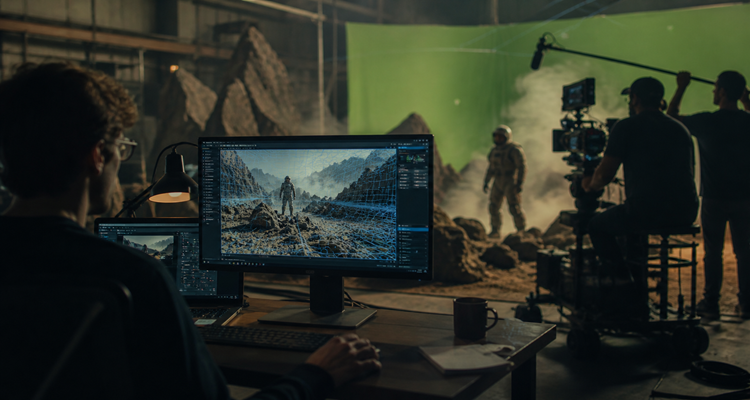
Studios are using AI-driven tools for visual effects, enabling faster scene rendering and more realistic environments without massive production teams. Background extras in crowd scenes can now be digitally generated or enhanced using machine learning models, reducing the need for large-scale casting.
Voice technology is also evolving rapidly. AI-generated voices can replicate tone and emotion with surprising accuracy, allowing studios to dub content across languages more seamlessly or even recreate a performer’s voice for minor edits. Companies like Adobe and startups specializing in synthetic media are already pushing these capabilities forward.
Even editing is changing. AI-assisted tools can analyze footage, suggest cuts, and optimize pacing, helping editors streamline post-production timelines. The result is a faster, more cost-efficient process that subtly alters the rhythm of storytelling.
Why This Is Happening Now
The shift isn’t accidental; it’s driven by a convergence of economic pressure and technological maturity.
Streaming platforms like Netflix, Amazon Prime Video, and Disney+ are producing more content than ever, creating a demand for speed and scalability. AI offers a solution: automate repetitive tasks, reduce costs, and accelerate production cycles.
At the same time, advancements in generative AI have made these tools more accessible and powerful. What once required large teams and months of work can now be done in a fraction of the time.
There’s also a global dimension. As streaming services expand into international markets, AI helps localize content quickly, through dubbing, subtitling, and even cultural adaptation, making shows more accessible worldwide.
Why It Matters to Viewers
For audiences, the impact is subtle but meaningful.
On one hand, AI is enabling more polished visuals and broader storytelling. Smaller productions can now achieve cinematic quality, and global audiences can access content that feels tailored to them.
But there’s also a growing sense of unease. When a scene feels “too perfect” or a performance lacks the unpredictability of human expression, viewers notice, even if they can’t articulate why.
The emotional connection between the audience and the performer is at stake. Acting has always been about nuance, imperfection, and spontaneity. As AI begins to replicate or enhance these elements, the line between authentic performance and digital construction becomes blurred.
What’s Different This Time
Hollywood has always embraced new technology from CGI to motion capture, but AI represents a deeper shift.
Previous tools enhanced what humans created. AI, by contrast, can generate content on its own. It doesn’t just assist; it can simulate.
That distinction is critical. When CGI was introduced, it expanded visual possibilities but still relied heavily on human input. AI, however, can analyze patterns, predict outcomes, and produce results with minimal intervention.
This changes the creative process itself. Decisions that were once made by directors, editors, and actors may increasingly be influenced or even suggested by algorithms.
A Quiet Shift in Creative Power
The rise of AI in entertainment is also reshaping who holds creative control.
Studios and tech companies are gaining new leverage as they invest in proprietary AI tools. Meanwhile, concerns are growing among writers, actors, and production crews about how these technologies might affect their roles.
Recent industry conversations, including debates within Hollywood unions, reflect a broader चिंता: if AI can replicate voices, generate scripts, or simulate performances, what happens to the people behind them?
This isn’t just about job displacement, it’s about authorship. Who owns a performance created with AI assistance? Where does human creativity end and machine input begin?
The Behavioral Shift Viewers Are Experiencing
One of the most telling changes isn’t on screen, it’s in how audiences react.
Viewers are becoming more attentive, even skeptical. Subtle inconsistencies, slightly unnatural movements, overly smooth dialogue, or hyper-polished visuals are prompting questions.
This marks a shift in media consumption. Audiences are no longer passive; they are increasingly aware of the technology shaping what they watch. The “illusion” of cinema, once taken for granted, is now being quietly examined.
It’s a paradox: as technology becomes more advanced, it risks making itself more visible.
The Bigger Industry Picture
The integration of AI is part of a broader transformation across the entertainment industry.
Tech giants like Google and Microsoft are investing heavily in AI infrastructure, while media companies are experimenting with new production workflows. Startups are entering the space with specialized tools for everything from scriptwriting assistance to digital character creation.
At the same time, ethical and regulatory questions are gaining attention. Governments and industry bodies are beginning to explore guidelines around AI use in media, particularly concerning intellectual property and consent.
This is not just a technological shift, it’s a structural one. The boundaries between tech and entertainment are dissolving, creating a new hybrid industry.
What Comes Next
The role of AI in movies and television is only set to expand.
In the near future, viewers may encounter fully AI-generated characters, dynamically personalized storylines, or content tailored in real time based on user preferences. Interactive storytelling could evolve beyond traditional formats, blending gaming and cinema in new ways.
But with these possibilities come critical choices. How much AI is too much? Where should the line be drawn between efficiency and authenticity?
For now, the change remains subtle, a quiet transformation unfolding frame by frame. But as viewers begin to notice, the conversation is just getting started.
This content is published for informational or entertainment purposes. Facts, opinions, or references may evolve over time, and readers are encouraged to verify details from reliable sources.
Related News
- Netflix’s 2026 Book Options Reveal What Stories It May Be Betting On Next
- Why Video Game Adaptations Are Finally Winning Over Audiences
- From Fan Fiction to Blockbusters: How Online Communities Are Changing Storytelling
- The Death of Channel Surfing: How Streaming Changed the Way We Discover Entertainment