








How Stress Is Quietly Becoming Humanity’s Most Dangerous Toxin
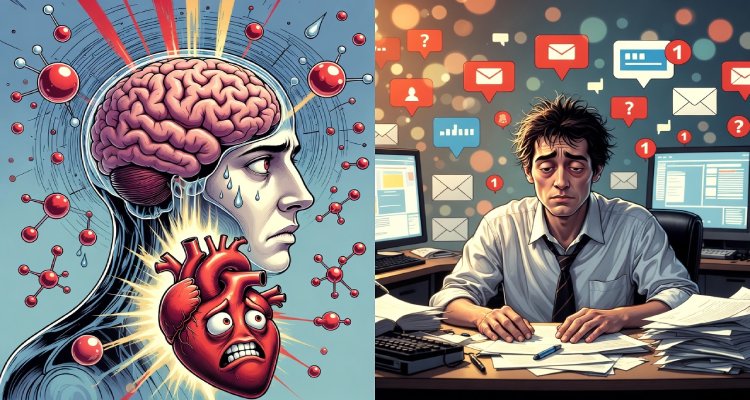
Chronic stress is emerging as a silent global health toxin, damaging bodies, minds, and economies. Experts warn it may rival pollution in impact.
Introduction: The Silent Threat We Normalize
Stress no longer announces itself with dramatic breakdowns or visible collapse. Instead, it slips quietly into daily life—embedded in work calendars, economic uncertainty, endless notifications, and the constant pressure to perform. What was once considered a short-term biological response has evolved into a chronic condition affecting billions. Scientists increasingly warn that prolonged stress may now rival pollution, poor diet, and inactivity as one of humanity’s most dangerous toxins—one that does not contaminate air or water, but the human nervous system itself.
Unlike traditional toxins, stress is invisible, socially rewarded, and often dismissed as a personal weakness rather than a systemic threat. Yet mounting evidence suggests that chronic stress is reshaping global health outcomes, accelerating disease, and quietly shortening lifespans.
Context & Background: From Survival Mechanism to Health Crisis
Stress is not inherently harmful. The body’s stress response—driven by hormones like cortisol and adrenaline—evolved to help humans survive immediate threats. In short bursts, it sharpens focus, boosts energy, and enhances reaction time.
The problem lies in duration. Modern stress rarely resolves. Financial instability, digital overload, job insecurity, geopolitical anxiety, climate fears, and social comparison have created an environment where the stress response remains permanently switched on.
According to global health researchers, humans are now experiencing chronic stress at population scale, something evolution never prepared the body to handle. Unlike past generations, today’s stressors are psychological, persistent, and inescapable—emails follow people home, work invades sleep, and crises unfold in real time through screens.
This shift has transformed stress from a temporary biological tool into a long-term physiological burden.
Main Developments: Why Chronic Stress Is So Dangerous
Chronic stress affects nearly every system in the human body, often in ways that remain undetected for years.
A Slow Attack on the Body
Prolonged exposure to stress hormones has been linked to:
- Cardiovascular disease, including high blood pressure and heart attacks
- Weakened immune function, increasing susceptibility to infections
- Metabolic disorders such as obesity and type 2 diabetes
- Accelerated aging at the cellular level
- Cognitive decline, memory loss, and increased dementia risk
Neuroscientists have found that sustained stress can physically alter brain structures responsible for memory, emotional regulation, and decision-making. Over time, this rewiring increases vulnerability to anxiety, depression, and burnout.
The Mental Health Spillover
Stress is now a leading contributor to global mental health disorders. Unlike clinical depression or anxiety, stress often goes untreated because it is normalized. People are praised for pushing through exhaustion, rewarded for overwork, and stigmatized for slowing down.
The result is a silent mental health pipeline—where untreated stress evolves into chronic illness.
Societal and Economic Costs
The economic toll is staggering. Lost productivity, healthcare costs, absenteeism, and early retirement linked to stress-related conditions cost global economies trillions annually. Yet stress remains largely framed as an individual coping failure rather than a public health emergency.
Expert Insight & Public Reaction: A Growing Alarm
Health experts increasingly describe stress using language once reserved for environmental hazards.
Many researchers argue that chronic stress should be treated like exposure to a toxin—measured, regulated, and mitigated at systemic levels. Public health professionals emphasize that stress is not evenly distributed; it disproportionately affects low-income populations, frontline workers, caregivers, and those living amid instability.
Public sentiment is also shifting. Burnout has become a mainstream conversation, particularly after global disruptions that blurred the boundaries between work, home, and rest. Younger generations, in particular, are questioning productivity cultures that equate constant stress with success.
Despite growing awareness, experts warn that acknowledgment alone is insufficient without structural change.
Impact & Implications: What Happens Next?
If current trends continue, stress-related illness may define the next major global health crisis—not through sudden outbreaks, but through slow deterioration.
Who Is Most Affected
- Urban workers facing long hours and job insecurity
- Digital-native populations exposed to constant information overload
- Healthcare and essential workers under sustained pressure
- Children and adolescents growing up in high-stress educational environments
The Bigger Picture
Unchecked stress has implications beyond health. It affects decision-making, social cohesion, creativity, and resilience. Societies under chronic stress tend to experience higher polarization, reduced empathy, and lower long-term productivity.
Some governments and organizations are experimenting with systemic solutions—shorter workweeks, mental health integration into primary care, stress audits in workplaces—but adoption remains uneven.
Experts argue that without addressing root causes such as economic precarity, digital overexposure, and cultural overwork norms, individual wellness strategies will remain insufficient.
Conclusion: The Toxin We Can No Longer Ignore
Stress may be invisible, but its effects are not. It quietly erodes health, shortens lives, and weakens societies—often without triggering urgent alarms. Unlike traditional toxins, stress is socially embedded, culturally rewarded, and politically inconvenient to confront.
Recognizing stress as a public health threat—not merely a personal challenge—may be one of the defining health shifts of the modern era. The question is no longer whether stress is dangerous, but whether humanity is willing to treat it with the seriousness it demands.
This article is intended for general awareness and educational purposes only. It should not be considered medical advice. Readers are encouraged to consult qualified healthcare professionals for personal health decisions.