










Why the Next Food Revolution Might Start Underground
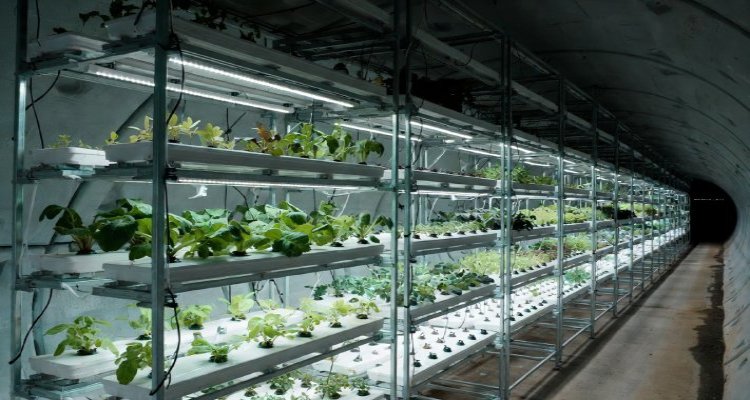
Why underground farming could reshape global food systems, offering climate resilience, urban food security, and a glimpse into the future of agriculture.
Introduction: Farming’s Most Radical Shift May Be Out of Sight
The next major breakthrough in how the world grows its food may not come from sprawling farmlands, climate-controlled greenhouses, or genetically modified seeds. Instead, it could emerge quietly from beneath our feet—inside tunnels, basements, repurposed bunkers, and abandoned subway stations. As climate change intensifies, arable land shrinks, and urban populations swell, food production is being pushed to rethink its most basic assumption: that crops must grow above ground.
Underground farming, once a fringe concept explored by sustainability enthusiasts and experimental startups, is increasingly being discussed as a serious solution to some of the most pressing challenges in global food systems. From water scarcity and soil degradation to supply chain disruptions and urban food insecurity, the pressures are mounting. And in response, a growing number of innovators are looking downward, not outward, for answers.
Context & Background: A Food System Under Strain
Global agriculture is facing a convergence of crises. Climate volatility is making traditional farming less predictable, with droughts, floods, and heatwaves becoming more frequent. According to international agricultural bodies, soil degradation now affects a significant portion of the world’s farmland, reducing yields and threatening long-term food security. At the same time, cities are expanding rapidly, consuming land that once produced food while increasing demand for fresh, local produce.
Urbanization has also exposed weaknesses in long supply chains. Events over the past few years—ranging from pandemics to geopolitical tensions—have shown how easily food distribution networks can fracture. When transportation falters, cities feel the impact first, with shortages, rising prices, and increased food waste.
Against this backdrop, controlled-environment agriculture has gained momentum. Vertical farms, hydroponics, and aeroponics have already begun reshaping food production. Underground farming is the next evolution of this movement, offering a way to grow food year-round, close to consumers, while shielding crops from environmental extremes.
Main Developments: Why Going Underground Is Gaining Momentum
At its core, underground farming involves growing crops below the Earth’s surface using artificial lighting, advanced climate controls, and soil-free growing systems. While this may sound futuristic, the logic is surprisingly practical.
Below ground, temperatures remain relatively stable throughout the year, reducing the energy required for heating or cooling. Crops are protected from extreme weather, pests, and airborne pollutants. Water use is tightly controlled, often requiring a fraction of what conventional farming consumes, thanks to recirculating hydroponic systems.
Technological advances have made this approach increasingly viable. Energy-efficient LED lighting can now be precisely tuned to the wavelengths plants need for photosynthesis. Automation and data analytics allow farmers to monitor nutrient levels, humidity, and growth cycles with remarkable accuracy. In some setups, artificial intelligence is used to optimize yields and reduce waste.
Importantly, underground farms can be established in places once considered unusable—abandoned mines, war bunkers, parking structures, or transit tunnels. This transforms idle urban infrastructure into productive food hubs, reducing the distance between farm and plate.
Expert Insight & Public Reaction: Innovation Meets Skepticism
Agricultural scientists and urban planners increasingly see underground farming as a complementary, rather than replacement, solution. Experts in food systems argue that while staple crops like wheat or rice are unlikely to move underground, high-value, perishable produce such as leafy greens, herbs, and certain fruits are ideal candidates.
Public sentiment around underground farming is cautiously optimistic. Supporters point to the promise of pesticide-free produce, reduced food miles, and greater resilience against climate shocks. For consumers, the appeal lies in freshness and reliability—food grown locally, regardless of season or weather.
Skeptics, however, raise valid concerns. Energy consumption, particularly for lighting, remains a major challenge. While renewable energy integration is improving, underground farms must balance sustainability with operational costs. Others question scalability, asking whether these systems can truly make a dent in global food demand or remain niche solutions for wealthy urban centers.
Still, many analysts note that every major agricultural shift—from mechanization to synthetic fertilizers—initially faced resistance before becoming mainstream.
Impact & Implications: Who Benefits and What Comes Next
If underground farming continues to evolve, its implications could be far-reaching. Cities could become more self-sufficient, reducing dependence on distant agricultural regions and cutting carbon emissions linked to transportation. Food production could move closer to consumers, improving freshness and reducing spoilage.
For regions facing land scarcity or harsh climates, underground systems offer a way to produce food where traditional farming is impractical. This could be particularly significant for densely populated мегacities and areas vulnerable to climate extremes.
Economically, underground farming opens new job categories at the intersection of agriculture, technology, and engineering. It also invites new policy discussions around urban planning, zoning laws, and energy use. Governments may need to rethink how food production fits into city infrastructure, just as they once adapted to rooftop solar and data centers.
At the same time, underground farming highlights broader questions about the future of food: how much control humans should exert over natural processes, how technology can be used responsibly, and how to ensure innovations benefit more than just a privileged few.
Conclusion: A Quiet Revolution Beneath the Surface
Food revolutions do not always announce themselves with fanfare. Some begin quietly, in unexpected places, driven by necessity rather than novelty. Underground farming represents one such shift—a response to a world where traditional agricultural assumptions no longer hold.
While it is unlikely to replace open fields or rural farms, it may become a crucial piece of a more resilient, diversified global food system. As climate pressures intensify and cities continue to grow, the future of farming may depend on our willingness to rethink not just how we grow food, but where we grow it.
The next food revolution may not be visible from the horizon. It may already be taking root underground.
This content is published for informational or entertainment purposes. Facts, opinions, or references may evolve over time, and readers are encouraged to verify details from reliable sources.