










The Hidden Race to Build Technology You Can’t Detect
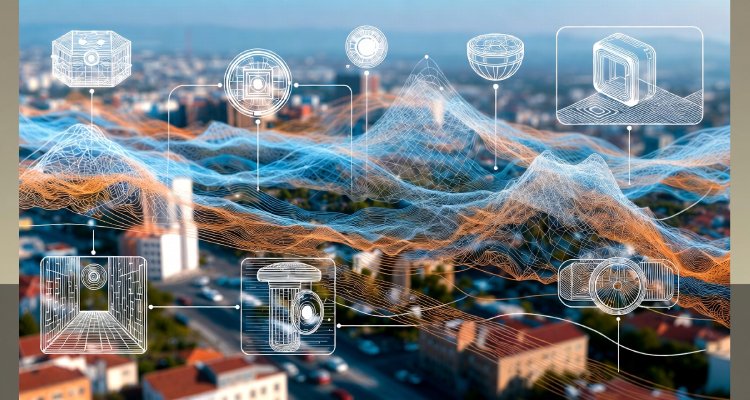
A global race is underway to build undetectable technology—from invisible AI to stealth surveillance—reshaping power, security, and privacy in silence.
Introduction: The Race You Were Never Meant to See
Some of the most consequential technology being built today is designed not to be noticed at all. No flashy product launches. No public demos. No consumer branding. Instead, this innovation race is unfolding quietly inside research labs, defense agencies, intelligence units, and advanced tech firms—focused on one goal: creating technology so subtle, seamless, and integrated that its presence is virtually undetectable.
From invisible surveillance systems and silent cyber tools to stealthy artificial intelligence models embedded deep within everyday infrastructure, a hidden competition is underway. Nations, corporations, and research institutions are vying for dominance in technologies that operate beneath perception, reshaping power without drawing attention. And while the public debate often centers on visible breakthroughs like generative AI or quantum computing, this silent arms race may prove even more transformative.
Context & Background: Why Undetectable Technology Matters
Historically, technological superiority has been obvious. Radar towers, nuclear missiles, satellites, and supercomputers were visible symbols of power. But in a hyperconnected world saturated with sensors, cameras, and data trails, visibility has become a vulnerability.
Modern conflicts—whether geopolitical, economic, or digital—reward subtlety. Intelligence agencies want tools that leave no trace. Militaries seek systems that cannot be detected by radar, sonar, or electronic surveillance. Corporations aim to collect insights without triggering privacy backlash. Cybersecurity teams work to deploy defenses that attackers cannot identify, study, or exploit.
Advances in machine learning, materials science, nanotechnology, and distributed computing have made this possible. What once belonged to science fiction—technology that blends into the background—is increasingly achievable. The result is a global competition where success is measured not by recognition, but by invisibility.
Main Developments: What’s Being Built—and Why It Matters
Invisible AI and “Silent” Algorithms
One of the most active fronts in this competition is artificial intelligence. Beyond chatbots and image generators lies a quieter class of AI systems designed to operate unnoticed. These models are embedded into network traffic management, financial markets, logistics systems, and even urban infrastructure.
Unlike consumer-facing AI, invisible AI does not announce decisions or interact with users. It optimizes, predicts, and intervenes silently—often in milliseconds. In finance, such systems can influence markets without revealing their presence. In cybersecurity, they can identify and neutralize threats without tipping off attackers.
The strategic value is enormous. An AI system that cannot be detected cannot easily be reverse-engineered, regulated, or targeted.
Stealth Surveillance and Sensor Technology
Surveillance technology has also entered an era of invisibility. Traditional cameras and microphones are increasingly supplemented—or replaced—by passive sensors that detect heat signatures, electromagnetic disturbances, or subtle environmental changes.
Some systems rely on existing signals, such as Wi-Fi or cellular networks, to “see” movement without emitting any detectable signal of their own. Others use nanoscale materials that blend into surroundings, making physical detection nearly impossible.
These tools are attractive to law enforcement and intelligence agencies, but they also raise profound questions about privacy, consent, and oversight—especially when their very existence is difficult to prove.
Cyber Weapons That Don’t Announce Themselves
In cyberspace, the most valuable tools are no longer loud, destructive attacks but quiet, persistent capabilities. Advanced cyber tools are now engineered to remain dormant, invisible, and indistinguishable from normal system processes.
Such technologies can sit undetected for years, gathering intelligence or waiting for activation. Their strength lies not in immediate impact, but in long-term access. For governments, this offers strategic leverage. For critical infrastructure, it represents a deeply unsettling vulnerability.
Materials and Hardware Designed to Disappear
Beyond software, physical technology is also becoming harder to detect. Researchers are developing materials that absorb radar, dampen sound, or alter thermal signatures. These innovations have applications in defense, aviation, and space—but also in consumer electronics and urban design.
The boundary between civilian and military use is increasingly blurred. A material developed for stealth aircraft may later appear in smartphones or data centers, quietly reshaping how devices interact with their environment.
Expert Insight & Public Reaction: Power Without Visibility
Technology analysts note that invisibility has become a strategic advantage in itself. “The future of competition isn’t about who has the most advanced technology,” one security researcher observed, “but about whose technology can operate without being noticed.”
Public awareness, however, remains limited. Because these systems are designed to avoid detection, they rarely spark debate until something goes wrong—such as a data breach, surveillance scandal, or geopolitical incident. Civil liberties groups warn that undetectable technology risks eroding accountability, as citizens cannot challenge systems they cannot see.
At the same time, industry leaders argue that invisibility often improves safety and efficiency. Silent cybersecurity defenses, for example, protect users without disrupting their experience. The tension between protection and transparency continues to grow.
Impact & Implications: What Happens Next
The hidden competition to build undetectable technology is likely to intensify. As detection tools improve, so too will methods of concealment. This dynamic creates an endless cycle of innovation, where visibility and invisibility constantly chase each other.
Governments may struggle to regulate technologies that cannot be easily identified or audited. International agreements, already strained in areas like cyber warfare and AI governance, face new challenges when capabilities are deliberately concealed.
For ordinary citizens, the implications are subtle but significant. Daily life may become more efficient, secure, and automated—yet also more opaque. Decisions affecting finance, mobility, security, and information access may increasingly be made by systems operating beyond perception.
Conclusion: The Quiet Technologies Shaping the Future
The most important technologies of the coming decade may never announce themselves. They will not trend on social media or debut at product launches. Instead, they will operate silently—optimizing systems, gathering intelligence, and shifting power in ways that are difficult to trace.
The hidden competition to build technology you can’t detect is not just a technical race. It is a contest over control, trust, and accountability in an age where invisibility itself has become a form of power. As these systems spread, the challenge for societies will be ensuring that what cannot be seen can still be governed, questioned, and understood.
The information presented in this article is based on publicly available sources, reports, and factual material available at the time of publication. While efforts are made to ensure accuracy, details may change as new information emerges. The content is provided for general informational purposes only, and readers are advised to verify facts independently where necessary.