










Southern California Floods Trigger Rescues, Warnings
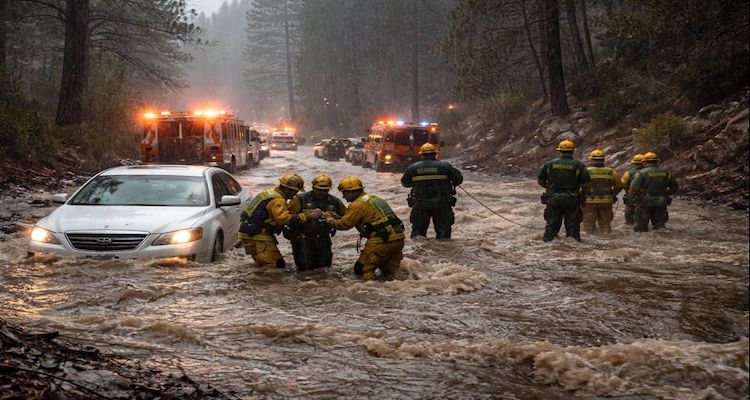
A powerful Christmas Eve storm transformed parts of Southern California into disaster zones, flooding roads, trapping motorists, and forcing emergency evacuations. As extreme weather intensifies across the West, this latest deluge highlights the growing risks facing communities already scarred by wildfires and unstable terrain.
Authorities say the danger is far from over, with additional waves of heavy rain and wind threatening lives, infrastructure, and holiday travel plans.
A Holiday Storm Turns Dangerous
Southern California was battered Wednesday by relentless downpours that triggered flash flooding, mudslides, and swift-water rescues across multiple counties. Emergency officials urged residents to avoid travel altogether, warning that roadways were rapidly becoming impassable.
The storm system, fueled by a moisture-rich atmospheric river sweeping in from the Pacific Ocean, unleashed rainfall rates exceeding one inch per hour in some areas. For communities perched along mountain slopes and burn scars, the sudden surge of water proved especially hazardous.
Wrightwood at the Center of Emergency Rescues
The mountain town of Wrightwood, located east of Los Angeles in San Bernardino County, saw some of the most severe impacts. Fire crews spent hours responding to emergency calls as vehicles were overtaken by floodwaters.
Christopher Prater, a spokesperson for the San Bernardino County Fire Department, said rescue teams pulled multiple drivers from submerged cars throughout the day. Despite the intensity of the flooding, officials confirmed that no deaths or serious injuries had been reported as of Wednesday night.
Aerial footage released by the department showed muddy torrents carving through residential cabin areas, turning streets into fast-moving streams.
Atmospheric River Brings Relentless Rain
Meteorologists identified the storm as the latest in a series of atmospheric rivers, long, narrow bands of concentrated moisture that can dump extraordinary amounts of rain in a short time.
According to the National Weather Service (NWS), some foothill communities recorded between four and eight inches of rain by midmorning Wednesday. Forecast models warned that cumulative totals in certain mountain regions could exceed a foot of rainfall by the end of the week.
The timing proved especially dangerous, arriving during what is typically one of the busiest travel periods of the year.
Authorities Issue Stark Warnings
The National Weather Service labeled conditions across Southern California as “life-threatening,” citing widespread flash flooding already underway. A flash flood warning remained in effect for much of Los Angeles County until Wednesday evening.
In a blunt advisory, officials warned motorists not to travel unless evacuation was unavoidable. Roads, they said, could flood with little warning, and emergency access might be delayed or impossible.
The Angeles Crest Highway, a critical mountain route through the San Gabriel Mountains, was closed in multiple sections due to rising waters and debris.
Evacuations Ordered in Fire-Scarred Areas
Los Angeles city officials ordered evacuations for roughly 130 homes in areas deemed especially vulnerable to mudslides and debris flows. Many of those neighborhoods lie within Pacific Palisades, where last year’s wildfires stripped hillsides of vegetation that would normally stabilize soil.
Without that natural barrier, even moderate rainfall can trigger destructive landslides. Wednesday’s intense downpours significantly increased that risk.
Residents were told to evacuate early or shelter in place if travel became unsafe.
Shelter-in-Place for Wrightwood Residents
San Bernardino County Sheriff’s officials initially issued an evacuation warning for Wrightwood earlier in the day. As flooding worsened, that advisory was upgraded to a shelter-in-place order, instructing residents to remain indoors and off roadways.
Officials emphasized that conditions were changing rapidly and that emergency crews needed clear access to respond to life-threatening situations.
Wind, Power Outages, and Mountain Snow
The storm’s impact extended beyond flooding. Strong, gusty winds toppled trees and downed power lines across the region, causing scattered power outages and additional hazards for first responders.
At higher elevations, particularly in the Sierra Nevada mountains, the system delivered heavy snowfall. While beneficial for long-term water supplies, the snow raised avalanche concerns and further complicated travel through mountain passes.
Rare Tornado Warning Issued
In an unusual development for Southern California, forecasters issued a tornado warning for a small area of east-central Los Angeles County. The alert followed reports of intense thunderstorm activity near the city of Alhambra.
While no confirmed tornado touchdowns were reported, the warning underscored the storm’s volatile nature and the broad range of hazards it presented.
Meteorologists Warn of More to Come
NWS meteorologist Ariel Cohen said the region experienced a brief lull in rainfall Wednesday night, but warned that a second wave of the storm system was expected to arrive Thursday.
That next round, forecasters said, could bring renewed heavy rain, prolonging flood risks and delaying recovery efforts.
“The ground is already saturated,” Cohen noted, increasing the likelihood of additional runoff, debris flows, and infrastructure damage.
Impact on Travel and Daily Life
Holiday travel across Southern California was severely disrupted. Road closures, flight delays, and hazardous driving conditions forced many residents to cancel or postpone plans.
Emergency officials stressed that staying home was the safest option, particularly for those living near canyons, rivers, or steep hillsides.
A Broader Climate Reality
While atmospheric rivers are a natural feature of West Coast weather, scientists say climate change is making them more intense and destructive. Warmer air holds more moisture, increasing the likelihood of extreme rainfall events like this one.
For Southern California, where droughts and wildfires often dominate headlines, the storm served as a reminder that water, too much or too little, remains a defining challenge.
Vigilance Remains Key
As Southern California braces for the next wave of storms, officials are urging residents to stay informed, follow evacuation orders promptly, and avoid unnecessary travel.
Emergency crews remain on high alert, knowing that conditions can deteriorate quickly. For now, the region waits, hoping the worst has passed, but prepared for what may still come.
ALSO READ: Bondi Attack Prompts NSW to Pass Tougher Gun and Protest Measures
Disclaimer:
The information presented in this article is based on publicly available sources, reports, and factual material available at the time of publication. While efforts are made to ensure accuracy, details may change as new information emerges. The content is provided for general informational purposes only, and readers are advised to verify facts independently where necessary.