









Epstein Files Rock Norway as Europe Faces New Fallout
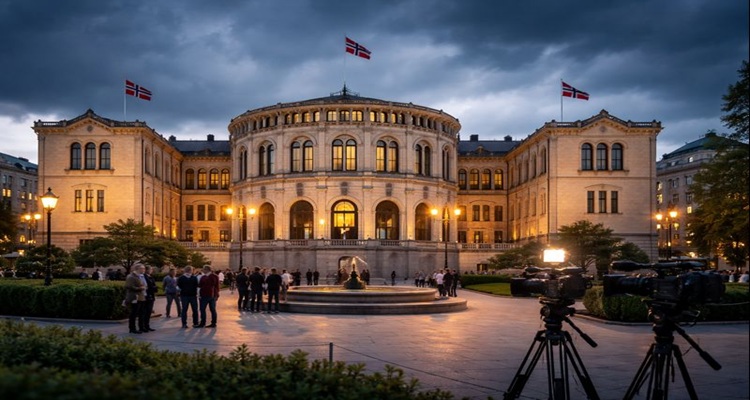
The release of new U.S. court documents tied to Jeffrey Epstein has reignited a scandal that refuses to fade. While American politics has so far avoided major consequences, the shockwaves are hitting Europe hard, particularly Norway, a country long associated with diplomacy, transparency, and global moral leadership.
As governments and institutions confront uncomfortable questions, Norway now finds itself at the center of a growing international reckoning over power, accountability, and past associations.
A scandal spreading across Europe
Newly unsealed files from the U.S. Justice Department have laid out detailed correspondence, travel records, and social connections involving the late financier and convicted sex offender Jeffrey Epstein. The disclosures expand on relationships that were previously rumored but never fully documented.
Across Europe, the political impact is becoming increasingly tangible.
In the United Kingdom, Prime Minister Keir Starmer is facing rising criticism over his decision to appoint veteran Labour figure Peter Mandelson as ambassador to Washington last year. Mandelson has acknowledged a close personal friendship with Epstein, and critics argue the appointment now looks politically reckless.
The British royal family, already under strain, is again in the spotlight. Prince Andrew, officially Andrew Mountbatten-Windsor, lost his military roles, patronages, and royal residence years ago over his Epstein ties. Pressure is now mounting for him to provide testimony to U.S. authorities.
Elsewhere, consequences have been swift. In Slovakia, Prime Minister Robert Fico’s national security adviser resigned after emails surfaced showing exchanges with Epstein that discussed young women. In France, former culture minister Jack Lang is under public pressure to step down as president of the Arab World Institute over his past connections.
According to a Reuters report, these cases underscore how the fallout is landing far more heavily in Europe than in the United States, where Epstein’s political connections remain largely insulated from formal inquiry.
Norway enters the spotlight
Norway’s position is particularly striking. The country is home to the Nobel Peace Prize, hosts international mediation efforts, and often presents itself as a global ethical broker. Yet the new documents suggest Norway may have deeper institutional exposure than many of its peers.
Several prominent Norwegian figures are now under renewed scrutiny. Among them are Crown Princess Mette-Marit and former prime minister and foreign minister Thorbjørn Jagland. Both were previously known to have crossed paths with Epstein, but the newly released material provides significantly more detail about the nature and timing of those contacts.
Also named are former foreign minister Børge Brende, now president of the World Economic Forum, Mona Juul, Norway’s ambassador to Jordan and Iraq, and her husband Terje Rød-Larsen, a veteran diplomat.
Juul and Rød-Larsen are internationally known for helping establish the secret backchannel between Israel and the Palestine Liberation Organization that led to the Oslo Accords in the 1990s, a cornerstone of modern Middle East diplomacy.
Calls for a formal inquiry
The political response in Oslo has been unusually broad. Norwegian media report that a majority of parties in parliament are prepared to back an independent investigation into the foreign ministry’s historical interactions with Epstein and his network.
The proposed inquiry would examine whether official positions, public funds, or diplomatic privileges were misused—or whether failures of judgment allowed Epstein continued access to high-level Norwegian figures even after his 2008 conviction for child sex offenses in the United States.
Legal pressure is also intensifying. Norway’s economic crime police unit confirmed it is investigating Jagland on suspicion of aggravated corruption. His lawyer has said Jagland denies any wrongdoing, is confident he will clear his name, and will cooperate fully with investigators.
Diplomatic immunity and internal probes
Norway’s foreign ministry has taken the unusual step of seeking to lift Jagland’s diplomatic immunity. He held immunity as a former Secretary General of the Council of Europe, a role he occupied from 2009 to 2019. The Council has not publicly commented on the request.
Mona Juul has been temporarily suspended from her ambassadorial role while an internal investigation is underway. Requests for comment from Juul and Rød-Larsen were not immediately answered, according to Reuters.
Børge Brende has said he was unaware of Epstein’s criminal history when he first met him in 2018 and expressed regret for not conducting deeper background checks. Brende has not been accused of any criminal activity.
The royal dimension
One of the most sensitive revelations involves Crown Princess Mette-Marit. The U.S. documents include extensive email correspondence between Epstein and the crown princess, including exchanges that continued after Epstein’s 2008 conviction.
Mette-Marit has publicly apologized, acknowledging the seriousness of Epstein’s crimes and saying she should have cut off contact sooner. Norwegian commentators note that while no illegality has been alleged, the optics are deeply damaging for a monarchy built on public trust.
The timing is especially difficult for Norway’s royal family. Marius Borg Høiby, Mette-Marit’s son from a previous relationship, is currently facing trial on charges of rape and domestic violence, compounding public scrutiny of the household.
Public reaction and expert views
Political analysts in Norway say the episode represents a stress test for the country’s self-image.
“Norway prides itself on transparency and moral authority in global affairs,” said one Oslo-based political scientist quoted by Norwegian media. “That makes this scandal harder to absorb—and harder to deflect.”
Public reaction has been marked by frustration rather than outrage. Commentators note that Norwegians appear less interested in personal scandal than in whether institutions failed to act responsibly once Epstein’s criminal history was known.
What comes next
If parliament authorizes an independent inquiry, it could become one of the most comprehensive examinations of elite accountability in modern Norwegian history. Investigators would likely focus on governance failures rather than criminal liability, but reputational damage could be severe.
More broadly, the Epstein files are forcing European governments to confront how informal power networks operated across borders, and how long warning signs were ignored.
The contrast with the United States, where no senior political figure has yet faced formal consequences from the latest disclosures, is not lost on observers.
A reckoning still unfolding
The Epstein scandal has long been described as unresolved. The latest revelations suggest it is also unfinished.
For Norway, the coming months may determine whether its reputation for integrity can withstand close examination, or whether the country will have to rethink how it balances global influence with ethical responsibility.
As more governments face uncomfortable questions, Europe’s response may ultimately shape how history judges the legacy of Epstein’s elite connections.
ALSO READ: Measles Surge Triggers Vaccine Rush in South Carolina
The information presented in this article is based on publicly available sources, reports, and factual material available at the time of publication. While efforts are made to ensure accuracy, details may change as new information emerges. The content is provided for general informational purposes only, and readers are advised to verify facts independently where necessary.