










Yen Slumps as Policy Rift Clouds BOJ Path
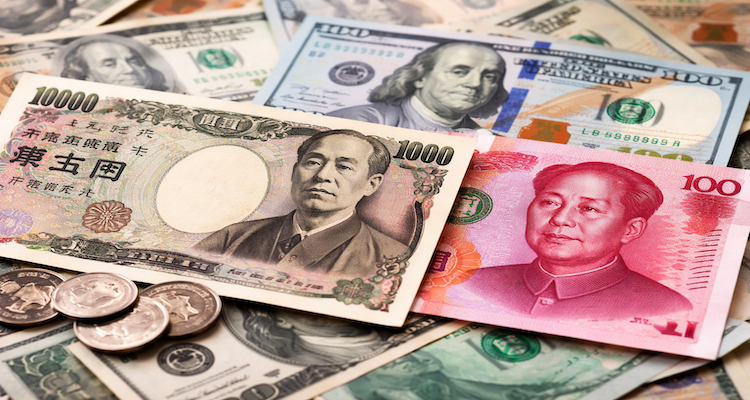
Currency Markets on Edge as Policy Signals Diverge
Global currency markets opened midweek with a clear theme: uncertainty in Japan and renewed strength in China. The Japanese yen hovered near a two-week low after reports suggested Prime Minister Sanae Takaichi expressed caution about further interest rate hikes, raising questions about the Bank of Japan’s tightening path.
At the same time, the Chinese yuan continued its steady ascent, adding pressure on the U.S. dollar and reshaping expectations across Asia-Pacific markets.
With inputs from Reuters.
Yen Slides on Report of Policy Reservations
The yen weakened sharply overnight, falling as much as 0.8% to 156.28 per dollar before stabilizing near 155.88 in early trading. The move followed a report by Japan’s Mainichi newspaper stating that Prime Minister Takaichi told Bank of Japan Governor Kazuo Ueda she had reservations about additional rate increases.
The report, which cited unnamed sources, suggested that Takaichi conveyed concerns during a meeting last week. While neither the prime minister’s office nor the BOJ immediately confirmed the discussion, the mere possibility of friction between fiscal and monetary leadership unsettled investors.
For markets, the signal was clear: Japan’s delicate transition away from ultra-loose monetary policy may not be as smooth as previously expected.
Why the BOJ’s Rate Path Matters
Japan has maintained historically low interest rates for years in an effort to combat deflation and stimulate growth. That prolonged easing has contributed to persistent yen weakness, particularly as other major economies raised borrowing costs.
Since Takaichi assumed office in October, investors have watched closely for signs of her economic priorities. Concerns have grown that aggressive fiscal spending combined with resistance to higher rates could strain Japan’s already stretched public finances.
According to Bob Savage, head of markets macro strategy at BNY, the political messaging caught traders off guard.
He said the tougher tone attributed to Takaichi added to fears that policy shifts could be unfavorable for currency markets. Savage also noted that coordinated intervention with the United States has likely helped prevent the yen from breaching the psychologically significant 160-per-dollar level.
Questions Over Currency Intervention
Adding another layer of complexity, Japan’s Nikkei newspaper reported that the United States led so-called “rate checks” in January—informal inquiries with financial institutions that often precede currency intervention.
If accurate, that detail raises questions about how actively Japan itself has been supporting its currency.
Historically, Japanese authorities have stepped into markets to curb excessive volatility. However, the scale and frequency of recent support remain a topic of debate among analysts.
The yen’s prolonged decline has been fueled primarily by wide interest rate differentials. As long as Japanese rates remain well below U.S. levels, downward pressure is likely to persist.
Australian Dollar Gains on Inflation Surprise
While Japan grappled with policy uncertainty, Australia saw a brighter start.
The Australian dollar rose 0.3% to $0.7074 after data showed a pickup in inflation. The stronger price readings increased the possibility that the Reserve Bank of Australia may need to consider further rate hikes.
Among major currencies, the Aussie was the session’s strongest performer. Meanwhile, the euro held steady near $1.1776, and the British pound traded around $1.35, reflecting relatively calm conditions in Europe.
New Zealand’s dollar edged higher to $0.5971, benefiting modestly from the broader weakness in the U.S. currency.
Yuan Strength Reshapes Dollar Dynamics
The most striking move, however, came from China.
The yuan recorded its sharpest one-day gain in nine months on Tuesday, rising 0.35%. It climbed to 6.8766 per dollar, its strongest level in nearly three years, before settling near 6.8778 in offshore trading.
Over the past ten months, the yuan has appreciated nearly 7%, supported by robust export performance and expectations of easing trade tensions.
Analysts pointed to a recent U.S. Supreme Court decision striking down many of former President Donald Trump’s heaviest tariffs. According to market observers, the ruling could reduce the overall tariff burden on Chinese goods, potentially strengthening trade flows and supporting further yuan gains.
Goldman Sachs analysts said the structural case for yuan appreciation remains intact, citing what they described as significant undervaluation at the starting point and continued resilience in China’s export sector.
They also suggested that the likelihood of additional Section 301 tariffs ahead of Trump’s planned visit to China at the end of March appears low, reducing immediate trade policy risks.
Trump’s Speech in Focus
Currency traders in Asia also monitored developments in Washington, where President Donald Trump was set to deliver his State of the Union address.
Major policy announcements or trade signals can quickly ripple through foreign exchange markets. Although no immediate currency-specific measures were expected, investors remained alert for comments related to China, tariffs, or fiscal policy.
The dollar has recently faced headwinds from shifting global rate expectations and the strengthening yuan. Any policy guidance from Washington could influence near-term momentum.
Broader Market Implications
The divergence between Japan and China highlights a broader theme in global markets: policy paths are increasingly moving in different directions.
In Japan, uncertainty over monetary tightening complicates the outlook for the yen. If political resistance slows the pace of rate normalization, interest rate differentials could continue to weigh on the currency.
In China, easing trade tensions and solid export data have bolstered confidence. A stronger yuan, if sustained, could reshape capital flows across emerging Asia and alter dollar dynamics regionally.
For multinational businesses, currency swings of this magnitude affect everything from import costs to earnings translations. For investors, volatility presents both risk and opportunity.
What Comes Next for the Yen and Yuan?
Much will depend on clarity from Japanese policymakers in the coming weeks. Markets will look for confirmation from the BOJ regarding its rate trajectory and signals from Takaichi’s administration about fiscal discipline.
If tensions between political leadership and the central bank intensify, currency traders may test the yen’s lower bounds once again.
In China’s case, sustained yuan strength will hinge on export momentum, capital flows, and the broader geopolitical climate. A reduction in tariff uncertainty could extend gains, though policymakers in Beijing traditionally manage currency moves carefully to avoid destabilizing shifts.
A Delicate Balance in Asia’s Currency Markets
Asia’s two largest economies are now navigating sharply contrasting pressures.
Japan faces questions about its commitment to policy normalization amid political caution. China, by contrast, is benefiting from improved trade prospects and a currency that appears to be regaining investor confidence.
For global markets, the message is unmistakable: currency stability depends as much on political alignment as on economic fundamentals.
Investors will be watching closely, not just for economic data, but for signals of cohesion between governments and central banks.
Continue Exploring:
Gold Steadies as Dollar Strength Caps Rally
Asian Markets Climb as Tech Rally Offsets Tensions
Markets Drift as IT Stocks Eye AI Signals
The information presented in this article is based on publicly available sources, reports, and factual material available at the time of publication. While efforts are made to ensure accuracy, details may change as new information emerges. The content is provided for general informational purposes only, and readers are advised to verify facts independently where necessary.