









VB-G RAM-G Replaces MGNREGA: A New Chapter in India’s Rural Employment Story
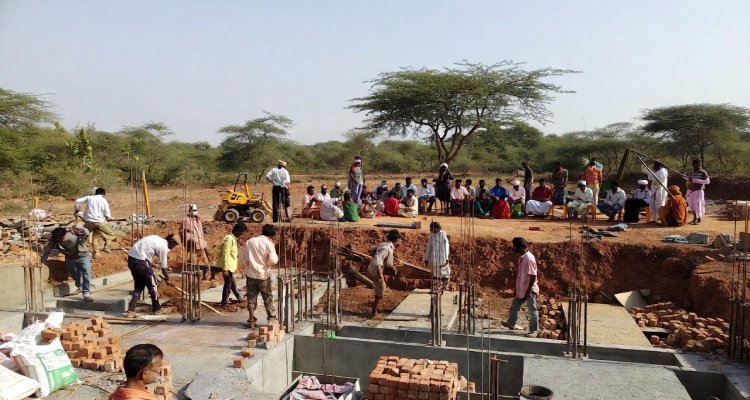
VB-G RAM-G replaces MGNREGA after President Murmu’s assent, reshaping India’s rural employment policy with higher guarantees and asset-driven development.
Introduction: A Historic Shift in Rural Welfare Policy
India’s rural employment framework is undergoing its most significant transformation in two decades. With President Droupadi Murmu granting assent to the Viksit Bharat Guarantee for Rozgar and Ajeevika Mission (Gramin) — VB-G RAM-G, Parliament has formally replaced the Mahatma Gandhi National Rural Employment Guarantee Act (MGNREGA), 2005, a landmark law that shaped rural livelihoods for nearly 20 years.
Passed amid intense debate and strong opposition resistance, the new Act signals a decisive policy shift—from a welfare-centric employment guarantee to a development-oriented rural transformation model. Supporters describe it as an evolution aligned with India’s changing rural realities; critics warn it risks diluting one of the country’s most powerful social safety nets.
Either way, the replacement of MGNREGA marks the end of an era—and the beginning of another.
Context & Background: The Long Evolution of Rural Employment in India
India’s journey with wage employment programmes predates independence but gathered momentum in the decades that followed. Early rural development policies focused on poverty alleviation, absorbing surplus agricultural labour, and building basic infrastructure.
Early Phases: Experimentation and Limited Reach
- Rural Manpower Programme (1960s) and the Crash Scheme for Rural Employment (1971) were among the earliest attempts to provide employment during periods of rural distress.
- The Food for Work Programme (1977–78) introduced food grains as wages, linking employment with food security.
- During the 1980s and 1990s, schemes such as the National Rural Employment Programme (NREP) and Rural Landless Employment Guarantee Programme (RLEGP) were launched, later consolidated into Jawahar Rozgar Yojana and Sampoorna Grameen Rozgar Yojana to improve administrative efficiency.
- The Employment Assurance Scheme (1993) aimed to provide work during agricultural lean seasons.
A Crucial Turning Point: Maharashtra’s Right to Work
A landmark moment came with the Maharashtra Employment Guarantee Act, 1977, which introduced the idea of a statutory right to work. This concept later became the philosophical backbone of MGNREGA.
MGNREGA: A Rights-Based Revolution
Enacted in 2005 under the UPA government led by Manmohan Singh, MGNREGA guaranteed 100 days of wage employment to rural households. It became one of the world’s largest public employment programmes, offering income security, empowering women, and injecting liquidity into rural economies.
Over two decades, MGNREGA evolved into a lifeline during droughts, economic downturns, and the COVID-19 pandemic. However, policymakers argue that India’s rural landscape has changed dramatically since 2005—necessitating a structural rethink.
Main Developments: What VB-G RAM-G Changes—and Why It Matters
The VB-G RAM-G Act seeks to reimagine rural wage employment as an integrated instrument of national development rather than a standalone welfare measure.
Expanded Employment Guarantee
- Statutory guarantee increased to 125 days per household per financial year, up from MGNREGA’s 100 days.
- States can declare a pause period of up to 60 days during peak agricultural seasons to ensure adequate farm labour availability.
Timely Wages and Accountability
- Wages must be paid weekly or within 15 days of work completion.
- Mandatory delay compensation strengthens worker protection and administrative accountability.
Asset-Centric Development Focus
Unlike earlier schemes that often produced fragmented assets, VB-G RAM-G explicitly links wage employment to the creation of durable public assets across four priority domains:
- Water security and water-related works
- Core rural infrastructure
- Livelihood-supporting infrastructure
- Climate resilience and extreme weather mitigation
This alignment reflects the government’s emphasis on long-term productivity, sustainability, and climate adaptation.
Planning from the Ground Up: Gram Panchayats at the Core
A defining feature of the new Act is its planning architecture.
- All works must originate from Viksit Gram Panchayat Plans (VGPPs).
- Plans are prepared through participatory processes, approved by the Gram Sabha, and digitally integrated with national platforms such as PM Gati Shakti.
- This integration aims to eliminate duplication, reduce wastage, and achieve saturation-based development outcomes.
The cost-sharing model remains familiar but refined:
- 60:40 between Centre and states
- 90:10 for northeastern and Himalayan states
- 100% central funding for Union Territories without legislatures
Expert Insight & Public Reaction: Evolution or Erosion?
Policy experts are sharply divided.
Supporters argue that MGNREGA, while transformative in its time, was designed for a vastly different rural India. With expanded social security coverage, digital financial inclusion, improved rural connectivity, and diversified livelihoods, they see VB-G RAM-G as a necessary modernization.
“Rural aspirations today go beyond subsistence wages. They demand infrastructure, resilience, and growth-linked livelihoods,” said a senior rural development analyst.
Opposition leaders and civil society groups, however, fear that replacing MGNREGA weakens a legally enforceable right that protected the poorest during crises.
“MGNREGA was not just an employment scheme—it was a social contract,” an opposition MP argued during parliamentary debates.
Farmer unions and rural worker collectives have expressed cautious concern, particularly about state-notified pause periods and the transition phase.
Impact & Implications: Who Gains, Who Watches Closely
For Rural Households
The enhanced 125-day guarantee could boost incomes, but outcomes will depend on implementation quality, fund flow efficiency, and local planning capacity.
For States
States gain greater flexibility in managing labour demand cycles but also bear responsibility for effective VGPP preparation and execution.
For Rural Infrastructure
The Act’s emphasis on durable, climate-resilient assets could accelerate rural transformation—if coordination across ministries succeeds.
For India’s Development Model
VB-G RAM-G reflects a broader shift in governance—from entitlement-driven welfare to outcome-oriented development, aligned with the vision of a Viksit Bharat.
Conclusion: A Defining Test for India’s Rural Future
The replacement of MGNREGA with VB-G RAM-G is more than a legislative update—it is a philosophical reset of India’s rural employment strategy. Whether this new framework strengthens rural resilience or undermines a hard-won safety net will depend on execution, transparency, and sustained political commitment.
As India’s villages navigate climate stress, economic transitions, and rising aspirations, VB-G RAM-G now carries the weight of expectation. The coming years will determine whether this ambitious reform becomes a blueprint for inclusive growth—or a contested chapter in India’s social policy history.
The information presented in this article is based on publicly available sources, reports, and factual material available at the time of publication. While efforts are made to ensure accuracy, details may change as new information emerges. The content is provided for general informational purposes only, and readers are advised to verify facts independently where necessary.