






The Surprising Comeback of Slowness in a Speed-Obsessed World
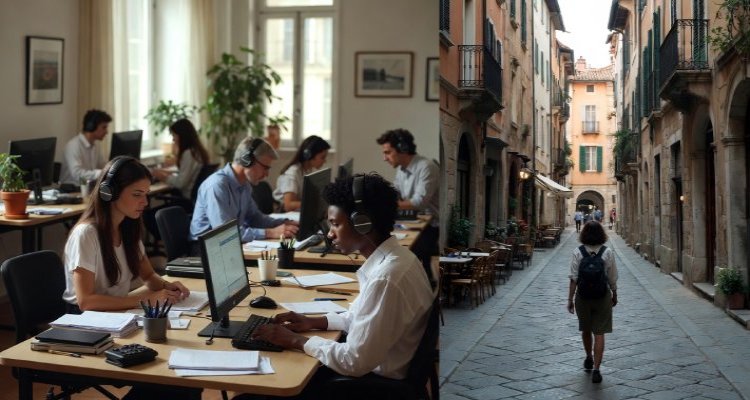
Why slowness is making a comeback in a fast-paced world—exploring work, media, lifestyle, and why moving slower may lead to better living.
Introduction: When Faster No Longer Feels Better
For decades, speed has been treated as a virtue. Faster internet, quicker deliveries, instant replies, real-time updates—modern life has been engineered to eliminate waiting. Yet something unexpected is happening beneath the surface of this hyper-accelerated world. Slowness, once dismissed as inefficiency or laziness, is quietly making a comeback.
From slow travel and mindful work to long-form content and deliberate living, individuals and industries alike are rediscovering the value of taking their time. In a culture obsessed with immediacy, the return of slowness feels almost rebellious. But this shift isn’t about nostalgia—it’s a calculated response to burnout, information overload, and the limits of constant acceleration.
Context & Background: How Speed Became the Default
The modern obsession with speed has deep roots. Industrialization prioritized productivity. The digital revolution intensified it. Smartphones collapsed time and space, turning every idle moment into a potential task. Social media trained users to scroll, react, and move on within seconds. Even success became measured by velocity—growth rates, response times, viral reach.
Yet as life accelerated, unintended consequences followed. Studies across psychology and workplace research have consistently linked constant urgency to chronic stress, reduced attention spans, and declining creativity. The faster everything became, the harder it was to think deeply, focus fully, or feel satisfied.
By the early 2020s, cracks were visible. Burnout became a mainstream conversation. “Quiet quitting” entered the lexicon. Digital detoxes, once fringe ideas, turned into wellness staples. The groundwork for a cultural shift toward slowness was already being laid.
Main Developments: Where Slowness Is Reclaiming Ground
The comeback of slowness is not a single movement but a pattern appearing across multiple domains of life.
Work: Fewer Tasks, Deeper Focus
In professional environments, companies are rethinking speed-driven productivity. Deep work models, asynchronous communication, and four-day workweeks are gaining traction. The emphasis is shifting from how fast tasks are completed to how meaningful and sustainable the output is.
Knowledge workers, in particular, are pushing back against constant notifications and meeting overload. Slower workflows allow for better decision-making, fewer errors, and more creative thinking—qualities that speed alone cannot produce.
Media & Content: The Rise of Long-Form Thinking
Despite predictions that attention spans would only shrink, long-form content is thriving. Podcasts lasting several hours, in-depth newsletters, and slow journalism platforms are attracting loyal audiences. Readers and listeners are choosing depth over brevity, nuance over hot takes.
This trend reflects a growing fatigue with algorithm-driven content designed for rapid consumption. Slower media offers context, coherence, and intellectual breathing room—something speed-focused platforms often lack.
Lifestyle: From Hustle to Intentional Living
The “always-on” hustle culture is losing its shine. Slow living philosophies emphasize intentional choices—how people eat, travel, shop, and spend their time. Slow travel, for example, favors immersive experiences over packed itineraries. Home cooking, analog hobbies, and offline leisure are no longer framed as inefficient but as restorative.
Even consumer behavior is changing. People are willing to wait longer for products that are ethically made, durable, or locally sourced, challenging the dominance of instant gratification.
Expert Insight & Public Sentiment: Why Slowing Down Works
Behavioral scientists argue that the human brain was never designed for perpetual acceleration. Cognitive overload reduces comprehension and memory retention, while constant urgency narrows perspective. Slowness, by contrast, enables reflection and emotional regulation.
Public sentiment echoes this shift. Online discussions increasingly question whether speed actually improves quality of life. Many professionals openly admit that moving slower has made them more productive, not less. The cultural narrative is evolving—from “faster is better” to “better is better.”
Economists and futurists also note that as automation accelerates routine tasks, human value will lie in judgment, creativity, and empathy—skills that require time and space to develop.
Impact & Implications: What Happens When Society Slows Down
The return of slowness carries meaningful implications across industries and institutions.
- Business models may prioritize longevity over rapid scaling.
- Education systems could shift away from rote speed-based testing toward deeper learning.
- Technology design may focus on reducing frictionless addiction and increasing mindful use.
- Mental health outcomes could improve as pressure to constantly keep up eases.
However, this shift is uneven. Speed still dominates sectors driven by competition and scarcity. Slowness, for now, remains a choice often available to those with privilege. The challenge ahead is making sustainable pacing accessible without sacrificing opportunity.
Conclusion: A New Definition of Progress
The resurgence of slowness is not a rejection of progress—it is a redefinition of it. In a world that can move instantly, choosing when to slow down becomes a form of intelligence. The future may not belong to those who move fastest, but to those who move with intention.
As societies recalibrate their relationship with time, slowness is no longer a flaw to be corrected. It is a strategy, a safeguard, and increasingly, a competitive advantage in a speed-obsessed world.
This content is published for informational or entertainment purposes. Facts, opinions, or references may evolve over time, and readers are encouraged to verify details from reliable sources.