








The Birth of Lord Shiva: Myths That Shaped Hindu Thought
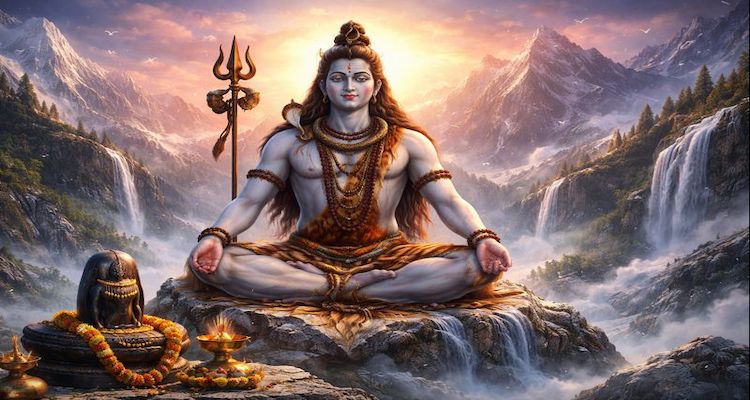
The birth of Lord Shiva is one of the most intriguing and debated themes in Hindu tradition. Unlike many deities with clearly narrated origins, Shiva’s arrival is wrapped in symbolism, philosophical depth, and multiple interpretations that continue to shape spiritual thought across India and beyond.
Understanding these myths is not just about faith, it offers insight into how ancient civilizations explained creation, consciousness, and cosmic balance.
Who Is Lord Shiva?
Lord Shiva is one of the principal deities of Hinduism, forming the Trimurti alongside Brahma the creator and Vishnu the preserver. Often called Mahadeva (the Great God), Shiva embodies contradiction, ascetic yet householder, destroyer yet compassionate, fearsome yet benevolent.
Unlike gods associated with royal births or genealogies, Shiva’s origin resists linear storytelling. This ambiguity is intentional, reflecting his role as a timeless, formless cosmic force rather than a mortal-born deity.
The Challenge of Defining Shiva’s Birth
In Hindu philosophy, Shiva is often described as Anadi, without beginning. Many scriptures suggest he was never born in the conventional sense but has always existed as pure consciousness.
This raises an important question: if Shiva is eternal, why do myths about his birth exist at all?
Scholars explain that these stories are symbolic frameworks designed to help human minds grasp abstract cosmic truths. Different texts offer different narratives, each emphasizing a specific philosophical idea rather than historical fact.
Myth One: Shiva as the Self-Manifested Being
One of the most widely accepted interpretations is that Shiva is Swayambhu, self-manifested. According to Shaivite traditions, Shiva did not emerge from a womb but revealed himself at the dawn of creation.
The Shiva Purana describes him as appearing from the infinite void, representing consciousness emerging from chaos. In this view, Shiva is not born but becomes perceptible when creation requires balance.
This myth reinforces the idea that Shiva transcends time, form, and physical laws.
Myth Two: The Cosmic Pillar of Fire
Another powerful story comes from the Lingodbhava legend. Here, Brahma and Vishnu argue over supremacy when an endless pillar of fire appears before them. Unable to find its beginning or end, they realize the pillar is Shiva himself.
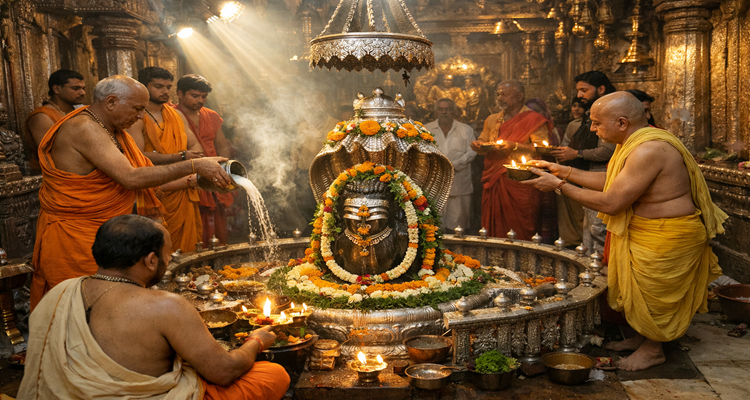
Rather than a birth story, this myth represents Shiva as the axis of existence, limitless and incomprehensible. The Shiva Lingam, widely worshipped today, originates from this narrative and symbolizes creation without origin.
Religious scholars often interpret this as a metaphor for the universe emerging from an unknowable absolute reality.
Myth Three: Shiva as Adiyogi, the First Teacher
Some traditions describe Shiva as Adiyogi, the first yogi who transmitted knowledge to humanity. In this interpretation, Shiva’s “birth” occurs when he chooses to engage with the world.
According to yogic philosophy, Shiva existed in deep meditation until compassion moved him to share wisdom. His emergence marks the birth of spiritual awareness rather than physical existence.
Modern spiritual teachers frequently reference this version to emphasize inner awakening over ritual belief.
Interpretations from Scholars and Thinkers
Indologist Wendy Doniger has noted that Shiva’s myths intentionally resist closure, reflecting Hinduism’s comfort with paradox and plurality. Rather than offering one authoritative story, the tradition allows multiple truths to coexist.
Similarly, historian Radhakrishnan Chatterji observed that Shiva’s undefined birth highlights a core Hindu idea, that ultimate reality cannot be confined to narrative or form.
Public discourse today often mirrors this academic view, with many devotees embracing Shiva not as a historical figure but as a living symbol of consciousness.
Cultural and Spiritual Impact
The absence of a fixed birth story has made Shiva uniquely adaptable across regions and eras. From tribal worship in ancient forests to grand temples like Kedarnath and Chidambaram, Shiva’s identity absorbs local beliefs without losing its essence.
Festivals such as Maha Shivaratri celebrate not Shiva’s birth but his cosmic presence and union with Shakti. This further underscores the idea that Shiva transcends ordinary life cycles.
For millions of followers, this timelessness makes Shiva deeply personal, less a distant god and more an ever-present guide.
Why These Myths Still Matter Today
In an age driven by data and definition, Shiva’s ambiguous origin offers a counterpoint. His myths encourage reflection rather than certainty, inquiry rather than answers.
Psychologists and mindfulness practitioners increasingly reference Shiva’s symbolism to discuss balance, destruction of ego, and renewal. The stories resonate not because they explain everything, but because they leave space for interpretation.
This openness has helped Shiva remain relevant in modern spiritual conversations worldwide.
Looking Ahead: Shiva in Contemporary Understanding
As global interest in yoga, meditation, and Eastern philosophy grows, interpretations of Shiva continue to evolve. Scholars are reexamining ancient texts through interdisciplinary lenses, while younger generations reinterpret Shiva as a symbol of mental resilience and transformation.
Rather than fading into mythology, Shiva’s “birthless” nature positions him as a timeless concept, one that adapts to each era’s questions.
Conclusion
The birth of Lord Shiva is less about an event and more about an idea. Through myths of self-manifestation, cosmic fire, and awakened consciousness, Shiva represents existence beyond beginning or end.
These stories endure because they invite contemplation, not conclusion. In exploring them, readers are not asked to believe blindly, but to reflect deeply on the nature of creation, identity, and balance itself.
ALSO READ: Shiva’s Silence: The Cosmic Meaning Behind His Stillness
Disclaimer:
This content is published for informational or entertainment purposes. Facts, opinions, or references may evolve over time, and readers are encouraged to verify details from reliable sources.