










Samsung Sees AI Memory Boom Extending Into 2026
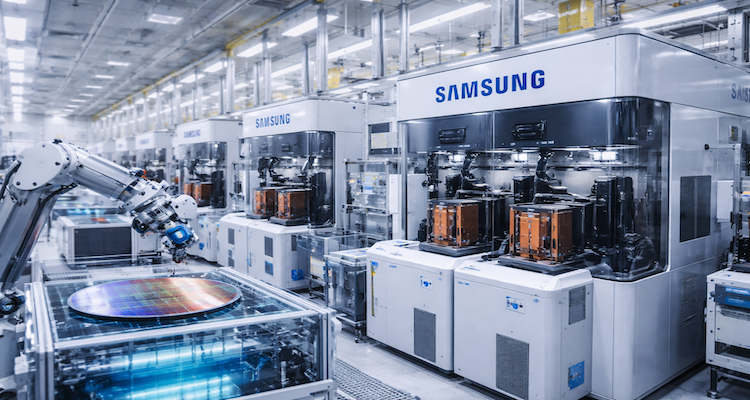
Samsung Bets on Sustained AI Memory Surge
Samsung Electronics expects the global appetite for advanced memory chips to remain strong through this year and into 2026, signaling continued momentum in the artificial intelligence boom.
The forecast, shared by a senior executive at a major semiconductor industry event, underscores how deeply AI is reshaping demand patterns in the global chip market.
AI Demand Powers Memory Market Growth
Speaking at the Semicon trade show on Wednesday, Song Jai-hyuk, Chief Technology Officer of Samsung’s semiconductor division, said the company sees robust and sustained demand for memory products driven largely by artificial intelligence workloads.
AI systems, from generative models to large-scale data centers, require vast amounts of high-performance memory to process and store information at unprecedented speeds. This shift has significantly altered the memory chip landscape over the past two years.
According to remarks delivered at the event, Samsung expects this AI-fueled demand to continue not only through 2025 but into next year as well.
The outlook reinforces broader industry expectations that memory suppliers will remain key beneficiaries of the AI infrastructure buildout.
(With inputs from Reuters.)
Positive Signals for Next-Generation HBM4
Beyond overall demand trends, Samsung also offered an update on its next-generation high-bandwidth memory (HBM) product.
Song said customer reactions to the company’s upcoming HBM4 chips have been “very satisfactory,” reflecting strong early engagement from clients preparing for next-generation AI systems.
High-bandwidth memory is a specialized form of DRAM stacked vertically to enable faster data transfer speeds and improved energy efficiency. It plays a critical role in powering AI accelerators, GPUs, and advanced computing platforms used in machine learning applications.
The next iteration, HBM4, is expected to further enhance performance capabilities, making it especially attractive to companies developing cutting-edge AI chips.
While Samsung did not disclose detailed specifications or commercial timelines at the event, the positive feedback suggests that major customers are already aligning future product roadmaps with the new memory standard.
Why HBM Matters in the AI Era
The race to dominate AI hardware has intensified competition among semiconductor firms.
AI training and inference workloads require enormous memory bandwidth to prevent bottlenecks between processors and storage. Traditional memory architectures often struggle to keep pace with the demands of large-scale AI models.
HBM technology addresses this challenge by stacking memory dies and connecting them through advanced packaging techniques. The result is dramatically higher data throughput compared to conventional DRAM modules.
As companies build more powerful AI chips, the need for cutting-edge memory solutions has become strategic rather than optional.
Samsung, as one of the world’s largest memory manufacturers, is positioning itself to capture this growing segment of the market.
Industry Context: Memory Cycles and AI Resilience
The global memory industry is historically cyclical, swinging between periods of oversupply and tight capacity. However, the current AI-driven demand surge has created a different dynamic.
Rather than depending solely on consumer electronics or PC upgrades, growth is now increasingly tied to enterprise AI infrastructure investments.
Cloud service providers, AI startups, and large technology firms are pouring capital into data centers optimized for artificial intelligence workloads. This structural shift is providing more sustained support for advanced memory products, particularly high-bandwidth variants.
Samsung’s comments suggest the company believes this cycle has longer legs than previous upturns.
Competitive Landscape and Strategic Stakes
Samsung competes closely with other major memory producers in the high-bandwidth segment. The race to secure design wins with leading AI chipmakers is particularly intense.
Strong customer feedback on HBM4 may strengthen Samsung’s position in future AI supply chains, especially as next-generation accelerators demand even more memory performance.
Industry analysts have noted that high-bandwidth memory commands higher margins compared to conventional DRAM, making it strategically important for profitability.
If AI infrastructure spending continues at its current pace, suppliers with advanced HBM capabilities could see outsized gains.
What This Means for Investors and Tech Markets
Samsung Electronics, listed under ticker 005930.KS, is a bellwether for the global semiconductor industry. Its outlook often serves as a signal for broader market trends.
A sustained AI memory boom could help stabilize revenue streams in a sector known for volatility.
For investors, the message is clear: AI hardware demand is not showing immediate signs of cooling. Instead, it appears to be evolving into a multi-year investment cycle.
For technology firms, the availability of advanced memory like HBM4 could influence the design and competitiveness of future AI systems.
Looking Ahead: A Longer AI Infrastructure Runway
While uncertainty remains around global economic conditions, Samsung’s projections point to continued strength in AI-related semiconductor demand.
As enterprises scale generative AI tools, autonomous systems, and data-intensive applications, high-performance memory will remain a foundational component.
The next phase of AI development is likely to hinge not only on computing power but also on the speed and efficiency of memory architectures.
If current demand patterns persist into 2026 as Samsung anticipates, the company’s investments in next-generation memory technologies could prove pivotal.
For now, the semiconductor giant appears confident that AI’s appetite for advanced memory chips is far from satisfied.
ALSO READ: Why Elon Musk Wants to Move AI Data Centers Into Space
The information presented in this article is based on publicly available sources, reports, and factual material available at the time of publication. While efforts are made to ensure accuracy, details may change as new information emerges. The content is provided for general informational purposes only, and readers are advised to verify facts independently where necessary.