










Rupee Steady as Trade Deal Boost Meets Dollar Demand
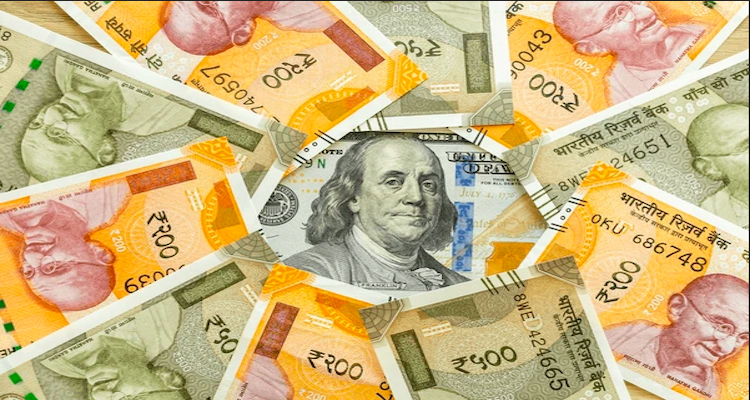
India’s currency markets are entering a delicate phase. While a long-awaited trade agreement between India and the United States has lifted sentiment, the Indian rupee is finding it difficult to build sustained momentum. For businesses, investors, and policymakers alike, the rupee’s next move will signal how durable this optimism really is.
Early indications suggest the currency may open largely unchanged on Thursday, mirroring cautious moves across Asian peers and reflecting persistent dollar demand from domestic players.
Rupee Seen Opening Flat Amid Mixed Signals
The Indian rupee is expected to begin Thursday’s session little changed against the U.S. dollar, according to offshore pricing indicators. One-month non-deliverable forwards (NDFs) point to an opening range of roughly 90.45 to 90.48 per dollar, close to Wednesday’s closing level of 90.4350.
This subdued start underscores a broader theme: while positive headlines have helped the rupee recover from recent extremes, underlying demand for dollars continues to act as a counterweight.
Trade Deal Sparks Relief, Not a Breakout
The rupee staged a notable rebound earlier this week after New Delhi and Washington finalized a long-anticipated trade deal late Monday. That announcement helped the currency claw back ground from record lows near 92 per dollar.
However, the recovery has stalled short of the psychologically important 90 level. Market participants say the initial enthusiasm has already been priced in, leaving the rupee vulnerable to familiar structural pressures.
Importer Demand Caps Near-Term Gains
Traders point to strong dollar buying by local corporates as a key reason the rupee has struggled to extend its rebound. Importers, including at least one major conglomerate, have been actively purchasing dollars over the past two sessions.
This demand has absorbed much of the positive sentiment generated by the trade agreement, effectively capping the rupee’s upside in the near term.
A trader at a state-run bank summed up the mood succinctly, noting that attention is now shifting away from headlines and back toward capital flows and fundamentals.
Foreign Flows Back in Focus
With the trade deal’s initial boost fading, market participants are closely watching foreign portfolio flows for clues about the rupee’s next direction.
“If foreign equity inflows do not meaningfully recover, the rupee could resume a gradual downward drift once the sentiment from the trade deal wears off,” the bank trader said, according to a Reuters report.
Encouragingly for the currency, there has also been a pickup in exporter hedging activity over the last couple of sessions. Exporters selling dollars forward can provide temporary support to the rupee, even if broader inflows remain uneven.
RBI’s Forex Strategy Adds Another Layer
Analysts say the Reserve Bank of India’s foreign exchange management strategy could further complicate the outlook.
Economists at HSBC highlighted that the rupee underperformed during the April–June 2025 quarter partly because the RBI reduced its short dollar forward positions by around $25 billion during that period. That adjustment effectively tightened dollar liquidity and weighed on the currency.
In their base-case scenario, however, HSBC expects a different approach in the coming months.
They anticipate the central bank will allow the rupee to recover during the January–March 2026 quarter before resuming efforts to rebuild its foreign exchange buffers.
India’s FX Reserves at Record High
As of late December, the RBI’s short dollar forward book stood at approximately $62.3 billion. Meanwhile, India’s overall foreign exchange reserves have surged to historic levels.
Data released last week showed reserves climbing to a record $709.4 billion in the week ended January 23, providing the central bank with significant firepower to manage volatility if needed.
This ample reserve cushion reassures markets that the RBI has room to smooth sharp moves, even if it prefers to avoid defending specific levels.
Broader Asian and Global Backdrop
The rupee’s cautious tone mirrors trends across Asia. On Thursday, most regional currencies were flat to slightly weaker, while the U.S. dollar index hovered around 97.7, signaling a broadly stable greenback.
Commodity markets offered mixed signals for India. Brent crude futures slipped around 1.7% to about $68.3 a barrel, easing some pressure on India’s import bill. Lower oil prices are typically supportive for the rupee, given the country’s heavy reliance on energy imports.
In global bond markets, the benchmark 10-year U.S. Treasury yield stood near 4.27%, a level that continues to influence capital flows into and out of emerging markets.
What the Latest Flow Data Shows
Recent portfolio flow data paints a nuanced picture. According to figures from India’s National Securities Depository Ltd. (NSDL), foreign investors were net buyers of Indian equities to the tune of roughly $836 million on February 3.
At the same time, foreign investors trimmed their exposure to Indian debt, selling a net $53.3 million worth of bonds on the same day.
This divergence suggests that while risk appetite for Indian stocks remains intact, bond flows are more sensitive to global rate expectations and currency risks.
Impact and What Comes Next
In the short term, the rupee appears caught between supportive factors, such as strong reserves, exporter hedging, and improved trade sentiment and persistent headwinds like importer dollar demand and uncertain foreign inflows.
For corporates, this environment argues for cautious hedging strategies rather than aggressive directional bets. For policymakers, it reinforces the importance of clear communication around FX management to anchor expectations.
Much will depend on whether foreign equity inflows gain traction in the weeks ahead and whether global conditions remain stable enough to support emerging-market currencies.
A Currency in Waiting Mode
For now, the rupee seems set to trade in a narrow range, digesting recent gains while waiting for the next catalyst. The India–U.S. trade deal has provided a welcome morale boost, but it has not fundamentally altered the balance of forces in the currency market.
As traders turn their attention back to flows, central bank actions, and global cues, the rupee’s resilience will be tested, not by headlines, but by hard numbers.
(With inputs from Reuters.)
ALSO READ: Dollar Holds Firm as Markets Await ECB, BoE Decisions
The information presented in this article is based on publicly available sources, reports, and factual material available at the time of publication. While efforts are made to ensure accuracy, details may change as new information emerges. The content is provided for general informational purposes only, and readers are advised to verify facts independently where necessary.