






Presidential Retreats: How India’s Rashtrapati Nilayam and Shimla Retreat Reflect Unity, History, and Constitutional Continuity
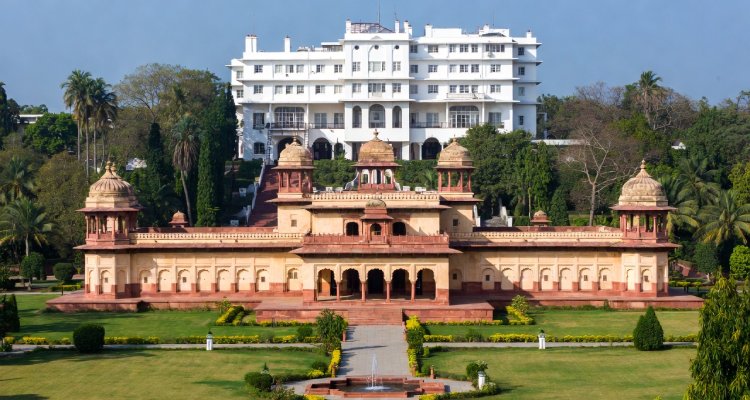
Explore India’s Presidential Retreats—Rashtrapati Nilayam in Hyderabad and the Retreat Building in Shimla—and their role in unity, governance, and history.
Introduction: When Governance Steps Into History
Every December, away from the formality of New Delhi and the towering dome of Rashtrapati Bhavan, the office of the President of India briefly relocates. It is not a retreat in the modern sense of escape, but a constitutional tradition rooted in history, symbolism, and national integration.
On December 22, President Droupadi Murmu concluded her customary winter sojourn at Rashtrapati Nilayam in Hyderabad, reaffirming a practice that predates independence yet remains deeply relevant to modern India. These Presidential Retreats—one in the north at Shimla and another in the south at Hyderabad—serve as living reminders that the Presidency is not confined to a single geography but belongs to the entire nation.
Context & Background: The Idea Behind Presidential Retreats
India has two official Presidential Retreats:
- The Retreat Building in Shimla (Himachal Pradesh)
- Rashtrapati Nilayam in Hyderabad (Telangana)
The President moves into these retreats at least once a year, with the core office of the Presidency shifting temporarily to these locations. This practice is not ceremonial alone—it carries constitutional and administrative weight.
The geographic placement of the retreats—one in the north and one in the south—symbolizes the integrative role of the President as the constitutional head of a diverse and federal nation. In a country shaped by regional identities, languages, and cultures, the retreats quietly reinforce a unifying idea: the Presidency represents every corner of India.
Main Developments: President Murmu’s Winter Sojourn
President Droupadi Murmu’s stay at Rashtrapati Nilayam began on December 17 and concluded on December 22, marking another chapter in this long-standing tradition. During such visits, official duties continue, files are processed, and meetings are held—underscoring that governance does not pause when the President changes location.
These visits also provide opportunities for engagement with local institutions, cultural spaces, and regional administrative setups, reinforcing the accessibility of the highest constitutional office.
Rashtrapati Nilayam, Hyderabad: A Southern Anchor of the Presidency
A Legacy from the Nizam Era
Located in Bolarum, Hyderabad, Rashtrapati Nilayam was originally constructed in 1860. After India gained independence, the property was taken over from the Nizam of Hyderabad and handed to the President’s Secretariat.
Spread across 90 acres, the estate is both stately and restrained. Unlike the expansive Rashtrapati Bhavan in New Delhi, Rashtrapati Nilayam is a single-storied structure with 11 rooms, designed more for functionality than grandeur.
Inside the Estate
The building houses several key spaces, including:
- A dining hall
- A cinema hall
- A darbar hall
- Morning and drawing rooms
The understated architecture reflects a colonial past while accommodating the modern requirements of the Presidency. Over time, the Nilayam has evolved into a symbol of southern India’s place within the national constitutional framework.
Image Alt Text: Rashtrapati Nilayam in Hyderabad surrounded by landscaped gardens and colonial-era architecture
The Retreat Building, Shimla: Governance in the Himalayas
A Hilltop Seat of Authority
Perched on the Mashobra hilltop, about 1,000 feet above Shimla’s Ridge, the Retreat Building is one of the most picturesque seats of governance in India. Originally constructed in 1850, it was taken over by the Viceroy in 1895, long before becoming a Presidential Retreat after independence.
With a plinth area of 10,628 square feet, the building blends architecture with nature, offering sweeping views of the surrounding Himalayan landscape.
A Rare Architectural Marvel
One of the most distinctive features of the Shimla retreat is its purely wooden structure, built using dhajji wall construction, a traditional earthquake-resistant technique. This makes the building not just historically significant but also architecturally unique.
Over the years, its design and setting have turned it into a major tourist attraction, even as it continues to function as a working seat of the Presidency during official stays.
Image Alt Text: The Retreat Building in Shimla nestled in the Himalayan hills with traditional wooden architecture
Expert Insight & Public Perception: More Than Symbolism
Constitutional scholars often view the Presidential Retreats as a subtle yet powerful reminder that the Indian state is decentralized in spirit, even when authority is centralized in function.
Former civil servants note that these retreats humanize the Presidency. By stepping outside New Delhi, the President reinforces a message of inclusivity and national cohesion—particularly important in a federal democracy where regional representation matters.
Public interest in these retreats has also grown, especially as parts of Rashtrapati Nilayam have been opened to visitors in recent years, allowing citizens to engage directly with spaces once considered distant symbols of power.
Impact & Implications: Why These Retreats Still Matter
The continued relevance of Presidential Retreats lies in their dual role:
- Administrative Continuity: Governance continues seamlessly during the President’s stay, reinforcing constitutional stability.
- National Integration: The retreats physically embody the idea that India’s leadership is not bound by one city or region.
In an era where symbolism often competes with spectacle, these retreats quietly assert a deeper truth—that unity is practiced, not proclaimed.
As India navigates complex political, social, and regional dynamics, such traditions offer continuity and reassurance.
Conclusion: Quiet Institutions, Enduring Meaning
Presidential Retreats may not dominate headlines, but their significance runs deep. From the plains of Hyderabad to the hills of Shimla, these spaces reflect India’s layered history, federal ethos, and commitment to unity in diversity.
President Droupadi Murmu’s recent stay at Rashtrapati Nilayam is a reminder that some of India’s most powerful democratic traditions operate without fanfare—steady, symbolic, and enduring.
This content is published for informational or entertainment purposes. Facts, opinions, or references may evolve over time, and readers are encouraged to verify details from reliable sources.