










ISRO Sets New Heavy-Lift Record as LVM3-M6 Places BlueBird Block-2 Into Orbit
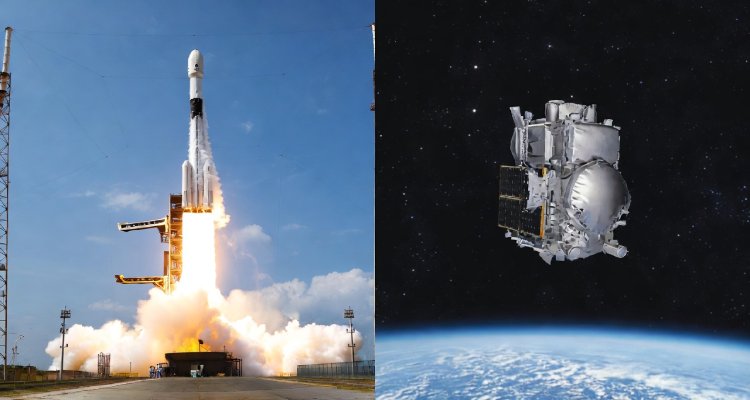
ISRO’s LVM3-M6 successfully launches the 6,100 kg BlueBird Block-2 satellite, marking the heaviest satellite ever launched from Indian soil.
Introduction: A New High-Water Mark for India’s Space Ambitions
On the morning of December 24, India’s space program crossed a defining threshold. As the 43.5-metre-tall Launch Vehicle Mark-3 (LVM3-M6) rose steadily from the second launch pad at Sriharikota at precisely 8:55 am, it carried more than just a satellite into space. The mission placed BlueBird Block-2, a massive 6,100-kilogram U.S. communication satellite, into orbit—making it the heaviest satellite ever launched from Indian soil.
The successful flight reinforced ISRO’s growing stature as a trusted global launch provider and underlined India’s expanding role in shaping the future of satellite-based communication.
Context & Background: From National Missions to Global Commerce
The LVM3, also known as GSLV-MkIII, has steadily evolved into ISRO’s workhorse for heavy-lift missions. Originally designed to support India’s most ambitious scientific and human spaceflight objectives, the rocket has built a formidable track record, completing eight consecutive successful missions.
In previous years, the vehicle launched landmark missions such as Chandrayaan-2 and Chandrayaan-3, which placed India among a select group of nations capable of advanced lunar exploration. It has also proven its reliability in the commercial sector by deploying two OneWeb missions, carrying a total of 72 satellites.
The December 24 mission, however, marked a shift in scale and significance. At 6,100 kg, BlueBird Block-2 surpassed the earlier weight record held by Communication Satellite-03, launched aboard LVM3-M5 in November at approximately 4,400 kg. This leap underscores how rapidly ISRO’s heavy-lift capabilities are maturing.
Main Developments: The Mission That Redefined Heavy-Lift Launches
A Precise 15-Minute Journey to Orbit
After liftoff, the LVM3-M6 executed a flawless ascent sequence. Two powerful S200 solid rocket boosters, developed by the Vikram Sarabhai Space Centre in Thiruvananthapuram, delivered the immense thrust required for liftoff. As the mission progressed, the rocket’s three-stage architecture—including a cryogenic upper stage designed by ISRO’s Liquid Propulsion Systems Centre—performed exactly as planned.
Roughly 15 minutes after launch, the BlueBird Block-2 satellite separated cleanly from the launch vehicle and was successfully placed into its intended orbit, confirming another textbook mission for ISRO’s heavy-lift platform.
A Commercial Mission With Global Reach
The launch was executed under a commercial agreement between NewSpace India Limited (NSIL)—ISRO’s commercial arm—and U.S.-based AST SpaceMobile (AST and Science, LLC). The deal highlights how India’s space ecosystem has expanded beyond government missions to become an integral player in the global satellite launch market.
For AST SpaceMobile, the mission was a critical step in deploying next-generation communication infrastructure. For India, it demonstrated that its launch systems can handle some of the world’s largest and most complex commercial satellites.
BlueBird Block-2: Redefining Satellite-Based Connectivity
Direct-to-Mobile Communication From Space
BlueBird Block-2 is part of a Low Earth Orbit (LEO) constellation designed to deliver direct-to-mobile connectivity. Unlike traditional satellite systems that require specialized terminals, this network aims to connect ordinary smartphones directly to satellites.
The technology is designed to support 4G and 5G voice calls, video streaming, text messaging, and broadband data, promising coverage “for everyone, everywhere, at all times.” If fully realized, it could dramatically change how mobile connectivity works in remote, underserved, and disaster-prone regions.
A Growing Global Network
According to AST SpaceMobile, the company launched five satellites—BlueBird 1 through 5—in September 2024, which currently provide continuous coverage across the United States and selected international regions. The company plans to deploy additional satellites to strengthen and expand its network and has already partnered with over 50 mobile operators worldwide.
The successful launch of BlueBird Block-2 aboard India’s LVM3 places ISRO at the center of this emerging global communications architecture.
Expert Insight & Public Reaction: A Vote of Confidence in ISRO
Within India’s scientific and aerospace community, the mission has been widely viewed as a validation of ISRO’s heavy-lift reliability. Industry observers note that commercial satellite operators increasingly value launch providers with consistent performance records, and LVM3’s unbroken success streak strengthens India’s position in this competitive market.
Public reaction has also been strongly positive, with many highlighting how missions like LVM3-M6 reflect India’s transition from a cost-effective launch option to a high-capability, high-confidence space partner. The fact that the heaviest satellite ever launched from Indian soil belonged to a foreign commercial operator further underscores international trust in ISRO’s systems.
Impact & Implications: What This Mission Means Going Forward
Strengthening India’s Commercial Space Footprint
The success of LVM3-M6 significantly boosts NSIL’s commercial credibility. As more global satellite companies seek reliable launch services for heavy payloads, India is increasingly positioned as an alternative to traditional launch providers.
This mission also aligns with India’s broader push to commercialize its space capabilities, attract foreign partnerships, and integrate private industry into the national space ecosystem.
Advancing Global Connectivity Goals
For AST SpaceMobile, the launch accelerates the rollout of a network designed to bridge connectivity gaps worldwide. If the constellation performs as intended, it could reshape how mobile services are delivered, particularly in regions where terrestrial infrastructure remains limited or unreliable.
The mission therefore represents not just a technical achievement, but a potential shift in how billions of people may access digital services in the future.
Conclusion: A Milestone That Signals India’s Space Future
The successful launch of BlueBird Block-2 aboard LVM3-M6 stands as one of ISRO’s most consequential achievements in recent years. By placing the heaviest satellite ever launched from Indian soil into orbit, ISRO demonstrated both technical excellence and commercial maturity.
As India prepares for future launches—from advanced scientific missions to expanded commercial partnerships—LVM3’s performance on December 24 sends a clear message: India is no longer just participating in the global space economy; it is helping shape its next phase.
The information presented in this article is based on publicly available sources, reports, and factual material available at the time of publication. While efforts are made to ensure accuracy, details may change as new information emerges. The content is provided for general informational purposes only, and readers are advised to verify facts independently where necessary.