







How Modern Life Turned Convenience Into a Burden
How modern convenience, from smartphones to automation, quietly increased mental load, burnout, and decision fatigue in everyday life.
Introduction: When Ease Starts to Feel Heavy
A grocery order arrives in ten minutes. A meeting happens without leaving the couch. A single tap pays bills, books tickets, and summons dinner. By every historical measure, modern life should feel easier than ever. Yet for millions, convenience has begun to feel less like liberation and more like a quiet weight—an invisible pressure that follows us everywhere.
The paradox of modern living is hard to ignore: the very tools designed to save time and effort now demand constant attention, decision-making, and emotional energy. What was meant to simplify life has, in many cases, complicated it.
Context & Background: The Rise of Frictionless Living
The pursuit of convenience is not new. From the washing machine to the microwave, each generation has embraced technologies that reduced physical labor. What changed in the last two decades is speed, scale, and saturation.
Smartphones, apps, cloud services, and algorithm-driven platforms didn’t just remove friction—they removed pauses. Tasks that once took hours now take seconds, but they also multiplied. Email replaced letters, then multiplied into inboxes, notifications, and instant replies. Shopping shifted online, but now requires tracking deliveries, managing returns, and navigating endless choices.
Sociologists describe this as the transition from labor-saving convenience to cognitive convenience—tools that reduce effort but increase mental load.
Main Developments: Why Convenience Became Exhausting
1. Decision Fatigue in an Always-On World
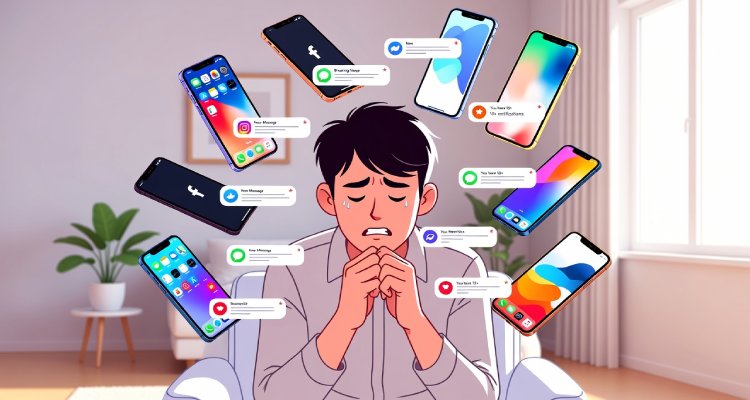
Convenience offers options—too many of them. Streaming platforms ask what to watch. Food apps ask what to eat. Social platforms ask what to say, like, or ignore. Each choice is small, but together they drain attention.
Psychologists call this decision fatigue, a state where constant micro-decisions reduce focus and emotional resilience. Instead of freeing the mind, convenience keeps it perpetually engaged.
2. The Tyranny of Instant Availability
Modern tools promise speed, but they also create expectations. Fast replies become normal. Delays feel like negligence. Work messages bleed into personal time, and personal notifications interrupt rest.
What was once optional becomes obligatory. Convenience shifts from a benefit to a baseline requirement.
3. Automation Without Relief
Automation was meant to give time back. Instead, saved time is often reinvested into more tasks. Calendars fill. Side hustles appear. Productivity metrics rise, but rest does not.
Economists note that efficiency gains rarely translate into leisure unless societies deliberately protect downtime. Without boundaries, convenience simply accelerates the pace of life.
Expert Insight: What Researchers Are Saying
Dr. Linda Stone, a former researcher at Microsoft, coined the term “continuous partial attention”—a mental state where people constantly monitor multiple streams of information without fully engaging in any. According to Stone, this state is exhausting because the brain never fully rests.
Meanwhile, behavioral economist Daniel Kahneman has long warned that humans are poorly equipped to handle environments with endless choices and constant stimuli. Convenience amplifies this mismatch between ancient cognitive wiring and modern digital life.
Public sentiment reflects these findings. Surveys across developed economies show rising reports of burnout, digital fatigue, and a desire for “simpler living”—even as people continue using convenience technologies daily.
Impact & Implications: Who Pays the Price?
Individuals
Mental overload, reduced attention spans, sleep disruption, and anxiety are increasingly linked to hyper-convenient digital lifestyles. Convenience saves time, but often steals presence.
Workplaces
Always-available tools blur boundaries, increasing burnout risk. Companies now face productivity losses tied not to inefficiency, but to exhaustion.
Society
When convenience becomes compulsory, opting out feels like falling behind. Those who resist digital acceleration—often older adults or marginalized groups—risk exclusion.
The Economy
Ironically, entire industries now exist to help people recover from convenience: digital detox retreats, mindfulness apps, and productivity coaches.
What Happens Next: Rethinking Ease
A growing countertrend is emerging—intentional friction. Some apps limit notifications by default. Devices promote screen-time awareness. Consumers seek slower experiences, from long-form content to offline hobbies.
The future of convenience may not be about doing everything faster, but about choosing what deserves speed—and what deserves space.
Conclusion: Choosing Convenience, Not Carrying It
Convenience itself is not the enemy. It has saved lives, expanded access, and reshaped opportunity. The burden arises when convenience stops being a choice and becomes an obligation.
Modern life didn’t fail by making things easy—it failed by making everything easy, all the time. The challenge ahead is not rejecting convenience, but reclaiming control over it.
True progress may lie not in removing every obstacle, but in deciding which ones are worth keeping.
The information presented in this article is based on publicly available sources, reports, and factual material available at the time of publication. While efforts are made to ensure accuracy, details may change as new information emerges. The content is provided for general informational purposes only, and readers are advised to verify facts independently where necessary.