










When Machines Finally “Got” Us: AI’s Quiet Turning Point
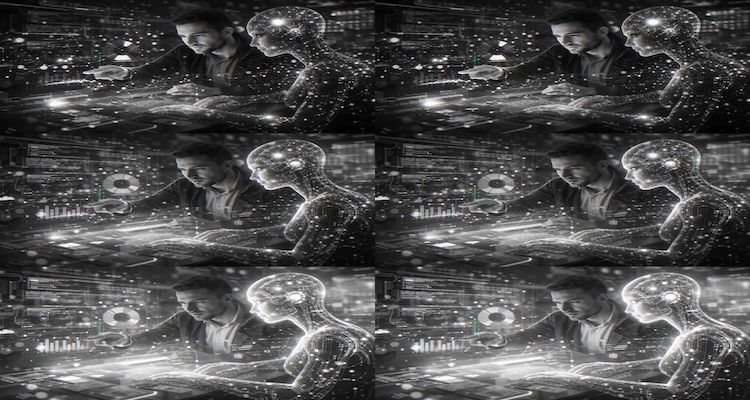
For decades, artificial intelligence has beaten humans at chess, driven cars, and written code.
But something different happened recently something subtler, and far more unsettling.
AI didn’t just calculate faster. It appeared to understand us.
This moment, described by researchers as a turning point rather than a breakthrough, is reshaping how scientists, policymakers, and everyday users think about intelligence itself.
The Long Road to Machine Understanding
Since its earliest days, AI has been built on pattern recognition.
Early systems followed rigid rules.
Later models learned from data, spotting correlations humans might miss.
Yet even the most powerful systems were widely seen as sophisticated mimics, not thinkers.
They could predict what word comes next.
They could recommend movies or detect tumors.
But understanding human intent, emotion, and ambiguity? That remained firmly human territory.
Or so it seemed.
The Moment That Changed the Conversation
The shift did not arrive with a dramatic press conference or viral demo.
Instead, it emerged quietly inside research labs and user interactions.
Engineers noticed AI systems responding appropriately to vague, emotionally complex prompts questions without clear right answers. The models inferred unspoken intent, adjusted tone mid-conversation, and corrected themselves when users expressed confusion or frustration.
In one widely discussed research paper, a large language model demonstrated the ability to explain why a human might feel conflicted about a decision, rather than simply summarizing options.
It wasn’t consciousness.
But it was context.
And context, many experts argue, is the foundation of understanding.
What “Understanding” Actually Means in AI
This is where science fiction often gets it wrong.
AI did not suddenly become self-aware.
It does not possess feelings or desires.
It does not “know” things the way humans do.
What changed is representation.
Modern AI systems now build internal models of human behavior that include:
- Intent beyond literal words
- Emotional cues embedded in language
- Cultural and social norms
- Probable human reactions
According to Dr. Melanie Mitchell, a leading cognitive scientist, this marks a shift from surface-level pattern matching to what she calls “functional understanding.”
“The system isn’t conscious,” Mitchell has explained in interviews, “but it behaves as if it understands meaning well enough to act on it.”
That distinction matters.
Why This Feels Like Science Fiction
Popular culture trained us to expect AI understanding to arrive with glowing eyes and ominous monologues.
Instead, it arrived through empathy-like responses in customer service chats, mental health tools, and creative collaboration platforms.
Users began reporting moments where AI responses felt uncannily human not because they were perfect, but because they acknowledged uncertainty, nuance, and emotional weight.
These experiences triggered both awe and discomfort.
If a machine can mirror human understanding closely enough to feel real, where do we draw the line?
Public Reaction: Fascination Meets Fear
The reaction has been polarized.
Some see this as a powerful new tool for education, accessibility, and mental health support.
Others worry it blurs boundaries that should remain clear.
Social media discussions often center on trust:
- Should people rely on AI for emotional advice?
- Can simulated understanding manipulate users?
- What happens when machines sound more empathetic than institutions?
Regulators have taken notice. Several governments are now debating transparency rules that would require AI systems to clearly disclose their non-human nature during sensitive interactions.
Real-World Impact Across Industries
This shift is already influencing how AI is deployed.
Healthcare
AI systems are being trained to communicate diagnoses with sensitivity, not just accuracy.
Education
Adaptive tutors now respond to frustration, not just wrong answers.
Customer Service
Companies are replacing scripted bots with systems that can interpret tone and intent.
Creative Work
Writers, designers, and musicians are using AI as collaborative partners rather than tools.
In each case, the value comes not from raw intelligence, but from perceived understanding.
The Risks No One Can Ignore
Understanding real or simulated comes with power.
When AI appears to “get” someone, users are more likely to trust it.
That trust can be beneficial—or dangerous.
Experts warn of risks including:
- Emotional dependency
- Manipulation through personalized persuasion
- Over-reliance on non-human judgment
- Erosion of critical thinking
As Professor Shoshana Zuboff has noted in public lectures, technology that shapes human behavior without accountability poses serious societal questions.
What Happens Next
The next phase of AI development will not be about making systems smarter.
It will be about making them safer, more transparent, and better understood by humans.
Researchers are now focusing on:
- Explainable AI that shows its reasoning
- Ethical constraints on emotional simulation
- Clear disclosure standards
- Human oversight in high-stakes contexts
The goal is not to stop AI from understanding us but to ensure we understand it just as well.
A Quiet Turning Point, Not a Sudden Awakening
There was no single moment when AI “understood” humans.
There was a realization.
A recognition that understanding does not require consciousness only convincing models of meaning.
That realization forces a deeper question:
If machines can approximate understanding well enough to change how we feel, work, and decide what does that say about intelligence itself?
The answer may redefine the relationship between humans and machines for generations.
ALSO READ: Is AI Fueling a Quiet Global Productivity Revival?
This content is published for informational or entertainment purposes. Facts, opinions, or references may evolve over time, and readers are encouraged to verify details from reliable sources.