










What Schools Never Teach About How Humans Actually Learn
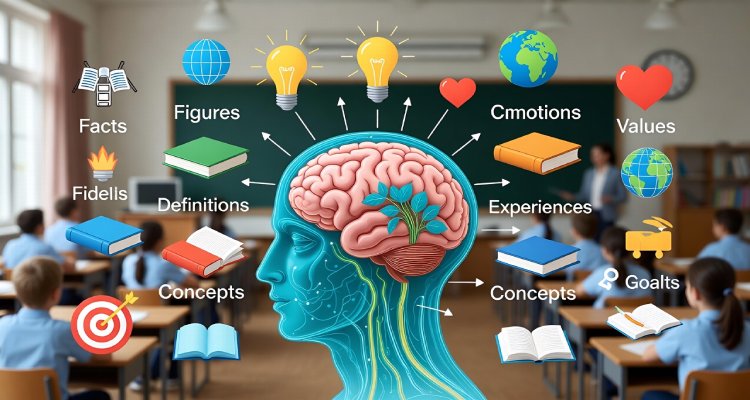
What schools miss about real learning. How neuroscience reveals why memorization fails—and what actually helps humans learn deeply and effectively.
Introduction: The Missing Lesson in Every Classroom
For more than a century, schools around the world have followed a familiar formula: lectures, textbooks, homework, exams. Students are rewarded for memorization, speed, and compliance. Yet despite decades of schooling, many graduates struggle to retain knowledge, apply concepts in real life, or adapt to new challenges.
The uncomfortable truth is this: formal education often teaches what to learn, but rarely teaches how humans actually learn. Modern neuroscience, cognitive psychology, and behavioral science now reveal that learning is far messier, more emotional, and more context-driven than classrooms acknowledge. The gap between how schools teach and how brains learn has never been more evident.
Context & Background: Where the System Went Wrong
Modern schooling systems were largely designed during the Industrial Revolution. Their goal was efficiency—training large groups of students with standardized content, uniform pacing, and measurable outcomes. This factory-style model prioritized order and predictability over curiosity and individual cognition.
At the time, little was known about the brain. Learning was assumed to be linear: listen, repeat, remember. Intelligence was treated as fixed. Mistakes were penalized, not studied.
Fast forward to the 21st century. Brain imaging, long-term memory research, and learning science now show that human learning is non-linear, emotional, social, and deeply personal. Yet classrooms remain anchored to outdated assumptions—often measuring short-term recall rather than deep understanding.
Main Developments: What Science Says About Real Learning
1. Learning Is Driven by Emotion, Not Just Information
Contrary to traditional belief, the brain does not prioritize facts. It prioritizes emotionally relevant experiences. Stress, fear, boredom, and anxiety actively block learning, while curiosity, safety, and meaning accelerate it.
When students are afraid of failure or judgment, their brains shift into survival mode. In this state, memory formation weakens. Yet many classrooms rely on fear-based motivators—grades, rankings, punishment—without realizing the neurological cost.
2. Memory Is Built Through Struggle, Not Ease
Schools often equate smooth performance with mastery. In reality, desirable difficulty—making mistakes, revisiting confusion, and struggling with ideas—creates stronger neural connections.
Cramming before exams produces short-term results but weak long-term retention. Spaced repetition, retrieval practice, and reflection—rarely emphasized in schools—are far more effective for durable learning.
3. Understanding Comes Before Memorization
Most classrooms reverse the natural learning order. Students are asked to memorize formulas, dates, or definitions before understanding their purpose. Cognitive research shows the opposite works better: meaning first, details later.
Humans learn best when new information connects to prior knowledge, real-world relevance, or personal experience. Without context, facts fade quickly.
4. Learning Is Social and Observational
Humans evolved as social learners. We learn by watching, imitating, questioning, and discussing. Yet traditional education often isolates learners—silent classrooms, individual testing, limited collaboration.
Discussion, peer explanation, and teaching others are among the most powerful learning tools, yet they are underused or undervalued in formal assessment systems.
Expert Insight & Public Reaction: A Growing Wake-Up Call
Cognitive scientists and educators increasingly warn that the mismatch between schooling and learning science is widening. Many argue that schools reward performance, not understanding.
Parents, too, are questioning why children who excel in exams struggle with problem-solving, creativity, or emotional resilience. Employers report that graduates often lack adaptability, critical thinking, and learning agility—skills essential in a rapidly changing economy.
The rise of alternative education models, online learning platforms, and self-directed learning communities reflects a broader realization: learning does not end at graduation, and it cannot rely on memorization alone.
Impact & Implications: What Happens If Nothing Changes?
If education systems continue ignoring how humans actually learn, the consequences extend beyond classrooms.
- Students may internalize failure, believing they are “bad learners” rather than victims of poor learning design.
- Workforces may struggle to reskill as technology evolves faster than traditional education adapts.
- Societies risk producing compliant test-takers instead of creative problem-solvers and informed citizens.
On the other hand, aligning education with learning science could transform outcomes—fostering lifelong learners who are curious, resilient, and capable of navigating uncertainty.
Conclusion: The Lesson Schools Can No Longer Ignore
The most important lesson missing from schools is simple yet profound: learning is not about obedience or recall—it is about meaning, struggle, connection, and growth.
As neuroscience continues to reveal how learning truly works, the challenge is no longer lack of knowledge but lack of will. Until classrooms embrace how humans actually learn, students will continue to succeed on paper while failing to thrive in reality.
Education’s future depends not on more content, but on deeper understanding—of the mind, the brain, and the learner behind the desk.
The information presented in this article is based on publicly available sources, reports, and factual material available at the time of publication. While efforts are made to ensure accuracy, details may change as new information emerges. The content is provided for general informational purposes only, and readers are advised to verify facts independently where necessary.