









Understanding the OSCE: Insights from the 32nd Ministerial Council in Vienna
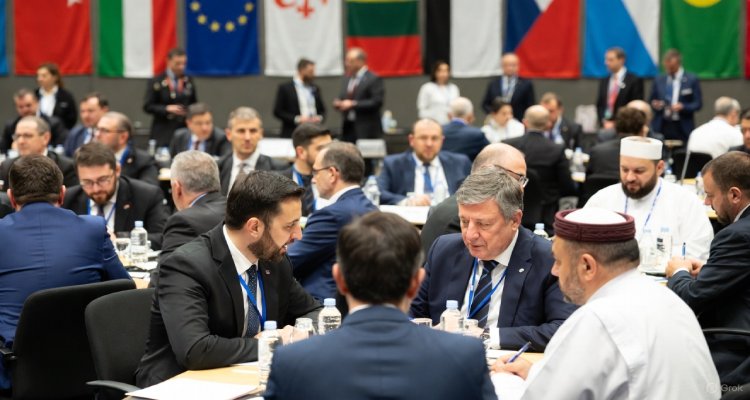
The OSCE’s 32nd Ministerial Council in Vienna reviewed security challenges, highlighting the organization’s role in fostering peace, stability, and democracy across 57 states.
Introduction: A Global Forum for Security and Cooperation
In an increasingly interconnected world, regional security organizations play a critical role in maintaining peace and stability. The Organisation for Security and Co-operation in Europe (OSCE), the world’s largest regional security forum, recently convened its 32nd Ministerial Council in Vienna on December 5. Chaired by Finland, the event drew more than 1,200 participants, highlighting the continued importance of dialogue, cooperation, and conflict prevention across the OSCE’s 57 participating States spanning North America, Europe, and Asia.
Context & Background: The OSCE’s Origins and Mission
The OSCE traces its roots to the early 1970s, emerging from the Helsinki Final Act of 1975 and the Conference on Security and Co-operation in Europe (CSCE). During the Cold War, the CSCE served as a rare platform for dialogue between East and West. The Helsinki Final Act laid out commitments on politico-military cooperation, economic and environmental issues, and human rights, establishing ten core principles—known as the ‘Decalogue’—guiding the behavior of States toward each other and their citizens.
In 1994, the CSCE was renamed the OSCE, formalizing its role as a regional security powerhouse. Today, the OSCE engages in a wide array of initiatives to foster stability, peace, and democracy for over a billion people. Its work spans three dimensions:
- Politico-Military Dimension – Focused on arms control, military transparency, and conflict prevention.
- Economic and Environmental Dimension – Promoting sustainable development, natural resource management, and climate-security initiatives.
- Human Dimension – Upholding human rights, democracy, and the rule of law.
Main Developments: Highlights from the 32nd Ministerial Council
The Ministerial Council serves as the OSCE’s annual platform to review activities and set strategic priorities. This year, Finland’s leadership underscored the importance of collaborative approaches to emerging security threats, including geopolitical tensions, terrorism, and energy security.
Discussions also focused on the OSCE’s field operations, which implement projects directly impacting communities, ranging from post-conflict rehabilitation to initiatives supporting media freedom and minority rights. By integrating diplomatic dialogue with on-the-ground action, the OSCE aims to bridge differences, build trust, and foster cooperation between States.
Expert Insight: The Value of Multilateral Engagement
Dr. Elena Fischer, an international security analyst at the Vienna Institute for International Studies, noted, “The OSCE’s strength lies in its comprehensive approach to security. It doesn’t just address military threats—it also tackles human rights, governance, and environmental issues, which are all increasingly recognized as central to stability.”
Public sentiment also highlights the OSCE’s role as a stabilizing force. Citizens and policymakers alike view its work on democratic development, media freedom, and conflict prevention as vital in a period of heightened global uncertainty.
Institutions Driving Specialized Work
Three OSCE institutions provide targeted support for key areas:
- Office for Democratic Institutions and Human Rights (ODIHR) – Based in Warsaw, ODIHR promotes elections observation, rule of law, and the rights of minority communities, including Roma and Sinti populations.
- Representative on Freedom of the Media – Based in Vienna, this office monitors media developments, ensuring early warning against violations of freedom of expression.
- High Commissioner on National Minorities – Operating from The Hague, this office uses diplomacy to defuse ethnic tensions and prevent conflicts from escalating.
These institutions exemplify the OSCE’s holistic approach to security, blending diplomacy, technical expertise, and early action to maintain regional stability.
Impact & Implications: What Comes Next
The outcomes of the Ministerial Council have implications for governments, civil society, and regional security frameworks. As geopolitical tensions persist across Europe and Asia, the OSCE’s conflict prevention mechanisms, arms control expertise, and human rights monitoring remain critical tools for sustaining peace.
Furthermore, the Council’s discussions underscore the need for collaborative responses to contemporary challenges like climate-security risks, migration pressures, and digital threats. By fostering dialogue and implementing projects on the ground, the OSCE ensures that security is not only a matter of state relations but also of individual well-being.
Conclusion: A Pillar of Regional Stability
From its Cold War origins to its current role as a multifaceted security organization, the OSCE continues to demonstrate the power of cooperation and dialogue. The 32nd Ministerial Council in Vienna reaffirmed its mission: to build trust, prevent conflict, and promote democracy and human rights across a region encompassing more than one billion people. As global security dynamics evolve, the OSCE’s work remains a vital anchor for stability, bridging divides and safeguarding the interests of communities across continents.
Disclaimer: This article is intended for informational and educational purposes only. The content is based on publicly available information about the Organisation for Security and Co-operation in Europe (OSCE) and its 32nd Ministerial Council. While every effort has been made to ensure accuracy, the publisher does not guarantee the completeness, reliability, or suitability of the information. Readers should independently verify facts before making any decisions based on this content.
No matter if some one searches for his vital thing, thus he/she wants to be available that in detail, therefore that thing is maintained over here.