










UN General Assembly Approves $3.45 Billion Regular Budget for 2026
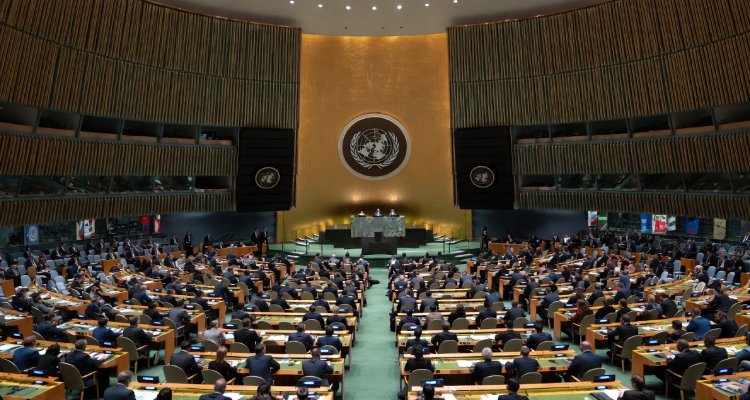
UN General Assembly approves a $3.45 billion regular budget for 2026, balancing reform goals under UN80 with funding for peace, development, and human rights.
Introduction: A Budget Vote at a Turning Point for the United Nations
At a time when global diplomacy is under unprecedented strain—from protracted conflicts and humanitarian crises to climate shocks and institutional reform pressures—the United Nations has locked in its financial blueprint for the year ahead. On December 30, the UN General Assembly approved a $3.45 billion regular budget for 2026, concluding weeks of intensive negotiations among its 193 Member States.
The decision is more than a routine fiscal exercise. It reflects a delicate balancing act between financial restraint and the growing expectations placed on the world’s most inclusive multilateral institution. Coming amid the rollout of the UN80 reform initiative, the approved budget signals both continuity and recalibration in how the UN funds its core mission.
Context & Background: Why the 2026 Budget Matters
The UN’s regular budget is the financial backbone of the organisation. Unlike peacekeeping operations—which are funded separately—the regular budget supports the core administrative and operational machinery that allows the UN to function on a daily basis.
For 2026, the General Assembly authorised $3.45 billion, a figure that is:
- Roughly $200 million higher than the Secretary-General’s proposal prepared under the UN80 reform framework
- Approximately 7 per cent lower than the UN’s approved regular budget for 2025
This reduction reflects sustained pressure from Member States to curb spending, improve efficiency, and modernise internal systems—central goals of the UN80 initiative, which aims to make the organisation more agile, transparent, and results-driven as it approaches its 80th anniversary.
Yet the final figure also underscores political reality: many governments agreed that deeper cuts could risk undermining the UN’s ability to deliver on its mandate at a time of rising global instability.
Main Developments: What the Budget Covers and Why It Counts
Funding the UN’s Three Core Pillars
The 2026 regular budget will finance activities across the UN’s three foundational pillars:
- Peace and Security – including special political missions and support to conflict prevention efforts
- Sustainable Development – coordination, policy work, and implementation support for global development goals
- Human Rights – oversight, monitoring, and institutional backing for rights-based initiatives
The funding also covers essential operations of key UN bodies, including:
- The General Assembly
- The Security Council
- The UN Secretariat
- The International Court of Justice
- Human rights entities and special political missions
Unlike many international organisations, the UN operates on a calendar-year budget cycle, running from January 1 to December 31. This regular budget is distinct from the UN peacekeeping budget, which follows a separate July-to-June fiscal year.
Negotiated by Consensus, Approved by All
Most UN budget decisions are adopted by consensus, and the 2026 budget was no exception. When votes do occur—rare but significant—they require a two-thirds majority of Member States present and voting, with each country holding one vote regardless of size or wealth.
The approval on December 30 marked the end of one of the most closely watched Fifth Committee negotiations in recent years, reflecting both fiscal caution and political compromise.
Where Does the UN Get Its Money?
The UN’s regular budget is funded almost entirely by its 193 Member States, assessed according to their capacity to pay.
How Assessments Are Calculated
Every three years, the General Assembly sets a scale of assessments based on a complex formula that includes:
- The size of a country’s economy
- Income per capita
- External debt burden
- Level of development
Under this system:
- The highest assessment rate is 22 per cent of the total budget
- The lowest rate is 0.001 per cent, paid by the least developed countries
This structure is designed to balance fairness with financial sustainability, ensuring that wealthier nations shoulder a larger share while protecting poorer states from disproportionate burden.
What Happens If a Country Doesn’t Pay?
Failure to pay UN dues carries real consequences.
If a Member State’s arrears equal or exceed the amount it was assessed to pay for the previous two full years, it loses its vote in the General Assembly. Voting rights can only be restored if:
- The country reduces its arrears below the two-year threshold, or
- The General Assembly makes a special exemption decision
This rule acts as a powerful incentive for countries to stay current on their financial obligations, reinforcing the collective responsibility that underpins the UN system.
Expert Insight and Institutional Perspective
Budget experts and diplomats familiar with Fifth Committee negotiations describe the 2026 outcome as a “pragmatic compromise.” While many Member States pushed for sharper reductions in line with UN80 reforms, others warned that excessive austerity could weaken the organisation’s effectiveness.
Within UN circles, the modest increase over the Secretary-General’s proposal is seen as recognition that reform requires investment, not just cuts—particularly in areas such as digital systems, oversight, and internal coordination.
Public sentiment among diplomats has largely framed the agreement as a signal of continued—if cautious—commitment to multilateralism at a time when geopolitical divisions remain deep.
The Role of the Fifth Committee
The budget’s journey runs through the Fifth Committee, the General Assembly’s primary forum for administrative and financial matters.
Other Main General Assembly Committees
- First Committee – Disarmament and International Security
- Second Committee – Economic and Financial Affairs
- Third Committee – Social, Humanitarian, and Cultural Issues
- Fourth Committee – Special Political and Decolonization
- Fifth Committee – Administrative and Budgetary
- Sixth Committee – Legal Matters
Each committee plays a distinct role, but the Fifth Committee remains the financial engine room of the UN system.
Impact & Implications: What Happens Next?
The approval of the 2026 regular budget provides operational certainty—but it also sets the stage for continued debate.
- For the UN Secretariat, the lower overall budget means tighter prioritisation and efficiency gains will remain unavoidable.
- For Member States, especially major contributors, the outcome reinforces demands for measurable reform outcomes under UN80.
- For global stakeholders, the decision ensures continuity in the UN’s core functions, even as external expectations continue to rise.
As the UN navigates geopolitical fragmentation, funding constraints, and reform pressures, future budget negotiations are likely to become even more politically charged.
Conclusion: A Leaner Budget, a Heavier Mandate
The General Assembly’s approval of a $3.45 billion regular budget for 2026 underscores the evolving reality of multilateral governance. The UN is being asked to do more—with less—while simultaneously reforming itself from within.
Though smaller than last year’s allocation, the budget preserves the organisation’s ability to support peace, development, and human rights worldwide. Whether the UN80 reform initiative delivers the efficiency and trust Member States seek will shape not only future budgets, but the credibility of the UN itself in a rapidly changing world.
The information presented in this article is based on publicly available sources, reports, and factual material available at the time of publication. While efforts are made to ensure accuracy, details may change as new information emerges. The content is provided for general informational purposes only, and readers are advised to verify facts independently where necessary.