








Trump Opens Door to Nvidia AI Chip Sales to China
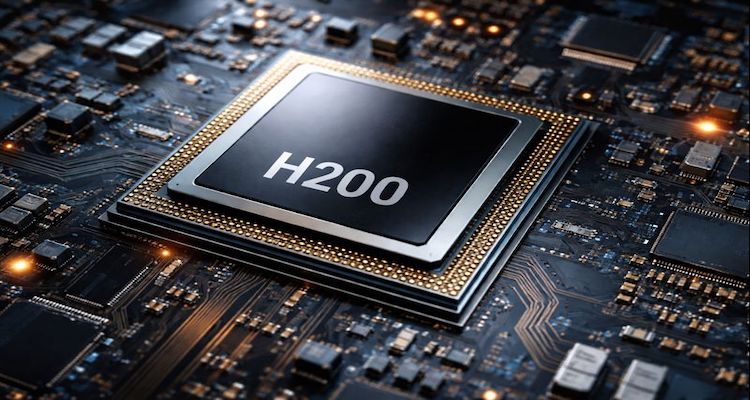
The Trump administration begins reviewing licenses that could allow Nvidia’s H200 AI chips to be sold to China, reigniting debate over tech, trade, and security.
A Controversial Shift in U.S. Tech Policy
The Trump administration has quietly set in motion a regulatory process that could reshape the global artificial intelligence landscape. For the first time, U.S. officials are actively reviewing whether Nvidia’s powerful H200 artificial intelligence chips can be shipped to China, an outcome that would mark a significant break from years of strict export controls aimed at limiting Beijing’s access to advanced American technology.
The move follows President Donald Trump’s recent pledge to permit such sales under a new framework that would impose a hefty government fee, while still claiming to protect U.S. strategic interests. The decision has reopened a fierce debate in Washington over whether economic competitiveness or national security should take priority in the race for AI dominance.
Why Nvidia’s H200 Matters
Nvidia sits at the center of the global AI boom. Its chips power everything from data centers and cloud computing platforms to advanced research in machine learning. The H200 chip, while no longer Nvidia’s most advanced product, remains one of the industry’s most capable AI processors and is widely used by major technology firms.
Until now, the H200 has been off-limits to Chinese buyers. U.S. export restrictions imposed in recent years were designed to prevent advanced American semiconductors from being used to strengthen China’s military or surveillance capabilities. Those controls intensified during Trump’s first term, when his administration aggressively targeted Chinese access to U.S. technology, citing concerns over intellectual property theft and military modernization, allegations Beijing has consistently denied.
Despite being surpassed by Nvidia’s latest Blackwell chips, the H200 is still considered a high-performance processor. Allowing it into the Chinese market would represent a notable easing of restrictions that have defined U.S.-China tech relations for much of the past decade.
Inside the Licensing Review
According to multiple sources familiar with the process, the U.S. Commerce Department has formally begun circulating export license applications for Nvidia’s H200 chips among key federal agencies, including the Departments of State, Energy, and Defense. These agencies now have up to 30 days to assess the potential risks and benefits of approving the shipments.
If disagreements arise among officials, the final decision would land on President Trump’s desk.
This inter-agency review marks the first concrete step toward fulfilling Trump’s promise to allow the controversial sales. Earlier this month, the president said his administration would permit Nvidia to sell H200 chips to China in exchange for a 25% fee paid to the U.S. government. Trump argued the policy would strengthen American companies by reducing Chinese reliance on domestically produced chips and keeping U.S. firms ahead of their global rivals.
The review process itself has not been publicly disclosed until now. Neither the Commerce Department nor Nvidia has offered immediate comment, while the White House declined to address the specifics of the review. A spokesperson reiterated only that the administration remains focused on preserving U.S. leadership in technology without undermining national security.
Demand From China Is Rising
The timing of the review is significant. Just days earlier, reports indicated that Nvidia was weighing whether to boost production of the H200 chip after early orders from Chinese buyers reportedly exceeded existing manufacturing capacity. While those orders remain contingent on U.S. approval, they highlight the scale of pent-up demand in China for advanced AI hardware.
For Nvidia, China represents a massive market that has largely been closed off due to export rules. Even limited access could translate into billions of dollars in revenue and help the company maintain its commanding position in the global semiconductor industry.
Expert Insight & Political Backlash
Not everyone in Washington is convinced the policy shift is wise. Lawmakers and national security experts across party lines have warned that advanced AI chips could accelerate China’s military capabilities, from autonomous weapons systems to intelligence analysis.
Critics argue that even chips less powerful than Nvidia’s latest models could still provide China with a significant boost at a time when artificial intelligence is increasingly intertwined with defense strategy.
Inside the administration, however, some senior officials see the issue differently. Led by White House AI adviser David Sacks, proponents of the move contend that controlled sales of U.S. chips could actually slow China’s technological progress. Their argument is that access to Nvidia’s hardware reduces the incentive for Chinese firms, such as Huawei to pour resources into developing domestic alternatives that could eventually rival American designs.
From this perspective, selective exports are seen not as a concession, but as a way to entrench U.S. dominance in the global AI ecosystem.
A Turning Point in AI Geopolitics
If approved, the H200 shipments would signal a dramatic recalibration of U.S. technology policy toward China. It would also underscore how economic competition in artificial intelligence is forcing policymakers to reconsider long-standing assumptions about containment and decoupling.
For U.S. companies, the decision could open new revenue streams and reinforce America’s role as the world’s leading supplier of AI infrastructure. For China, it would provide access to proven technology at a critical moment, even as domestic chipmakers race to close the gap with Western rivals.
The move could also influence how future export controls are designed, shifting from blanket bans to more targeted, transactional approaches that balance security concerns with commercial interests.
Balancing Power, Profit, and Security
The Trump administration’s review of Nvidia’s H200 chip exports reflects the growing complexity of governing artificial intelligence in a deeply interconnected world. What once seemed like a clear-cut case for restriction has evolved into a nuanced debate over leverage, competition, and long-term strategy.
As the inter-agency process unfolds, the decision will be closely watched not just in Washington and Beijing, but across the global tech industry. Whether the outcome strengthens U.S. leadership or creates new risks will likely shape AI policy discussions for years to come.
(Disclaimer: This article is based on verified reporting and publicly available information. All facts, statements, and attributions reflect the latest known developments at the time of publication.)
ALSO READ: Inside the Secret Network Your Phone Contacts Without Permission