







The Spiritual Meaning Behind Jal Abhishek Rituals
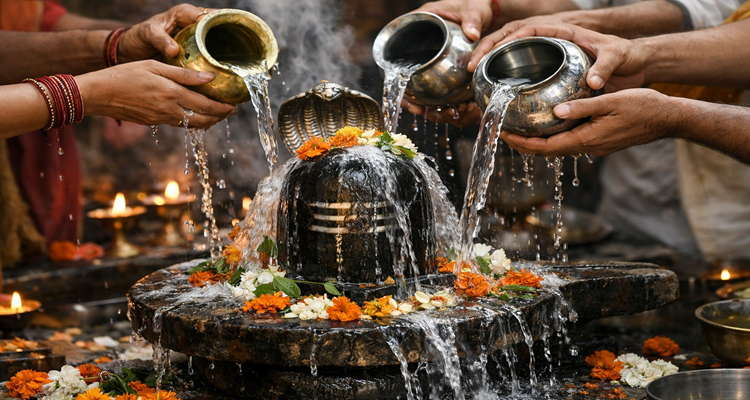
One of the most recognizable rituals in Hindu temples is the ceremonial pouring of water over the Shiva Lingam. Known as Jal Abhishek, the practice is especially common during the sacred month of Shravan.
While many devotees perform the ritual as an act of faith, its origins lie in a dramatic mythological story that connects devotion with cosmic preservation.
The Ritual Explained
Jal Abhishek involves offering water, milk, or other sacred liquids to a Shiva Lingam while chanting prayers or mantras.
The act symbolizes purification, gratitude, and surrender to divine energy.
Devotees often accompany the offering with sacred items such as flowers, sandalwood paste, rice grains, and herbs.
Each item carries symbolic meaning representing purity and devotion.
Mythological Origins
The ritual is linked to an ancient story involving the churning of the cosmic ocean.
During this event, a powerful poison emerged that threatened to destroy the universe.
To prevent catastrophe, Shiva consumed the poison and held it in his throat, which turned blue from its intensity.
The act saved creation but caused immense internal heat and discomfort.
Cooling the Divine
According to tradition, gods and sages poured water over Shiva to cool the burning effect of the poison.
This act of compassion eventually evolved into the ritual practiced today.
The pouring of water during Jal Abhishek symbolizes relief, gratitude, and reverence for Shiva’s sacrifice.
Sacred Offerings in the Ritual
Various substances are traditionally offered during the ritual.
These include:
- Milk, representing purity and nourishment
- Honey, symbolizing sweetness and harmony
- Sandalwood paste, used for its cooling properties
- Sacred herbs and flowers, associated with Shiva worship
Each offering reflects the devotee’s intention to honor the divine presence.
Importance During Shravan
Although Jal Abhishek can be performed year-round, it holds special significance during the month of Shravan.
Many scriptures emphasize that spiritual practices during this period carry greater merit.
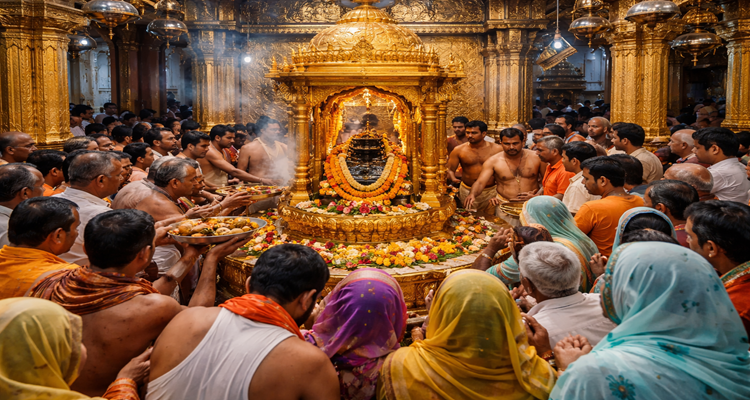
As a result, temples often see a dramatic rise in worshippers during these weeks.
Pilgrims frequently travel long distances to perform the ritual at sacred Shiva temples.
A Meditation in Motion
Beyond ritual symbolism, Jal Abhishek can also be understood as a meditative practice.
The rhythmic act of pouring water, combined with mantra chanting, helps focus the mind.
For many devotees, the ritual becomes a moment of inner reflection and spiritual connection.
Real-World Impact
Today, the ritual continues to play a central role in temple life across India and the global Hindu diaspora.
It brings together communities, strengthens cultural identity, and preserves ancient spiritual traditions.
Even individuals unable to visit temples often perform the ritual at home altars.
Conclusion
Jal Abhishek represents more than a religious custom.
It embodies a story of compassion, sacrifice, and gratitude that lies at the heart of Shiva worship.
Through this simple yet powerful ritual, devotees continue to express reverence for a divine act that, according to mythology, once saved the universe.
This content is published for informational or entertainment purposes. Facts, opinions, or references may evolve over time, and readers are encouraged to verify details from reliable sources.