








The Global Economy’s Most Valuable Asset Isn’t Money Anymore
The global economy’s most valuable asset is no longer money. Discover why trust, data, and human knowledge now define economic power worldwide.
Introduction: A Quiet Shift Reshaping the World Economy
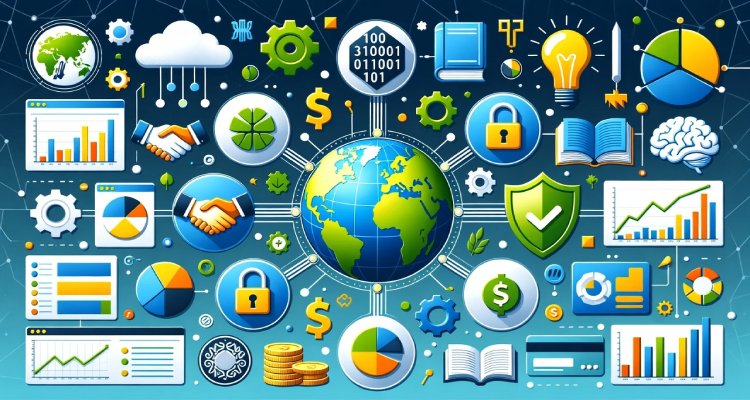
For centuries, money has been the ultimate measure of power in the global economy. Nations amassed gold reserves, corporations chased capital, and individuals equated wealth with financial security. But in today’s interconnected, digital-first world, a quieter yet far more transformative shift is underway. The most valuable asset driving global economic power is no longer money—it is trust, data, and human knowledge.
From financial markets reacting instantly to information, to companies valued more for their intellectual capital than their physical assets, the rules of economic dominance are being rewritten. The question is no longer who has the most money, but who controls information, credibility, and innovation.
Context & Background: From Capital to Capability
Historically, economic strength was tied directly to tangible resources—land, labor, and capital. The Industrial Revolution elevated machinery and manufacturing, while the post-war era rewarded nations with financial muscle and natural resources.
However, the digital revolution has dismantled these traditional hierarchies. Today’s largest companies own fewer factories, less real estate, and minimal physical inventory compared to their predecessors. Instead, they dominate through algorithms, platforms, brand trust, and data ecosystems.
This evolution mirrors broader global trends:
- The rise of the knowledge economy
- Rapid digitization of services
- Declining importance of physical borders in commerce
- Growing dependence on trust in institutions, platforms, and digital systems
Money still matters—but it is no longer the primary driver of value creation.
Main Developments: Why the New Asset Matters More Than Money
1. Data Is the New Currency
Data fuels everything from artificial intelligence to targeted advertising and economic forecasting. Companies that collect, analyze, and ethically deploy data hold immense power.
A firm with deep consumer insights can outperform a cash-rich competitor that lacks intelligence. In financial markets, information asymmetry often determines winners and losers faster than capital advantages ever could.
2. Trust Has Become Economic Infrastructure
Trust now functions like invisible infrastructure. Consumers choose brands they believe in. Investors favor transparent markets. Nations with stable institutions attract long-term capital more easily than those offering higher returns but lower credibility.
When trust collapses—whether in banks, governments, or tech platforms—the economic damage can be swift and severe, regardless of how much money is available.
3. Human Capital Outweighs Financial Capital
Talent, creativity, and problem-solving skills now generate more value than balance sheets. Startups with minimal funding but strong teams often outpace heavily funded rivals.
In this environment:
- Skilled workers command global opportunities
- Innovation clusters outperform resource-rich regions
- Education and adaptability become economic multipliers
4. Attention Is Scarcer Than Cash
In a world flooded with content and information, attention has become one of the rarest commodities. Companies and economies that capture attention—ethically and effectively—gain influence disproportionate to their financial size.
Expert Insight & Public Sentiment: A New Definition of Wealth
Economists and policy analysts increasingly agree that economic power has entered a post-capital-centric phase.
“Capital is abundant today. What’s scarce is trust, insight, and the ability to innovate responsibly,” notes a global economic strategist.
Business leaders echo similar views, arguing that brand credibility and customer loyalty are now harder to acquire than funding. Public sentiment reflects this shift as well—consumers are more willing to pay a premium for transparency, sustainability, and ethical practices than for mere affordability.
Meanwhile, governments are recalibrating policies to protect data sovereignty, regulate digital platforms, and invest in education rather than only infrastructure.
Impact & Implications: Who Wins and Who Loses
Winners
- Countries investing in education, digital governance, and institutional credibility
- Companies prioritizing innovation, ethics, and user trust
- Workers with adaptable, high-value skills
Losers
- Economies reliant solely on natural resources or cheap labor
- Organizations that treat trust and data as afterthoughts
- Institutions slow to adapt to digital accountability
The shift also reshapes global inequality. While money can be printed or borrowed, trust and knowledge must be built over time—making them far harder to replace once lost.
What Happens Next: The Future of Economic Power
The next phase of global competition will not be decided by who spends the most, but by who:
- Governs data responsibly
- Builds resilient institutions
- Invests in human intelligence and creativity
- Maintains public trust in an era of misinformation
Money will remain a tool—but not the ultimate asset. The real currency of the future is credibility, insight, and collective intelligence.
Conclusion: Redefining Value in the Modern Economy
The global economy is undergoing a profound redefinition of value. While money still enables growth, it no longer guarantees it. The true drivers of economic power today are intangible yet decisive—trust, data, knowledge, and human capability.
In a world where capital is plentiful but confidence is fragile, the most valuable asset is no longer what you own, but what people believe about you—and what you know how to build next.
The information presented in this article is based on publicly available sources, reports, and factual material available at the time of publication. While efforts are made to ensure accuracy, details may change as new information emerges. The content is provided for general informational purposes only, and readers are advised to verify facts independently where necessary.