









Supreme Court Greenlights Trump’s Immigration Raids in California
The U.S. Supreme Court backed President Trump’s immigration raids in Southern California, sparking sharp dissent, lawsuits, and rising tensions.
A Divisive Ruling From the Nation’s Highest Court
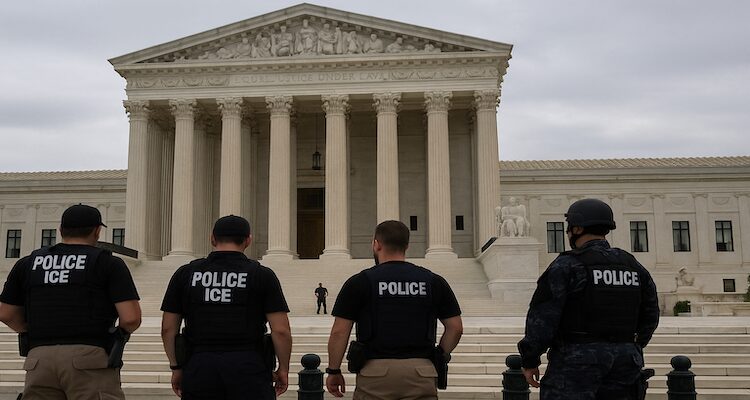
The U.S. Supreme Court on Monday allowed President Donald Trump’s administration to resume aggressive immigration raids in Southern California, giving federal agents the green light to conduct stops and detentions based partly on race, ethnicity, or language.
The decision, issued without explanation, represents another victory for Trump’s hardline immigration agenda and a setback for immigrant communities and civil rights advocates who warn of widespread racial profiling.
Background: A Legal Clash Over Civil Liberties
The ruling temporarily overturned an order issued in July by Los Angeles-based District Judge Maame Frimpong. She had barred federal agents from targeting people based on factors such as ethnicity, Spanish-language use, or employment in low-wage sectors, citing constitutional protections against unreasonable searches and seizures.
Her order followed mounting complaints and lawsuits alleging that immigration enforcement in Southern California resembled “roving patrols” where masked and heavily armed agents conducted raids resembling kidnappings.
But the Trump administration swiftly appealed, arguing that roughly 10% of the region’s residents were in the U.S. illegally, and that a broader enforcement profile was justified.
Supreme Court’s Decision and Conservative Majority
The Court’s unsigned order reinstated Trump’s enforcement powers, reflecting its 6-3 conservative majority. Justices Sonia Sotomayor, Elena Kagan, and Ketanji Brown Jackson dissented.
Justice Sotomayor, writing in a forceful dissent, warned that the administration’s tactics effectively treated “all Latinos, citizens or not, who work low-wage jobs as fair game” for arrest and detention until they could prove their legal status.
She concluded: “Rather than stand idly by while our constitutional freedoms are lost, I dissent.”
Justice Brett Kavanaugh, concurring with the majority, noted that ethnicity alone cannot justify a stop but said it may be considered a “relevant factor” alongside other circumstances.
Administration Pushes Harder on Deportations
Trump’s second term has doubled down on immigration enforcement, with record-level deportations a central campaign promise. In May, senior White House aide Stephen Miller directed Immigration and Customs Enforcement (ICE) to escalate operations with a goal of 3,000 arrests per day.
These efforts have sparked protests, particularly in Los Angeles, where immigrant communities report heightened fear. Trump even deployed National Guard troops and U.S. Marines to support federal agents during summer raids—an extraordinary use of military force inside the U.S.
California leaders, including Democratic Governor Gavin Newsom, condemned the troop deployment as unlawful and unnecessarily provocative.
Legal Battles Mount Against Federal Raids
Civil rights lawsuits continue to challenge the administration. One proposed class action in Los Angeles federal court accused agents of racial profiling and violent tactics. Plaintiffs included both undocumented immigrants and U.S. citizens caught up in raids.
One plaintiff, Jason Gavidia, said agents physically assaulted him after refusing to believe he was a U.S. citizen, demanding he name the hospital where he was born.
The lawsuit argued that individuals with “brown skin” were being singled out by unidentified agents who demanded proof of citizenship on the spot, often with a show of force.
Broader Implications for Civil Liberties
By siding with the Trump administration, the Supreme Court reinforced its recent trend of upholding controversial immigration policies that lower courts had previously blocked. Past rulings have allowed deportations to third countries and the revocation of temporary humanitarian protections.
Legal experts warn the latest decision sets a precedent that could erode constitutional safeguards for millions of Americans, particularly Latinos and immigrants living in mixed-status households.
For immigrant communities in Southern California, the ruling means increased fear of raids at workplaces, car washes, and other gathering points while local officials brace for more legal clashes and protests in the weeks ahead.
Looking Ahead
As federal agents ramp up operations, tensions in California are expected to intensify. With the Supreme Court signaling continued support for Trump’s enforcement powers, immigrant-rights groups and civil liberties advocates are preparing for a prolonged legal and political battle.
The ruling underscores the sharp divide between the conservative-dominated high court and Democratic-led states resisting federal immigration crackdowns. Whether future lawsuits succeed may determine the balance between national security priorities and constitutional freedoms.
Also Read: Yen Slides as Japan Faces Political Turmoil and Fed Eyes Rate Cuts