









Silver Soars to Record High as Demand and Supply Tighten
Silver prices have surged to a historic peak, reflecting more than just momentum in precious metals. The rally underscores deep unease in global financial markets, driven by political pressure on the U.S. Federal Reserve, a weakening dollar, and intensifying demand for physical silver across investment and industrial channels.
As silver mirrors gold’s extraordinary rise, investors are paying renewed attention to how the metal is traded—and why its market structure matters now more than ever.
Silver Hits a Record as Markets Turn Defensive
Silver climbed to an all-time high of $84.60, extending gains alongside gold as investors sought safety amid heightened uncertainty in U.S. monetary policy. The rally followed reports that the Trump administration had threatened a potential criminal investigation into the Federal Reserve chair, an extraordinary development that rattled currency markets and sent the dollar lower.
According to a Reuters report, the weaker dollar made dollar-priced commodities like silver more attractive to global buyers. At the same time, constrained supply and sustained industrial demand added further upward pressure on prices.
Silver’s dual role—as both a store of value and a key industrial input- has amplified its appeal during this period of volatility.
(With inputs from Reuters.)
How the Global Silver Market Works
Unlike stocks or bonds, silver trades through a complex mix of physical markets, derivatives, and financial instruments. Understanding these channels helps explain why price moves can be swift and sometimes dramatic.
Over-the-Counter Trading: The Heart of Physical Silver
The largest marketplace for physical silver is London, which also serves as the global hub for gold trading. Here, major banks and brokers facilitate buy and sell orders for clients around the world.
Trading takes place over the counter (OTC), meaning transactions are negotiated directly between financial institutions rather than on a centralized exchange. Access to this market requires an established relationship with a participating bank or broker.
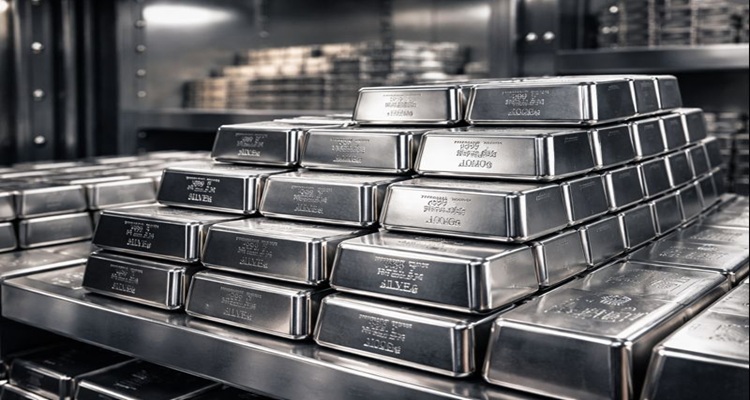
The system is anchored by vast holdings of physical bullion stored in secure vaults operated by major institutions such as JPMorgan and HSBC. These vaults underpin confidence in the market by ensuring that traded silver is backed by real metal.
As of the end of December 2025, London vaults held approximately 27,818 tons of silver, highlighting the city’s central role in global precious metals logistics.
Futures Markets: Trading Silver Without Moving Metal
Silver is also heavily traded on futures exchanges, which allow investors to buy or sell the metal for delivery at a future date. The two largest hubs are the Shanghai Futures Exchange in China and COMEX, operated by CME Group in New York.
Futures contracts are typically traded through brokers and are rarely held until physical delivery. Instead, most participants roll their positions into later-dated contracts.
This system allows traders to speculate on silver prices, or hedge against price swings without dealing with the costs and logistics of storing metal.
Another key feature is margin trading. Rather than paying the full value of the silver upfront, traders post a fraction of the contract’s value, making futures markets highly capital-efficient but also more sensitive to price volatility.
Exchange-Traded Funds: Silver for the Stock Market Age
For many investors, the most accessible route into silver is through exchange-traded funds (ETFs). These funds trade on major stock exchanges like the NYSE and the London Stock Exchange, alongside shares of publicly listed companies.
Silver ETFs hold physical silver in vaults, with each share representing a specific quantity of metal. Investors can buy and sell these shares through standard brokerage accounts or retail trading apps such as Robinhood.
When demand for an ETF rises sharply and its share price moves above the value of the underlying silver, additional metal is added to the fund’s vaults. This mechanism helps keep ETF prices aligned with the physical market.
The largest of these funds is the iShares Silver Trust, managed by BlackRock. It holds roughly 529 million ounces of silver, valued at about $39 billion at current prices, making it a major force in the global silver ecosystem.
Bars and Coins: Direct Ownership for Retail Buyers
Beyond financial instruments, many smaller investors choose to own silver directly. Bars and coins are sold by dealers and mints worldwide, offering tangible exposure to the metal.
While physical ownership eliminates counterparty risk, it also comes with added costs, including storage, insurance, and dealer premiums. During periods of strong demand, these premiums often rise, reflecting tight supply in retail markets.
Silver Mining Stocks: A Leveraged Bet on Prices
Another popular avenue is investing in silver mining companies. Shares of miners are easily traded on stock exchanges and tend to move in tandem with silver prices.
However, mining stocks are influenced by more than just the metal’s value. Operational efficiency, management quality, debt levels, geopolitical exposure, and environmental regulations all play a role in determining performance.
As a result, mining shares can outperform silver during rallies, but they can also lag or decline if company-specific issues emerge.
Why Silver’s Surge Is Resonating Now
Market analysts point out that silver’s rally reflects a rare convergence of forces. Monetary uncertainty has boosted safe-haven demand, while long-term industrial uses ranging from electronics to renewable energy technologies continue to underpin consumption.
Tight inventories in key storage hubs, including London, have reinforced concerns about supply constraints. At the same time, growing investor participation through ETFs and futures has increased liquidity but also heightened sensitivity to macroeconomic headlines.
According to Reuters, these dynamics have combined to push silver into uncharted territory.
What Comes Next for Investors
Silver’s record-breaking move has renewed debate about its role in diversified portfolios. While price volatility remains a defining feature of the metal, its behavior during periods of financial stress has reinforced its reputation as both a defensive asset and an industrial cornerstone.
Market participants are likely to continue watching currency movements, central bank independence, and physical inventory levels for clues about silver’s next phase.
A Metal Back in the Spotlight
Silver’s climb to an all-time high marks a pivotal moment for a market often overshadowed by gold. The surge highlights the metal’s unique position at the intersection of finance, industry, and geopolitics.
Whether traded in London vaults, futures pits, ETFs, or physical bars, silver is once again commanding global attention, reflecting broader questions about trust, stability, and value in an uncertain economic landscape.
ALSO READ: Trump Calls for 10% Credit Card Rate Cap, Sparks Pushback
Disclaimer:
The information presented in this article is based on publicly available sources, reports, and factual material available at the time of publication. While efforts are made to ensure accuracy, details may change as new information emerges. The content is provided for general informational purposes only, and readers are advised to verify facts independently where necessary.