










Rupee Jumps in Offshore Trade After US–India Deal
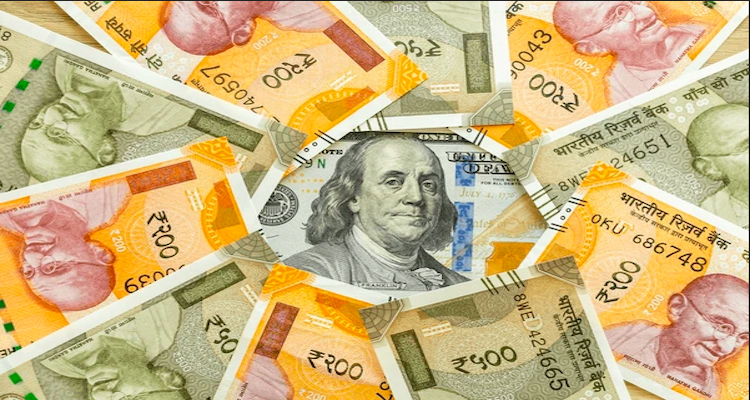
The Indian rupee posted a sharp gain in offshore trading after New Delhi and Washington finalized a long-awaited trade agreement, lifting sentiment across currency markets. The move signals renewed optimism around foreign capital inflows at a time when emerging market currencies remain under pressure globally.
Early indicators from the non-deliverable forward (NDF) market suggest the rupee is set for a significantly stronger opening, reflecting investor confidence in improved trade ties and macro stability.
Rupee Strengthens on Positive Trade Signals
The Indian rupee rallied in non-deliverable forward market trading following confirmation of a trade deal between India and the United States. The agreement, which aims to reduce trade frictions and improve market access, has been interpreted by investors as a positive step for India’s external sector.
One-month dollar/rupee NDF contracts pointed to an opening range of 90.15 to 90.25, a notable jump from the 91.5125 close recorded on Monday. The move represents one of the strongest single-session improvements in recent weeks for the offshore rupee market.
According to a Reuters report, the currency’s advance was driven by expectations that improved trade relations could encourage fresh foreign investment into Indian assets.
Understanding the Role of the NDF Market
The non-deliverable forward market plays a crucial role in shaping expectations for the rupee, especially among offshore investors who cannot access India’s onshore currency market directly. Movements in NDF contracts often serve as a leading indicator for how the rupee may trade when domestic markets open.
A sharp shift in NDF pricing typically reflects changes in global sentiment rather than domestic trading flows alone. In this case, traders appear to be pricing in lower perceived risk around India’s trade outlook with its largest export destination.
Market participants noted that such optimism tends to surface first in offshore markets, where international funds react swiftly to geopolitical and policy developments.
What the US-India Trade Deal Signals
While detailed terms of the agreement are still being assessed by analysts, the deal is widely seen as a step toward stabilizing trade relations that have faced periodic friction over tariffs, market access, and regulatory concerns.
The United States remains one of India’s most important trading partners, particularly for services, pharmaceuticals, and technology exports. Any framework that improves predictability and reduces uncertainty is likely to support export earnings and balance-of-payments dynamics.
Currency strategists told Reuters that improved trade visibility can directly influence capital flows, especially portfolio investments, which are highly sensitive to policy clarity and geopolitical alignment.
Expert View: Why Markets Reacted Quickly
Currency traders cited by Reuters said the rupee’s offshore rally reflects more than just short-term enthusiasm. One Asia-based FX strategist noted that trade deals with major partners often act as “confidence anchors” for emerging market currencies, particularly when global risk appetite is uneven.
Another market participant pointed out that foreign investors have been cautious on India in recent weeks due to global interest rate uncertainty. Positive trade news, however, can act as a counterbalance by reinforcing India’s long-term growth narrative.
Such reactions are consistent with past episodes where policy clarity or diplomatic breakthroughs triggered immediate currency adjustments before broader asset markets responded.
Broader Market Impact and Capital Flow Expectations
A stronger rupee opening could influence multiple segments of India’s financial markets. Equity investors often view currency stability as a sign of macroeconomic resilience, while bond investors pay close attention to exchange rate risks when allocating capital.
If the rupee sustains its gains, it may reduce imported inflation pressures, particularly for commodities priced in dollars. This could offer marginal relief to policymakers navigating price stability concerns.
At the same time, analysts caution that a single catalyst is unlikely to override global factors such as U.S. interest rates, dollar strength, and risk sentiment. Still, trade-related optimism can help insulate the rupee from sharper volatility.
What Comes Next for the Rupee
Traders will closely watch onshore market reaction to see whether the positive offshore signals translate into sustained buying during domestic trading hours. Any confirmation through equity inflows or central bank positioning could reinforce the rupee’s upward momentum.
Market participants also expect further clarity on the trade agreement’s implementation timeline and sector-specific benefits. Concrete progress, rather than headline announcements alone, will ultimately determine whether foreign investors increase exposure to Indian assets.
For now, the rupee’s NDF rally underscores how quickly currency markets respond to diplomatic and trade developments involving major economies.
Confidence Boost, Not a Cure-All
The rupee’s jump in offshore trading highlights the powerful role of trade diplomacy in shaping investor sentiment. The US–India deal has provided a timely confidence boost, reinforcing expectations of renewed foreign inflows and improved external stability.
However, currency analysts stress that sustained strength will depend on broader global conditions and consistent follow-through on policy commitments. As markets digest the implications of the agreement, the rupee’s next moves will reveal whether optimism can evolve into lasting support.
(With inputs from Reuters.)
ALSO READ: Gold, Silver Prices Crash as Budget Jitters Rattle Markets
The information presented in this article is based on publicly available sources, reports, and factual material available at the time of publication. While efforts are made to ensure accuracy, details may change as new information emerges. The content is provided for general informational purposes only, and readers are advised to verify facts independently where necessary.