







Rare Dragon Ball Art Reveals Toriyama’s Original Ending Vision
A newly resurfaced illustration from Dragon Ball’s archives is giving fans a rare glimpse into a pivotal moment in the series’ history and what was once meant to be its grand finale. The artwork not only celebrates a turning point in the story but also sheds light on creator Akira Toriyama’s original plans for ending the iconic franchise.
A Rediscovered Piece of Dragon Ball History
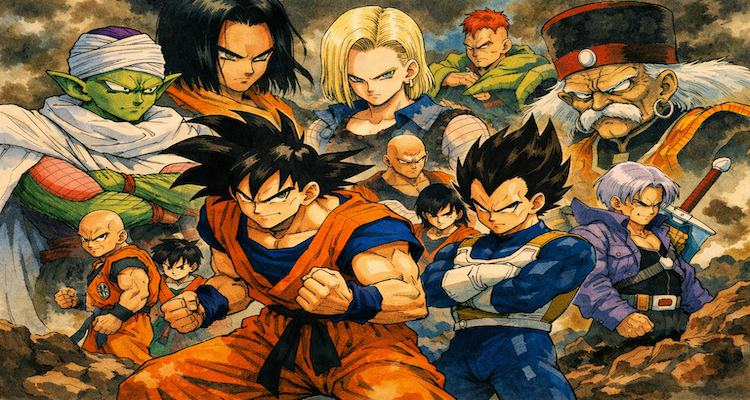
Fans of Dragon Ball recently got access to a striking piece of vintage artwork by Akira Toriyama, unveiled through the official Toriyama Archives. The illustration dates back more than three decades and captures the intense buildup to the Android Saga, one of the most defining arcs in the series.
Originally featured in Weekly Shōnen Jump’s 1991 double issue (No. 36/37), the artwork accompanied a major chapter titled “The Gathering of the Warriors.” It marked the moment when Goku, Vegeta, Piccolo, and other Z Fighters came together, preparing for an all-out confrontation with the looming android threat.
The original caption highlighted the significance of the moment, emphasizing both the fighters’ growth and the anticipation surrounding the upcoming battle. Even today, the image reflects a sense of urgency and transformation that defined this era of the manga.
The Android Saga: A Turning Point in the Series
The Android Saga began after a three-year time skip, during which the Z Fighters underwent rigorous training to face a prophesied enemy. This period of preparation introduced a more serious tone to the series, raising the stakes beyond anything seen in earlier arcs.
Toriyama used this storyline to deepen character development while expanding the universe’s complexity. The introduction of powerful androids, unpredictable, relentless, and vastly stronger than previous foes, shifted the narrative from adventure to survival.
For many longtime readers, this arc represents the moment when Dragon Ball matured, blending action with emotional weight and long-term consequences.
From Androids to Cell: The Saga That Changed Everything
While the Android Saga laid the groundwork, it seamlessly evolved into the Cell Saga arguably one of the most iconic chapters in Dragon Ball history.
Cell, a bio-engineered antagonist, brought a new level of existential threat to the series. His ability to absorb other characters and evolve into stronger forms created a sense of unpredictability that kept audiences on edge.
More importantly, the Cell Saga marked a narrative climax. It tied together multiple story threads, introduced generational change with Gohan stepping into the spotlight, and delivered one of the franchise’s most memorable conclusions.
Toriyama’s Original Plan: Ending with the Cell Saga
Behind the scenes, the Cell Saga carried even greater significance. According to a February interview with former Dragon Ball editors Kazuhiko Torishima, Yu Kondo, and Fuyuto Takeda, Akira Toriyama had intended for this arc to serve as the series’ conclusion.
The editors revealed that Toriyama had repeatedly expressed a desire to wrap up the story during this phase of the Android storyline. From a narrative standpoint, it made sense the saga offered closure, character resolution, and a natural endpoint.
However, the decision ultimately did not rest with the creator alone.
Editorial Influence and the Decision to Continue
Despite Toriyama’s intentions, the editorial team at Shueisha pushed for the continuation of Dragon Ball. The series was at the peak of its popularity, and ending it at that stage was seen as a missed opportunity from a commercial standpoint.
Fuyuto Takeda, one of the editors, reportedly sympathized with Toriyama’s desire to conclude the story. However, once it became clear that the series would continue, efforts were made to support the creator and ease his workload.
This compromise allowed Toriyama to carry on while maintaining the quality and consistency fans expected.
The Birth of the Majin Buu Saga
The decision to extend the series led directly to the creation of the Majin Buu Saga, the final arc of Dragon Ball Z. This storyline introduced new themes, characters, and a more playful tone, contrasting with the darker intensity of the Cell Saga.
While opinions among fans vary, the Buu Saga became a defining chapter in its own right. It expanded the universe further and cemented Dragon Ball’s legacy as a long-running cultural phenomenon.
Beyond the original manga, this continuation paved the way for future adaptations, spin-offs, and sequels that continue to shape the franchise today.
Fan Reactions and Cultural Impact
The release of the archived illustration has sparked renewed interest among fans and historians of the series. For many, it serves as a nostalgic reminder of a golden era in manga storytelling.
At the same time, it offers a rare behind-the-scenes look at how close Dragon Ball came to ending at one of its most powerful narrative moments.
Industry observers often point to this period as an example of the tension between creative vision and commercial demands a dynamic that continues to influence manga and anime production today.
Why This Rediscovery Matters Today
The unveiling of this artwork is more than just a celebration of Toriyama’s artistry. It highlights a critical “what if” moment in pop culture history.
Had the series ended with the Cell Saga, Dragon Ball might be remembered very differently. While it would still hold legendary status, it may not have reached the expansive global influence it enjoys today.
The continuation of the series allowed it to evolve across generations, introducing new audiences to its world while keeping longtime fans engaged.
Looking Ahead: The Legacy of Toriyama’s Vision
As Dragon Ball continues to expand through new adaptations and content, moments like this serve as a reminder of its origins and the creative decisions that shaped its journey.
Toriyama’s original vision, even when altered by external factors, remains at the heart of the franchise. The rediscovered artwork stands as a testament to his storytelling instincts and the enduring appeal of his characters.
Conclusion
The resurfacing of this rare illustration offers more than just visual nostalgia it opens a window into a defining crossroads in Dragon Ball history. It reminds fans of the delicate balance between artistic intent and industry influence, and how that balance ultimately shaped one of the most successful anime franchises of all time.
As the series continues to evolve, these glimpses into its past help deepen appreciation for the story and the creator behind it all.
This content is published for informational or entertainment purposes. Facts, opinions, or references may evolve over time, and readers are encouraged to verify details from reliable sources.