









PM Modi Conferred with Order of Oman: A Milestone in India–Oman Strategic Relations
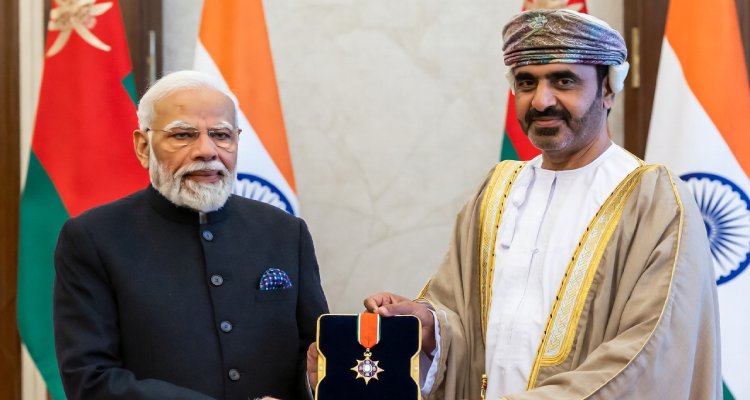
PM Modi receives the Order of Oman (First Class), marking 70 years of India–Oman ties and strengthening strategic cooperation in energy, trade, and sustainability.
Introduction: A Symbol of Trust Beyond Diplomacy
When Prime Minister Narendra Modi stepped onto Omani soil in December, the moment marked more than the final stop of a three-nation diplomatic tour. It became a defining chapter in India’s evolving global stature. On December 18, Sultan Haitham bin Tarik conferred upon PM Modi the Order of Oman (First Class)—the Sultanate’s highest civilian honour—recognizing not only a leader, but a long-term partner in progress, stability, and shared vision.
The award underscores the deepening relationship between India and Oman at a time when global geopolitics is increasingly shaped by trust-based partnerships rather than transactional alliances.
Context & Background: The Order of Oman and Its Legacy
Instituted in 1970 by Sultan Qaboos bin Said, the Order of Oman (First Class) is among the most prestigious civilian honours in the Arab world. It is conferred selectively upon global leaders who have made exceptional contributions to public life and to strengthening bilateral relations with Oman.
Prime Minister Modi’s recognition places him in an exclusive list of international statesmen acknowledged by the Sultanate. The honour also comes in a symbolic year—the 70th anniversary of the establishment of diplomatic relations between India and Oman, one of India’s oldest and most trusted partners in the Gulf region.
This recognition adds to PM Modi’s growing list of international civilian awards, including Ethiopia’s Great Honour Nishan of Ethiopia, reflecting India’s expanding diplomatic footprint across Africa, the Middle East, and beyond.
Main Developments: A Visit Anchored in Strategy and Substance
PM Modi received the Order of Oman during his two-day official visit to the Sultanate, the final leg of a three-nation tour that also included Jordan and Ethiopia. The visit was marked by high-level discussions, strategic reviews, and the signing of multiple agreements aimed at strengthening bilateral cooperation.
During talks with Sultan Haitham bin Tarik, both leaders comprehensively reviewed the India–Oman Strategic Partnership, expressing satisfaction over the steady growth in political, economic, and cultural ties. The discussions reflected a shared commitment to elevating the relationship to meet future regional and global challenges.
A major focus of the meeting was energy cooperation, with both sides exploring:
- Long-term energy supply arrangements
- Joint investments in renewable energy
- Collaboration on green hydrogen and green ammonia projects
These initiatives align with India’s clean energy transition goals and Oman’s ambition to emerge as a global green energy hub.
Beyond energy, the two nations signed memorandums of understanding (MoUs) in key sectors, including:
- Maritime heritage
- Education and skill development
- Agriculture cooperation
- Millet cultivation, reinforcing India’s global push for sustainable food systems
These agreements signal a shift from conventional diplomacy toward people-centric and future-ready collaboration.
Expert Insight & Public Sentiment: Diplomacy Rooted in Continuity
Foreign policy analysts view the honour as a recognition of India’s consistent engagement with the Gulf under PM Modi’s leadership. Unlike episodic diplomacy, India–Oman ties have been nurtured through sustained political dialogue, economic integration, and cultural exchange.
Observers also note that PM Modi’s personal diplomacy—combined with India’s growing economic influence—has helped reposition New Delhi as a reliable partner in West Asia, particularly for nations seeking long-term stability amid global uncertainty.
Public sentiment, both in India and among the Indian diaspora in Oman, has been overwhelmingly positive. The award is widely seen as validation of India’s rising global respect and the Prime Minister’s emphasis on mutual respect, sovereignty, and shared growth.
Impact & Implications: What This Honour Means Going Forward
The conferral of the Order of Oman has implications that extend well beyond ceremonial recognition.
For India, it reinforces:
- Its strategic relevance in the Gulf
- Enhanced energy security through diversified partnerships
- Greater influence in shaping regional economic and sustainability initiatives
For Oman, it strengthens:
- Access to India’s vast market and technological expertise
- Collaboration in green energy and sustainable agriculture
- Cultural and educational exchanges with one of the world’s fastest-growing economies
The visit also sets the stage for deeper engagement under the Comprehensive Economic Partnership Agreement (CEPA) framework, positioning both countries to expand trade, investment, and innovation-led cooperation.
Conclusion: A Recognition That Reflects a Shared Future
The Order of Oman bestowed upon Prime Minister Narendra Modi is more than a diplomatic honour—it is a reflection of trust built over decades and a roadmap for collaboration in the decades ahead. As India and Oman celebrate 70 years of diplomatic relations, the award symbolizes continuity, respect, and a shared commitment to sustainable development and regional stability.
In an era defined by shifting alliances, the India–Oman partnership stands as an example of how diplomacy rooted in history, mutual benefit, and forward-looking leadership can endure and thrive.
Disclaimer :This article is an original journalistic interpretation based solely on the provided headline and inputs. It does not reproduce or paraphrase any existing published content and is intended for informational and educational purposes only.