









PM Modi Chairs 50th PRAGATI Meeting, Marking a Decade of Outcome-Driven Governance
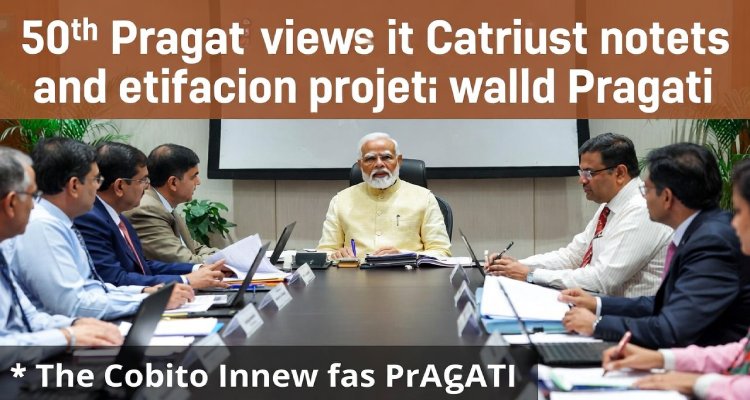
PM Modi chairs the 50th PRAGATI meeting, reviewing ₹40,000 crore infrastructure projects and marking a decade of technology-driven, outcome-focused governance.
Introduction: A Decade of Decisions That Move the Ground
When Prime Minister Narendra Modi chaired the 50th meeting of PRAGATI on December 31, it was more than a routine administrative review. The milestone gathering symbolised ten years of a governance model that prioritises speed, coordination, and accountability—three elements the Prime Minister has repeatedly described as essential for delivering tangible change to citizens’ lives. As India continues to scale up infrastructure and welfare ambitions, PRAGATI stands out as a quiet but powerful engine driving execution behind the scenes.
Context & Background: What Is PRAGATI and Why It Matters
PRAGATI—short for Pro-Active Governance and Timely Implementation—is an ICT-based, multi-modal governance platform designed to bridge the gap between policy intent and on-ground delivery. Launched on March 25, 2015, the platform was conceptualised by the Prime Minister’s Office (PMO) and developed with technical support from the National Informatics Centre (NIC).
At its core, PRAGATI operates as a three-tier system, bringing together the PMO, Union government secretaries, and the chief secretaries of states on a single digital platform. This structure enables direct communication, real-time problem-solving, and fixed accountability—often cutting through bureaucratic silos that traditionally delay large public projects.
Over the past decade, PRAGATI has evolved into a key instrument of cooperative federalism, allowing the Centre and states to jointly review progress, resolve bottlenecks, and monitor outcomes with shared responsibility.
Main Developments: Inside the 50th PRAGATI Meeting
During the landmark 50th meeting, Prime Minister Modi reviewed five critical infrastructure projects spanning five states, with a combined investment exceeding ₹40,000 crore. These projects cut across essential sectors such as:
- Road infrastructure
- Railways
- Power
- Water resources
- Coal
The review focused not only on financial progress but also on implementation challenges, inter-agency coordination, and timelines. Officials presented updates using digital dashboards, live video conferencing, and geo-spatial imagery, giving the Prime Minister a clear picture of ground realities.
Addressing the officials, PM Modi emphasised that timely decision-making, effective coordination, and clearly fixed accountability naturally accelerate governance outcomes. He noted that when these elements align, citizens experience the impact directly—through improved connectivity, reliable power, water security, and economic opportunities.
How PRAGATI Works: Technology Meets Governance
What sets PRAGATI apart is its integration of three powerful technologies:
- Digital Data Management – Ensures accurate, up-to-date project tracking
- Video Conferencing – Enables real-time dialogue between Centre and states
- Geo-Spatial Technology – Offers visual clarity on project locations and progress
This combination allows the Prime Minister to interact with officials armed with live visuals and verified data, reducing ambiguity and ensuring decisions are grounded in facts rather than paperwork alone.
The platform also simultaneously addresses public grievance redressal, programme implementation, and project monitoring, making it a rare example of an end-to-end governance system.
Expert Insight & Public Governance Perspective
Governance experts and civil services trainers often point to PRAGATI as a case study in modern public administration. By institutionalising regular, high-level reviews, the platform reduces the risk of stalled projects and cost overruns—persistent challenges in large infrastructure ecosystems.
According to data shared through PRAGATI reviews, 377 major projects have been examined over the years. Of the 3,162 issues identified, 2,958—nearly 94 percent—have been resolved. This track record highlights the platform’s effectiveness in breaking administrative deadlocks and enforcing follow-through.
For civil servants, PRAGATI has also redefined accountability. With progress reviewed directly by the Prime Minister, delays are harder to justify, and collaboration across departments becomes a necessity rather than a choice.
Impact & Implications: What Happens Next
The outcomes of the 50th PRAGATI meeting are expected to accelerate progress on high-value infrastructure projects that directly influence economic growth and public welfare. Improved roads and railways enhance logistics efficiency, while investments in power and water resources strengthen long-term sustainability.
More broadly, PRAGATI’s decade-long journey signals a shift in India’s governance culture—from reactive administration to proactive, technology-enabled oversight. As states continue to partner with the Centre through this platform, the model could further evolve to cover emerging priorities such as climate resilience, urban infrastructure, and digital public services.
For citizens, the implications are simple but significant: faster project completion, reduced waste of public money, and governance outcomes that are visible, measurable, and timely.
Conclusion: A Quiet Milestone with Lasting Impact
The 50th PRAGATI meeting may not dominate headlines, but its significance runs deep. Over ten years, the platform has quietly reshaped how India monitors projects, resolves disputes, and delivers results. By blending technology with political leadership and administrative accountability, PRAGATI has become a cornerstone of outcome-driven governance.
As Prime Minister Modi’s emphasis on speed and coordination continues to guide policy execution, PRAGATI’s role in shaping India’s infrastructure and governance landscape is likely to grow even more central in the years ahead.
The information presented in this article is based on publicly available sources, reports, and factual material available at the time of publication. While efforts are made to ensure accuracy, details may change as new information emerges. The content is provided for general informational purposes only, and readers are advised to verify facts independently where necessary.