










Lila and the Talking Algorithms: A Modern Tech Fable
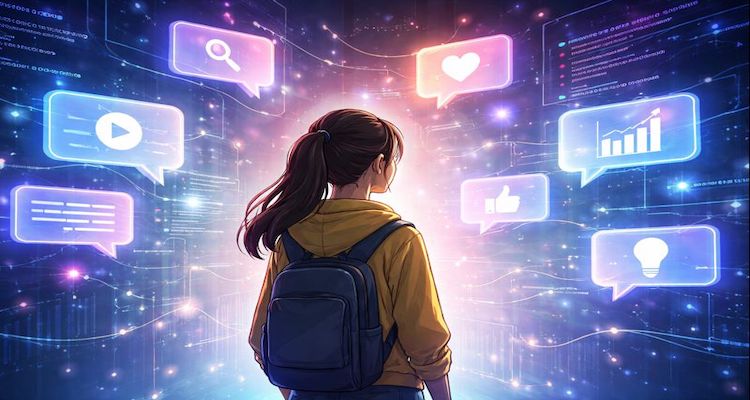
In a world where algorithms quietly decide what we watch, buy, and believe, stories about technology aren’t just entertainment—they’re warnings, mirrors, and sometimes, guides. Lila and the Talking Algorithms feels like one of those rare ideas that can spark curiosity in everyday readers while raising serious questions for the digital age.
At its heart, it’s a headline that hints at something bigger: what happens when the systems shaping our lives start “talking back”—and we finally start listening.
Why “Talking Algorithms” Hits a Nerve
Algorithms have become the invisible infrastructure of modern life.
They recommend music when we’re tired, suggest news when we’re distracted, and decide which job applications get reviewed first. Most people don’t see them as characters. They see them as tools cold, mathematical, and distant.
But in reality, algorithms behave like storytellers.
They create a version of the world for each user, selecting what’s “important,” what’s “trending,” and what’s “worth attention.” That power is why the idea of “talking algorithms” immediately lands. It suggests a future where these systems aren’t just sorting information they’re interacting with humans in a way that feels personal.
And that’s where Lila comes in.
Lila, as a concept, reads like the human anchor in this modern tech fable: the curious observer who doesn’t just accept the machine’s output, but questions its intent, its logic, and its influence.
Who Is Lila in This Story?
Even without a plot summary, the name “Lila” carries symbolic weight.
She represents the everyday person navigating a digital world that moves too fast to fully understand. She could be a student trying to learn, a young professional trying to build a career, or simply someone trying to keep her life from being swallowed by screens and endless scrolling.
Lila’s role isn’t to “fight technology.” It’s to confront it with something most systems aren’t designed to handle: human judgment.
Because algorithms are efficient—but they aren’t wise.
They can predict patterns, but they can’t truly understand meaning. They can detect what gets clicks, but they can’t measure what’s good for someone’s mental health, relationships, or long-term growth.
The Core Idea: When Algorithms Don’t Just Recommend They Speak
The phrase “talking algorithms” doesn’t have to mean machines literally speaking out loud.
It can also mean something more realistic—and more unsettling: systems that communicate through nudges, rankings, labels, and automated decisions.
Every “Suggested for you” is a kind of sentence.
Every trending list is a kind of opinion.
Every personalized feed is a kind of worldview.
And increasingly, these systems don’t feel neutral. They feel persuasive.
They push people toward certain emotions: outrage, desire, fear of missing out, urgency. They don’t only show content—they shape behavior. That’s why the headline feels timely. It reflects a growing public awareness that technology isn’t just in our hands.
It’s in our heads.
Main Developments: The Quiet Shift Toward Algorithmic Influence
1) Algorithms are no longer background technology
A decade ago, algorithms were mostly discussed by engineers and researchers.
Now, they’re part of everyday conversation. People blame them for misinformation, praise them for convenience, and fear them for their ability to predict private preferences.
Lila’s story fits into this moment because it imagines a world where the algorithm’s role becomes impossible to ignore.
When something starts “talking,” it becomes harder to pretend it’s just a tool.
2) Personalization is becoming more intimate
Modern recommendation systems are built to feel effortless.
They learn what you like, what you avoid, and what keeps you engaged. Over time, the feed starts to feel less like a product and more like a companion—always present, always responsive.
But that intimacy comes with a cost.
If Lila is listening closely, she may realize the algorithm isn’t simply reflecting her interests. It may be shaping them.
That subtle difference is one of the most important media literacy lessons today:
Are you choosing what you consume—or being guided toward it?
3) Automation is creeping into high-stakes decisions
Talking algorithms aren’t only about entertainment or social media.
Algorithms increasingly affect:
- Hiring and recruitment filters
- Credit scoring and loan approvals
- Online ad targeting
- Fraud detection systems
- Content moderation and visibility
In these spaces, “talking” can mean something as simple as a system saying “approved” or “rejected” without explanation.
If Lila’s journey involves any of these moments, the story becomes more than a metaphor. It becomes a reflection of how real people experience algorithmic power today: not as code, but as consequences.
Expert Insight: What Researchers Warn About
Many technology ethicists and AI governance researchers have repeatedly emphasized a core truth: algorithms don’t exist in a vacuum.
They reflect the priorities of the organizations that build them—often optimizing for engagement, efficiency, and profit rather than human well-being.
As AI ethicist Dr. Timnit Gebru has argued in public discussions over the years, the danger isn’t only the technology itself, but the lack of accountability around it—especially when systems are deployed at scale without meaningful transparency.
Meanwhile, computer scientist Dr. Joy Buolamwini, known for her work on algorithmic bias, has highlighted how automated systems can reproduce unfair outcomes, particularly when training data reflects real-world inequalities.
Put simply: algorithms can amplify what society already gets wrong—unless people like Lila push back with questions.
Public Reaction: Curiosity, Anxiety, and a Need for Control
The public mood around algorithms today is complicated.
People love convenience. They also feel trapped by it.
Many users say they’re exhausted by feeds that seem designed to provoke emotion rather than inform. Others worry about privacy, especially when ads appear to “know too much.” And there’s growing frustration with platforms that make it difficult to understand why certain content appears.
That’s why the idea of “talking algorithms” resonates.
It captures a feeling many people already have: the system is communicating with them—just not honestly, and not in a way they can challenge.
Lila’s presence in this headline suggests a turning point. Not a collapse of technology, but a confrontation with it.
Impact & Implications: What Happens Next, and Who It Affects
If Lila and the Talking Algorithms represents where society is headed, the implications are wide-reaching.
For everyday users
The biggest impact is psychological.
People may increasingly feel that their attention is being managed, not earned. That can lead to burnout, reduced focus, and a sense that life is being lived through recommendations rather than decisions.
Lila’s story reminds readers that the most valuable skill online isn’t speed—it’s discernment.
For parents and educators
Children are growing up in algorithm-shaped environments.
Their entertainment, learning resources, and social interactions are filtered through systems designed to maximize retention. This raises urgent questions about healthy development, digital independence, and critical thinking.
If Lila is young in this story, her journey becomes a powerful lens for the next generation’s digital reality.
For creators, publishers, and journalists
Algorithms now act like gatekeepers.
They can boost or bury content without warning. For publishers, that means traffic can rise or collapse based on changes they can’t see.
For journalism, it raises a deeper challenge: public interest reporting doesn’t always compete well in attention markets.
If algorithms “talk,” what they often say is:
Give me more of what performs. Not more of what matters.
For policymakers and tech companies
The next phase is accountability.
As algorithmic systems become more influential, pressure grows for clearer explanations, stronger safeguards, and fairer outcomes. This includes debates around transparency, privacy protection, and the ethics of AI-driven personalization.
Lila’s story, in that sense, is not just personal—it’s political.
A Story That Feels Like a Warning and an Invitation
Lila and the Talking Algorithms reads like a headline from the near future, but it speaks directly to the present.
It reminds us that the biggest danger isn’t that machines will suddenly become human.
It’s that humans will slowly stop acting human—outsourcing curiosity, judgment, and choice to systems designed to keep us consuming.
Lila matters because she represents resistance in its simplest form: paying attention.
And in an era where attention is constantly harvested, choosing where to place it might be the most powerful decision left.
ALSO READ: The Robot Who Dreamed of Rainbows: A New Age of Wonder
This content is published for informational or entertainment purposes. Facts, opinions, or references may evolve over time, and readers are encouraged to verify details from reliable sources.