










James Wan on Horror Fame and His Bold New ‘Spy-Fi’ Leap
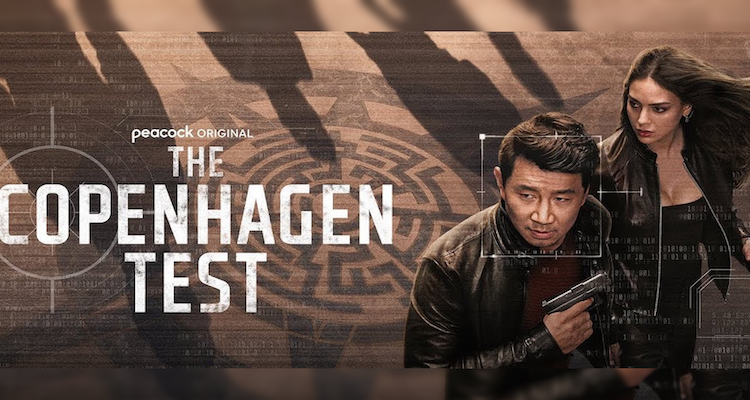
Few modern filmmakers have shaped contemporary horror like James Wan. Now, the director behind The Conjuring, Saw, and Insidious is pushing beyond fear-based storytelling with The Copenhagen Test, a genre-blending series that taps directly into today’s anxieties about technology, identity, and control.
In an exclusive conversation with SCREEN, Wan reflects on building enduring franchises, the risks of original storytelling, and why his latest project may be unsettling in ways no ghost story ever could.
From Indie Horror to Global Franchises
James Wan’s career arc is one of rare consistency and reinvention. He first made waves in 2004 with Saw, a low-budget thriller that became a cultural phenomenon and launched one of horror’s most successful franchises.
That momentum continued with Insidious in 2010, followed by The Conjuring in 2013 a film that not only terrified audiences but also created a sprawling cinematic universe. Spin-offs like Annabelle and The Nun turned Wan’s supernatural vision into a long-running box office force.
Over time, Wan emerged as a defining voice in modern horror, often mentioned alongside figures such as Jason Blum for his commercial instincts and Ari Aster for elevating genre storytelling.
Stepping Outside the Horror Box
Despite his reputation, Wan has never confined himself to one genre. He surprised many by directing Furious 7 in 2015, steering the Fast & Furious franchise through one of its most emotionally charged chapters.
He later entered the superhero arena with Aquaman, delivering a visually ambitious DC blockbuster led by Jason Momoa. These projects, Wan admits, offered a different kind of creative satisfaction.
In his interview with SCREEN, Wan explained that while he enjoys large-scale franchise filmmaking, developing original ideas remains deeply personal. Seeing a concept evolve from a rough idea into a finished project and watching audiences respond still brings him the greatest fulfillment.
Introducing The Copenhagen Test
Wan’s newest venture takes that philosophy into television. The Copenhagen Test, now streaming in India on JioHotstar, is an eight-episode science-fiction espionage series executive produced by Wan.
The story follows Alexander Hale, played by Shang-Chi star Simu Liu, an intelligence operative whose mind is compromised through advanced technology. With his thoughts no longer entirely his own, Hale must prove his loyalty to his agency while questioning his own reality.
The premise blends traditional spy intrigue with speculative science, creating what Wan jokingly refers to as “spy-fi” a term that has stuck with the creative team.
Building a New Subgenre
Series creator and showrunner Thomas Brandon believes the show exists precisely because it refuses to fit neatly into established categories. In the interview, Brandon emphasized that The Copenhagen Test was designed to challenge audiences, asking them to track both an external espionage plot and an internal psychological battle.
According to Brandon, the show’s ambition lies in merging genres while posing larger questions about trust, autonomy, and influence. Rather than relying on spectacle alone, the narrative asks viewers to sit with discomfort and uncertainty.
This dual structure, he says, reflects the world audiences are currently living in one shaped by invisible systems and unseen manipulation.
Technology, Surveillance, and the Mind
One of the show’s most striking creative choices is its use of The Cranberries’ 1994 song Zombie in the trailer. Removed from its original political context, the lyrics take on new meaning in a story about mental intrusion and surveillance.
Brandon notes that the series aims to feel both relevant and unsettlingly timely. While modern technology enables unprecedented monitoring, he argues that the most powerful form of manipulation has always been psychological.
A single intrusive thought, once planted, can be harder to escape than any digital hack. In The Copenhagen Test, this idea becomes both literal and symbolic, turning the spy genre inward.
Espionage Turned Inward
For Brandon, the concept of a hacked mind fits naturally within espionage storytelling. Traditional spy narratives already revolve around doubt questioning motives, alliances, and hidden agendas.
What The Copenhagen Test adds is a deeper layer of self-distrust. If a spy cannot trust his own perceptions, how does he define loyalty or truth?
Co-showrunner Jennifer Yale highlights this internal conflict as one of the show’s most compelling elements. Hale isn’t just monitoring enemies; he is forced to police his own senses, words, and reactions, turning espionage into a psychological maze.
A Different Kind of Horror
While The Copenhagen Test lacks demons or haunted houses, Wan believes it remains firmly within his wheelhouse. The fear here, he suggests, comes from reality rather than the supernatural.
The idea that external forces can reshape thoughts, beliefs, and identity mirrors real-world concerns about artificial intelligence, algorithms, and digital influence. These are anxieties audiences are already living with, making the series unsettling in a quieter, more persistent way.
In that sense, Wan’s latest project may be less escapist than his earlier work, but potentially more disturbing.
Humor Amid Heavy Themes
The interview also offered lighter moments. When asked what might be revealed if his own mind were hacked, Wan responded with characteristic self-deprecation, joking that viewers would likely be disappointed.
The exchange underscored a key contrast: while Wan’s work often explores dark psychological spaces, he approaches the process with humor and humility.
Impact and What Comes Next
The Copenhagen Test represents a significant evolution in Wan’s career. It signals a growing interest in stories that confront contemporary fears without relying on traditional genre formulas.
For audiences, the series offers more than entertainment it invites reflection on agency, control, and the invisible forces shaping modern life.
As technology continues to blur boundaries between private thought and external influence, stories like this may only grow more resonant.
Looking Ahead
James Wan has spent two decades redefining horror. With The Copenhagen Test, he appears ready to redefine suspense itself proving once again that his creative instincts extend far beyond haunted rooms and cursed objects.
If the series finds its audience, “spy-fi” may soon become more than a joke it could be Wan’s next lasting legacy.
ALSO READ: His & Hers Review: Strong Cast, Familiar Crime Formula
Disclaimer:
This content is published for informational or entertainment purposes. Facts, opinions, or references may evolve over time, and readers are encouraged to verify details from reliable sources.