










India, Pakistan Exchange Lists of Nuclear Installations and Prisoners
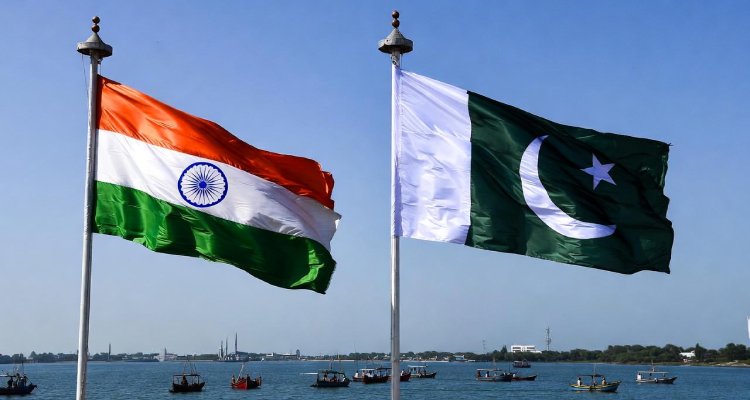
India and Pakistan exchange nuclear installation and prisoner lists for the 35th year, reinforcing nuclear restraint and humanitarian cooperation amid strained ties.
Introduction: A Quiet Ritual in a Noisy Rivalry
At a time when India–Pakistan relations remain defined by mistrust, military vigilance, and diplomatic pauses, a quiet but consequential ritual continues uninterrupted. On January 1, New Delhi and Islamabad once again exchanged lists of nuclear installations and detained nationals—an annual exercise that has endured wars, political upheavals, and decades of hostility. The exchange, now in its 35th consecutive year, stands as one of the rare confidence-building mechanisms between the two nuclear-armed neighbors, underscoring how diplomacy persists even when dialogue stalls.
Context & Background: A Pact Born of Nuclear Anxiety
The exchange of nuclear installation lists traces its roots to the Agreement on the Prohibition of Attack against Nuclear Installations and Facilities, signed on December 31, 1988. The agreement entered into force on January 27, 1991—just months before both nations formally conducted nuclear tests later in the decade.
Under the pact, India and Pakistan commit not to attack each other’s nuclear facilities under any circumstances. To reinforce transparency and reduce the risk of miscalculation, both sides are required to exchange updated lists of covered nuclear installations every year on January 1.
The first such exchange took place on January 1, 1992. Since then, despite armed conflicts, diplomatic breakdowns, and cross-border tensions, the annual exchange has never been missed—making it one of the most durable bilateral agreements between the two countries.
Parallel to this nuclear transparency mechanism is another humanitarian arrangement: the Agreement on Consular Access, 2008, which governs the treatment and repatriation of civilian prisoners and fishermen detained across borders.
Main Developments: What Was Exchanged—and Why It Matters
Nuclear Installations: 35 Years of Continuity
On January 1, India and Pakistan simultaneously exchanged their lists of nuclear installations through diplomatic channels in New Delhi and Islamabad. While the details of the installations remain confidential, the symbolic value of the exchange is substantial.
This marks the 35th consecutive annual exchange, reinforcing a mutual acknowledgment that nuclear facilities are off-limits, even during heightened tensions. In a region often described as one of the world’s most dangerous nuclear flashpoints, this practice acts as a stabilizing force, however limited.
Strategically, the agreement reduces ambiguity during crises. Knowing which sites are protected helps prevent catastrophic escalation resulting from misinterpretation or misinformation during military standoffs.
Exchange of Prisoners: The Human Dimension
Alongside nuclear lists, both countries exchanged updated lists of civilian prisoners and fishermen in each other’s custody, in line with the 2008 Consular Access Agreement.
- India’s list included details of 391 civilian prisoners and 33 fishermen who are Pakistani or believed to be Pakistani.
- Pakistan’s list contained information on 58 civilian prisoners and 199 fishermen who are Indian or believed to be Indian.
These exchanges take place twice a year—on January 1 and July 1—and aim to ensure humane treatment, timely consular access, and eventual repatriation of detainees.
India formally called for the early release and repatriation of civilian prisoners, fishermen along with their boats, and missing Indian defence personnel believed to be in Pakistan’s custody. New Delhi also urged Islamabad to expedite the release of 167 Indian fishermen and civilian prisoners who have already completed their sentences.
Additionally, India requested immediate consular access to 35 detainees in Pakistan’s custody who are believed to be Indian but have not yet been granted such access.
Expert Insight & Public Reaction: Small Steps, Serious Stakes
Strategic analysts often describe the nuclear installation exchange as a “minimal but essential” confidence-building measure. While it does not resolve core disputes, it lowers the probability of worst-case scenarios.
Security experts note that in a region with short missile flight times and high alert postures, even modest transparency mechanisms can have outsized importance. The agreement acts less as a trust-building tool and more as a risk-management instrument, ensuring nuclear red lines are clearly understood.
Human rights advocates, meanwhile, focus on the prisoner exchange. Fishermen—often detained for inadvertently crossing maritime boundaries—form the largest group of civilian detainees. Advocacy groups on both sides argue that prolonged detention of such individuals reflects humanitarian failure rather than security necessity.
Public reactions in both countries tend to be muted. The exchanges rarely dominate headlines, yet for the families of detained prisoners and fishermen, these lists represent hope, visibility, and the possibility of reunion.
Impact & Implications: What Happens Next?
Strategic Stability
The continued exchange of nuclear installation lists reinforces a baseline of strategic restraint. Even as bilateral talks remain frozen, this mechanism ensures that certain red lines remain intact. In practical terms, it contributes to crisis stability by reducing uncertainty during military escalations.
However, experts caution that such agreements cannot substitute for broader dialogue on arms control, nuclear risk reduction, or conflict resolution. The pact works best as part of a larger diplomatic ecosystem—one that is currently limited.
Humanitarian Outcomes
On the humanitarian front, the effectiveness of prisoner list exchanges depends on follow-through. India has highlighted that 2,661 Indian fishermen and 71 civilian prisoners have been repatriated from Pakistan since 2014—a sign that the agreement does produce tangible outcomes over time.
Yet delays in consular access and post-sentence detention remain persistent issues. Calls for compassionate release, especially for fishermen and elderly prisoners, continue to grow louder amid global scrutiny of human rights practices.
For families waiting across borders, the exchange is not symbolic—it is procedural progress that can eventually translate into freedom.
Conclusion: Diplomacy in the Details
In a relationship often dominated by confrontation, the annual exchange of nuclear installation and prisoner lists stands out as diplomacy conducted quietly, consistently, and without fanfare. It does not erase disputes or dissolve distrust, but it prevents the worst outcomes by maintaining minimal cooperation where it matters most—nuclear safety and human dignity.
As India and Pakistan navigate an uncertain future, these enduring agreements serve as reminders that even adversaries can recognize shared responsibilities. In a region where silence often signals danger, these routine exchanges speak volumes.
The information presented in this article is based on publicly available sources, reports, and factual material available at the time of publication. While efforts are made to ensure accuracy, details may change as new information emerges. The content is provided for general informational purposes only, and readers are advised to verify facts independently where necessary.