







Govt Introduces VB-GRAMG Bill in Lok Sabha: A New Chapter in India’s Rural Employment Guarantee
Govt introduces VB-GRAMG Bill in Lok Sabha to guarantee 125 days of rural employment, replace MGNREGA, and align development with Viksit Bharat 2047.
Introduction: A Defining Moment for Rural India
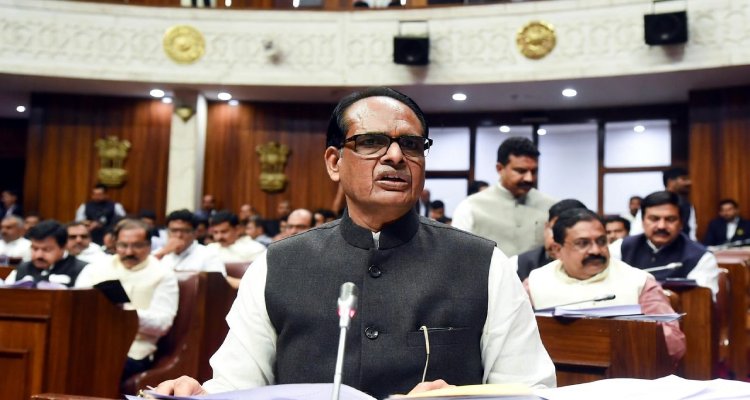
In a move that could redefine the future of rural livelihoods in India, the Union government has introduced the Viksit Bharat–Guarantee for Rozgar and Ajeevika Mission (Gramin) Bill, 2025, popularly referred to as the VB-GRAMG Bill, in the Lok Sabha. Presented by Union Minister Shivraj Singh Chouhan on December 16, the proposed legislation aims to guarantee 125 days of wage employment annually for rural households—significantly expanding the scope of India’s statutory rural employment framework.
The Bill seeks to replace the 20-year-old Mahatma Gandhi National Rural Employment Guarantee Act (MGNREGA), a landmark law that has shaped rural wage employment since 2005. However, the proposed overhaul has sparked intense political debate, with Opposition members demanding deeper scrutiny and referral to a parliamentary committee.
Context & Background: How Rural Employment Policy Has Evolved
India’s rural employment strategies did not emerge overnight. Since Independence, policymakers have grappled with the twin challenges of rural poverty and underemployment, especially in agriculture-dependent regions marked by seasonal income volatility.
Early Years: Laying the Foundation
The first generation of rural employment programmes emerged in the 1960s and 1970s, including initiatives such as the Rural Manpower Programme and the Crash Scheme for Rural Employment. These schemes aimed to absorb surplus labour and create basic infrastructure but operated on a limited scale.
Structured Expansion in the 1980s and 1990s
The 1980s saw the launch of the National Rural Employment Programme and the Rural Landless Employment Guarantee Programme, later merged into the Jawahar Rozgar Yojana in 1993. This consolidation continued with the Sampoorna Grameen Rozgar Yojana in 1999, reflecting a push toward efficiency and scale.
Parallel initiatives like the Employment Assurance Scheme and the Food for Work Programme sought to provide income support during agricultural lean seasons, combining food security with employment generation.
The Turning Point: A Legal Right to Work
A major milestone came with the Maharashtra Employment Guarantee Act, 1977, which introduced the idea of a statutory right to work. This concept later formed the backbone of MGNREGA, enacted in 2005 to provide guaranteed wage employment to rural households across India.
Why the Government Is Bringing a New Bill
While MGNREGA has provided income security to millions over the past two decades, the government argues that India’s rural economy has undergone a fundamental transformation, necessitating a new legislative framework.
Changing Rural Realities
Over the years, rural India has seen expanded access to housing, electrification, roads, banking, digital connectivity, and social security schemes. The workforce has diversified beyond agriculture, and aspirations have shifted toward higher incomes, sustainable livelihoods, and climate-resilient infrastructure.
Need for Structural Modernisation
According to the government’s rationale, rural infrastructure creation must move away from fragmented, scheme-based provisioning toward a coherent, future-oriented development model. There is also an emphasis on fair resource distribution based on objective parameters to reduce regional disparities and promote inclusive growth.
In this context, the VB-GRAMG Bill is positioned as a periodic revision of rural employment policy—aligned with the national vision of Viksit Bharat @2047.
Main Developments: What the VB-GRAMG Bill Proposes
The VB-GRAMG Bill introduces several structural and operational changes to India’s rural employment framework.
1. Expanded Employment Guarantee
At its core, the Bill proposes a statutory guarantee of 125 days of wage employment per financial year, up from the existing benchmark under MGNREGA. The guarantee applies to rural households whose adult members volunteer to undertake unskilled manual work.
2. Balancing Farm Labour Needs
To prevent labour shortages during peak agricultural seasons, the Bill empowers state governments to notify specific periods—such as sowing and harvesting seasons—during which works under the Act will not be executed.
3. Gram Panchayats at the Centre
The proposed framework places Gram Panchayats at the heart of participatory planning and execution. These local institutions will be supported by professional and technical capacity to ensure effective implementation.
4. Integration With National Infrastructure Planning
One of the most significant shifts is the integration of Viksit Gram Panchayat Plans with PM Gati Shakti, leveraging geospatial systems, digital public infrastructure, and multi-level planning mechanisms. These plans will ultimately feed into a consolidated Viksit Bharat National Rural Infrastructure Stack.
5. Centrally Sponsored Implementation
States will be required to prepare their own schemes within six months of the Act’s commencement. The programme will operate as a Centrally Sponsored Scheme, with the Centre making normative allocations based on objective criteria.
Any expenditure beyond the approved allocation will be borne by state governments.
6. Wage Rates and Unemployment Allowance
The central government will notify wage rates for unskilled work. Until then, MGNREGA wage rates will continue to apply. If eligible applicants are not provided work within the stipulated timeframe, states will be legally bound to pay an unemployment allowance.
7. Oversight and Transparency
The Bill proposes the creation of Central and State Gramin Rozgar Guarantee Councils to oversee implementation. Transparency mechanisms will include biometric authentication, spatial planning tools, mobile-based monitoring, dashboard reporting, weekly public disclosures, and a strengthened social audit system.
Expert Insight and Political Reaction
The introduction of the Bill triggered strong opposition protests in the Lok Sabha. Opposition members opposed the legislation at the introduction stage, arguing that replacing MGNREGA—a law with established institutional safeguards—requires broader consultation and parliamentary scrutiny.
They pressed for the Bill to be referred to a parliamentary standing committee, citing concerns over federal cost-sharing, state-level capacity, and the implications of pausing work during peak agricultural seasons.
Policy analysts note that while the Bill reflects an attempt to modernise rural employment policy, its success will depend on implementation clarity, fiscal sustainability, and state-centre coordination.
Impact & Implications: Who Stands to Gain or Lose?
For Rural Workers
If implemented effectively, the Bill could provide greater income security, more structured infrastructure creation, and alignment with evolving rural aspirations.
For State Governments
States gain flexibility in implementation but also face financial responsibility for costs exceeding central allocations, which could strain budgets in poorer states.
For the Rural Economy
The emphasis on convergence, saturation, and planning coherence could help shift rural development from short-term relief toward long-term economic resilience.
Conclusion: A Bold Proposal at a Crossroads
The VB-GRAMG Bill represents one of the most ambitious attempts in recent years to reimagine India’s rural employment guarantee system. By expanding workdays, integrating digital planning tools, and aligning rural development with national infrastructure goals, the government is signaling a shift toward a more growth-oriented model.
However, the intense political pushback underscores the stakes involved. As Parliament debates the Bill’s future, the outcome will determine not just the fate of MGNREGA, but the trajectory of rural livelihoods in India as the country looks toward Viksit Bharat @2047.
Disclaimer :This article is based solely on the provided inputs and is intended for informational purposes only. It does not represent legal or policy advice.