










From Climate to Quakes: Why Earth Is Growing Increasingly Unpredictable
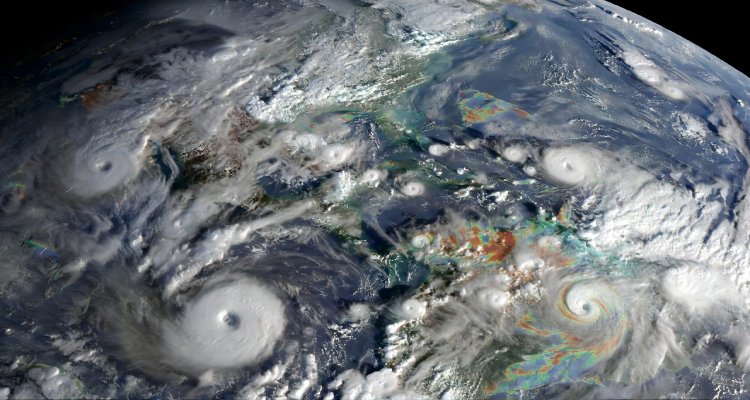
Scientists warn Earth is entering an era of extreme unpredictability as climate, ecosystems, and geological systems change faster than ever before.
Introduction: A Planet Losing Its Predictable Rhythm
For most of human history, Earth has followed patterns we learned to anticipate—seasons arrived on schedule, coastlines shifted slowly, and ecosystems adapted over centuries, not decades. But today, those familiar rhythms appear to be breaking down. From record-shattering heat waves and sudden floods to unexpected geological activity and ecological collapse, scientists increasingly warn that Earth may be entering its most unpredictable era yet. This is not a single crisis unfolding in isolation—it is a convergence of planetary systems behaving in ways that defy past models, leaving humanity navigating a future with fewer certainties than ever before.
Context & Background: When Stability Became the Exception
Earth’s climate and geological systems have always evolved, but traditionally at timescales spanning thousands or millions of years. The Holocene epoch, which began around 11,700 years ago, offered relative environmental stability—conditions that allowed agriculture, cities, and modern civilization to emerge. That stability is now eroding.
Over the past century, industrialization, population growth, deforestation, and fossil fuel dependence have rapidly altered atmospheric chemistry, ocean temperatures, and land use. Meanwhile, natural systems such as ocean currents, ice sheets, and carbon sinks are showing signs of stress. Scientists increasingly describe this phase as a transition out of the Holocene into a new, less predictable planetary state—one where historical data may no longer reliably forecast future conditions.
Main Developments: Why Earth’s Systems Are Behaving Differently
At the heart of this unpredictability lies the interaction between human activity and Earth’s interconnected systems. Rising global temperatures are not just making the planet warmer; they are amplifying feedback loops that intensify extremes. Warmer oceans fuel stronger storms. Melting ice reduces the planet’s ability to reflect sunlight, accelerating warming. Thawing permafrost releases methane, a potent greenhouse gas, further destabilizing climate patterns.
Beyond climate, other systems are also becoming erratic. Shifting rainfall patterns are transforming fertile regions into drought zones while triggering catastrophic floods elsewhere. Biodiversity loss is weakening ecosystems that once buffered environmental shocks. Even geological systems may be indirectly affected, as melting glaciers reduce pressure on tectonic plates, potentially influencing seismic and volcanic activity in certain regions.
What makes this era uniquely volatile is speed. Changes that once unfolded gradually are now happening within a single human lifetime, leaving little time for adaptation.
Expert Insight & Public Reaction: Warnings from the Scientific Community
Climate scientists and Earth system researchers increasingly emphasize that unpredictability—not just warming—is the defining feature of this era. Many warn that traditional forecasting models, built on historical trends, struggle to account for cascading effects and tipping points.
Public reaction, however, remains divided. While younger generations and vulnerable communities express growing concern, others experience “crisis fatigue,” overwhelmed by constant warnings without clear solutions. This gap between scientific urgency and public response poses a significant challenge, as delayed action increases the likelihood of abrupt, irreversible changes.
Experts stress that unpredictability does not mean randomness—it means Earth is responding to pressures in complex ways that are harder to anticipate, making preparation and resilience more difficult.
Impact & Implications: Who Is Most Affected—and What Comes Next
The consequences of a more unpredictable Earth will not be evenly distributed. Coastal communities face rising seas and stronger storms. Farmers must adapt to erratic rainfall and shifting growing seasons. Urban areas confront heat stress, water scarcity, and infrastructure strain. Economies built on stable environmental conditions—from fisheries to tourism—are already feeling the impact.
Geopolitically, environmental unpredictability may intensify competition over resources, drive migration, and strain global cooperation. At the same time, it forces innovation. Renewable energy, climate-resilient agriculture, early warning systems, and adaptive urban planning are no longer optional—they are survival strategies.
The coming decades will likely test humanity’s ability to respond not just to gradual change, but to sudden disruption.
Conclusion: Living with Uncertainty on a Changing Planet
Earth’s most unpredictable era does not signal inevitable collapse, but it does mark the end of assumptions that once guided human planning. Stability can no longer be taken for granted. The challenge ahead lies in learning to live with uncertainty—by strengthening scientific understanding, investing in resilience, and recognizing that human actions now shape planetary behavior at unprecedented scales. Whether this era becomes one of crisis or adaptation will depend on how seriously humanity responds to the signals the planet is already sending.
Disclaimer :This article is for informational and educational purposes only. It reflects current scientific perspectives and does not substitute for official environmental or policy guidance.