










Electronics Component Manufacturing Scheme: India’s Big Bet to Power the Next Global Electronics Supply Chain
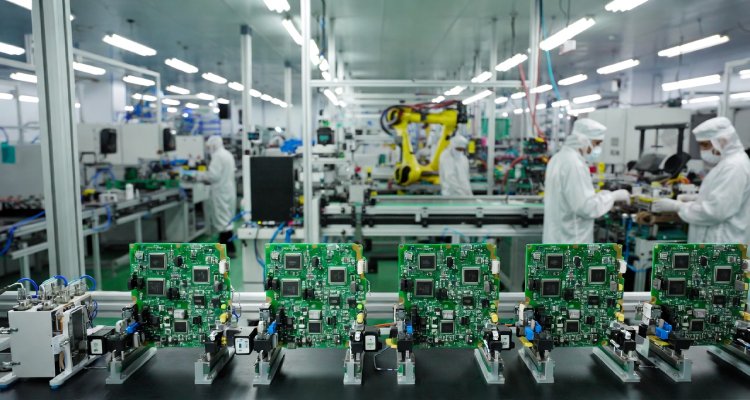
India boosts electronics manufacturing as MeitY approves 22 ECMS proposals, unlocking ₹41,863 crore investment, jobs, and global supply chain integration.
Introduction: India’s Quiet Electronics Revolution Takes Shape
India’s ambition to become a global electronics manufacturing powerhouse is no longer limited to assembling finished products. With the latest approvals under the Electronics Component Manufacturing Scheme (ECMS), the government is now aggressively strengthening the backbone of the electronics industry—components. In a major boost to domestic manufacturing, the Ministry of Electronics and Information Technology (MeitY) has approved 22 new proposals under the scheme, unlocking investments worth ₹41,863 crore and setting the stage for production valued at ₹2.58 lakh crore.
More than just numbers, the decision signals a strategic shift in India’s industrial policy: from import dependence to export-led, component-driven growth, positioning India as a reliable link in global electronics supply chains.
Context & Background: Why Electronics Components Matter
For years, India’s electronics growth story has been dominated by mobile phone assembly and consumer devices. While production-linked incentives (PLIs) helped scale final-product manufacturing, component imports—especially from East Asia—remained a critical vulnerability.
Recognizing this gap, the Union Cabinet approved the Electronics Component Manufacturing Scheme on March 28, 2025, with formal notification issued on April 8, 2025. The scheme was designed to address a structural weakness: India’s limited domestic capacity in high-value electronic components such as printed circuit boards (PCBs), camera modules, optical transceivers, and precision sub-assemblies.
The ECMS aims to build a self-sustaining component ecosystem, reduce import dependence, and integrate Indian manufacturers with Global Value Chains (GVCs)—a crucial step as geopolitics reshapes global manufacturing hubs.
Main Developments: Third Tranche Signals Rapid Momentum
Fresh Approvals and Scale of Investment
The latest approvals mark the third set of clearances under the ECMS. MeitY’s greenlighting of 22 proposals represents one of the largest single expansions of component manufacturing capacity under the scheme so far.
- Projected investment: ₹41,863 crore
- Expected production value: ₹2,58,152 crore
- Direct jobs created: 33,791
This follows earlier approvals:
- October 2025: First batch of 7 proposals worth ₹5,532 crore
- November 2025: Second tranche of 17 proposals with ₹7,172 crore investment, ₹65,111 crore in production, and 11,808 direct jobs
With the latest tranche, 46 applications across 11 states have now been approved under ECMS, bringing the cumulative figures to:
- Total investment: ₹54,567 crore
- Total direct employment: ~51,000 jobs
What the Scheme Supports
The ECMS targets a wide spectrum of electronics components, including:
- Printed circuit boards (PCBs)
- Mechanical and electro-mechanical components
- Camera modules and optical transceivers
- Sub-assemblies and intermediate components
- Capital goods required to manufacture these components
This breadth is deliberate, ensuring India does not merely specialize in one segment but builds end-to-end manufacturing depth.
Expert Insight & Industry Sentiment: A Structural Shift, Not a Short-Term Push
Industry analysts view ECMS as a course correction in India’s electronics policy. While final-product manufacturing created scale, components determine value capture, technology depth, and long-term competitiveness.
Manufacturing experts note that component ecosystems typically take years to mature, but India’s incentive structure—spanning employment, capital investment, and turnover—creates strong early momentum. The scheme’s six-year duration also gives companies long-term visibility, encouraging large domestic and global players to commit capital.
There is growing optimism that ECMS could help Indian firms move beyond contract manufacturing and become Tier-1 suppliers to global electronics brands.
Impact & Implications: Jobs, Exports, and Global Integration
Employment and Skill Development
The scheme is expected to generate 91,600 additional direct jobs over its tenure, besides substantial indirect employment in logistics, tooling, testing, and services. Importantly, component manufacturing typically requires higher technical skills, helping upgrade India’s manufacturing workforce.
Export-Led Growth Strategy
A key objective of ECMS is changing the mindset of Indian manufacturers—from serving only domestic demand to becoming global exporters of electronic components. As supply chains diversify away from single-country dependence, India is positioning itself as a credible alternative.
Strengthening Global Value Chains
By supporting both components and the capital goods used to manufacture them, ECMS addresses a common bottleneck in emerging manufacturing economies. This integrated approach improves India’s chances of embedding itself deeper into global electronics value chains, rather than remaining at the assembly stage.
Conclusion: Laying the Foundation for India’s Electronics Future
The Electronics Component Manufacturing Scheme represents one of India’s most consequential industrial interventions in recent years. With cumulative investments crossing ₹54,000 crore and production potential running into lakhs of crores, the scheme is no longer experimental—it is transformational.
As approvals accelerate and factories come online across multiple states, ECMS could redefine India’s role in the global electronics industry—from a large consumer market to a trusted manufacturing and export hub for critical components. The real impact, however, will be measured not just in output numbers, but in how effectively India captures value, technology, and global relevance in the years ahead.
The information presented in this article is based on publicly available sources, reports, and factual material available at the time of publication. While efforts are made to ensure accuracy, details may change as new information emerges. The content is provided for general informational purposes only, and readers are advised to verify facts independently where necessary.