










DRDO Successfully Test-Fires Two Pralay Missiles
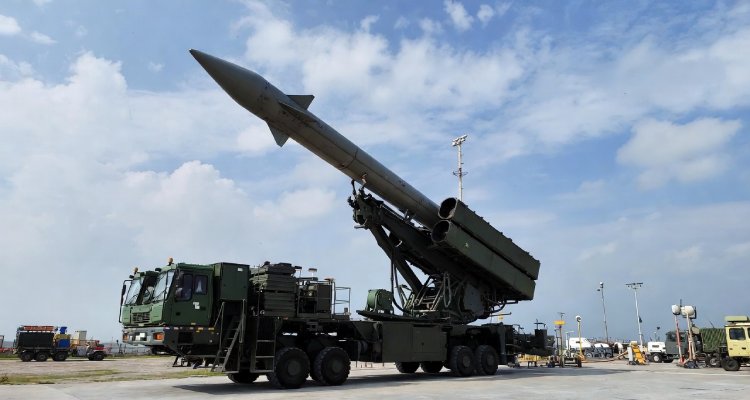
DRDO successfully test-fires two Pralay missiles off Odisha, marking a major step in India’s indigenous, high-precision short-range missile capability.
Introduction: A Precision Signal from India’s Missile Program
On the final day of 2025, India quietly but decisively reinforced its growing missile capability. The Defence Research and Development Organisation (DRDO) successfully test-fired two Pralay short-range surface-to-surface missiles in quick succession off the coast of Odisha on December 31—an exercise that underscored both technological maturity and operational readiness. Conducted as part of user evaluation trials, the tests signal that Pralay is transitioning from development to deployment, marking a significant milestone in India’s indigenous defense ecosystem.
Context & Background: The Rise of Indigenous Tactical Missiles
India’s missile development program has steadily evolved over the past two decades, with a clear focus on self-reliance, precision strike capability, and survivability in contested environments. While long-range systems like Agni attract global attention, short-range tactical missiles play a critical role in modern warfare—bridging the gap between artillery and strategic weapons.
Pralay belongs to this crucial category. Conceptualized to meet the Indian Armed Forces’ requirement for a high-accuracy, conventional strike missile, it reflects a shift toward flexible, battlefield-ready systems capable of neutralizing time-sensitive targets. Unlike traditional ballistic missiles, Pralay’s quasi-ballistic trajectory allows it to evade enemy air defense systems, making it especially relevant in today’s missile-defense-heavy operational theatres.
Main Developments: What Happened and Why It Matters
The December 31 tests were conducted from the Integrated Test Range (ITR) at Chandipur, with both missiles launched in close succession. According to DRDO officials, each missile followed its intended trajectory and met all mission objectives, as confirmed by tracking sensors and range instrumentation deployed along the flight path.
Key Technical Capabilities of Pralay
- Range: 150–500 kilometers
- Payload Capacity: 500–1,000 kilograms
- Propulsion: Solid propellant
- Guidance: Advanced navigation and guidance systems for high precision
- Warhead Options: Capability to carry multiple warhead types against diverse targets
Pralay is designed as a surface-to-surface missile, optimized for precision strikes against high-value targets such as enemy command centers, logistics hubs, radar installations, and airbases. Its ability to carry different warhead configurations enhances mission flexibility while maintaining compliance with India’s stated doctrine of credible deterrence.
The successful back-to-back launches demonstrate not only reliability but also rapid response capability, a critical factor in real-world combat scenarios.
Development Ecosystem: Collaboration at the Core
The Pralay missile has been developed by Research Centre Imarat (RCI) in Hyderabad, in close collaboration with multiple DRDO laboratories, including:
- Defence Research and Development Laboratory (DRDL)
- Advanced Systems Laboratory (ASL)
- Armament Research and Development Establishment (ARDE)
- High Energy Materials Research Laboratory (HEMRL)
- Terminal Ballistics Research Laboratory (TBRL)
This multi-lab collaboration highlights the growing depth of India’s defense R&D ecosystem, where propulsion, guidance, materials science, and terminal ballistics converge into deployable systems.
Expert Insight & Strategic Interpretation
Defense analysts view Pralay as a game-changer in India’s conventional deterrence posture. Its range bracket allows deployment along sensitive fronts, while its accuracy minimizes collateral damage—an increasingly important consideration in modern conflict.
Military experts note that quasi-ballistic missiles like Pralay complicate enemy interception strategies, as their maneuvering capability during flight reduces predictability. The missile’s successful user trials suggest that it is nearing operational induction, providing commanders with a rapid, precision-strike option without escalating to strategic weapon systems.
Public reaction within defense circles has been largely positive, with observers highlighting the test as another example of India’s shift from import dependence to indigenous capability under the broader “Atmanirbhar Bharat” framework.
Impact & Implications: What Comes Next
The successful user evaluation trials indicate that Pralay is on track for formal induction into the Indian Armed Forces, particularly the Army. Once operational, it is expected to enhance India’s conventional strike options, offering a credible response capability in limited-conflict scenarios.
Beyond immediate military utility, the program strengthens India’s defense manufacturing base and validates the country’s ability to develop complex missile systems end-to-end, from design to testing. It also sends a clear strategic signal—India is investing not just in deterrence, but in precision, readiness, and technological resilience.
Conclusion: A Quiet Test with Strategic Weight
The twin Pralay missile tests may not have generated dramatic headlines, but their significance is substantial. By demonstrating accuracy, reliability, and operational readiness, DRDO has taken another step toward equipping India’s forces with modern, indigenous, and flexible strike systems. As Pralay moves closer to deployment, it adds a crucial layer to India’s evolving defense posture—one defined increasingly by precision, preparedness, and self-reliance.
The information presented in this article is based on publicly available sources, reports, and factual material available at the time of publication. While efforts are made to ensure accuracy, details may change as new information emerges. The content is provided for general informational purposes only, and readers are advised to verify facts independently where necessary.