









Bob Weir, Grateful Dead Visionary, Dies at 78
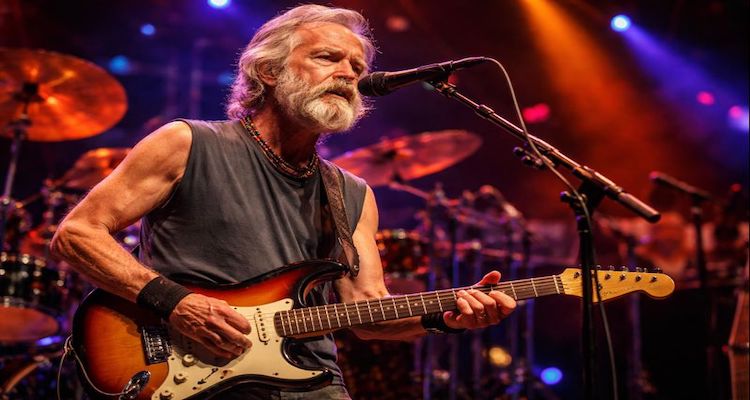
Bob Weir, the rhythm guitarist and co-founding force behind the Grateful Dead, has died at 78, marking the end of one of rock music’s most unconventional and influential careers.
For millions of fans, Weir wasn’t just a band member, he was a storyteller, innovator, and cultural bridge between American roots music and psychedelic experimentation.
According to a statement shared on his verified Instagram account, Weir died after battling cancer, surrounded by loved ones. With inputs from Reuters.
A Pillar of the Grateful Dead Legacy
For three decades, Bob Weir stood at the heart of the Grateful Dead’s ever-evolving sound. Alongside lead guitarist Jerry Garcia, he served as one of the band’s primary vocalists and creative anchors.
While Garcia became the spiritual center of the Deadhead universe, Weir provided balance, blending structure with spontaneity. His voice carried many of the band’s most enduring songs, including the restless road anthem “Truckin’” and the exuberant “Sugar Magnolia.”
The Grateful Dead, active from 1965 until Garcia’s death in 1995, became one of rock’s most enduring live acts without relying heavily on chart-topping singles. Their success was built instead on relentless touring, improvisation, and a fiercely loyal fan community.
From Teenager to Counterculture Icon
Born Robert Hall Parber on October 16, 1947, Weir was raised by adoptive parents in Atherton, California. School proved difficult, in part due to undiagnosed dyslexia, but music offered clarity and purpose.
At just 16, Weir met Jerry Garcia in the San Francisco Bay Area. The pair soon formed a group called the Warlocks, which would later become the Grateful Dead.
Weir was the youngest member of the original lineup and was often referred to simply as “the kid.” He was still in high school when he joined Garcia, Phil Lesh, Ron “Pigpen” McKernan, and drummer Bill Kreutzmann.
Early Doubts, Lasting Impact
Weir’s role in the band wasn’t always secure. In 1968, he was briefly dismissed amid concerns about his guitar skills. The setback proved temporary.
By the early 1970s, Weir had firmly established himself as a creative force. The Dead’s landmark albums “Workingman’s Dead” and “American Beauty” showcased his songwriting growth and deepening musical confidence.
His 1972 solo album “Ace” functioned as an unofficial Grateful Dead record, featuring contributions from Garcia and other bandmates. Songs like “Cassidy,” “Black-Throated Wind,” and “Looks Like Rain” became staples of the band’s live repertoire.
Reinventing the Rhythm Guitar
Bob Weir was never a conventional rhythm guitarist. Instead of strumming standard chords, he built intricate patterns, accents, and counter-melodies that wove around Garcia’s lead lines.
In a 2019 interview with GQ, Weir credited jazz pianist McCoy Tyner as a key influence, explaining how Tyner’s approach to harmony inspired his own guitar style.
British newspaper The Independent once described Weir as “arguably rock’s greatest, if most eccentric, rhythm guitarist,” a label that captured both his technical originality and refusal to conform.
The “Other One” Steps Forward
Following Garcia’s death in 1995, many wondered whether the Grateful Dead’s story had reached its end. Weir answered by forging a new path.
He pursued a solo career and led the band RatDog, exploring blues, reggae, and Americana while continuing to tour relentlessly. He also participated in multiple Grateful Dead reunion projects, ensuring the music remained a living, breathing entity rather than a museum piece.
The 2014 documentary “The Other One: The Long, Strange Trip of Bob Weir” reframed Weir not as a supporting figure, but as a central architect of the Dead’s sound and longevity.
A Musician Rooted in American Tradition
Though often associated with psychedelic culture, Weir’s musical identity was deeply tied to American roots music. His influences ranged from Chuck Berry and cowboy ballads to R&B and reggae.
Journalist Blair Jackson once described Weir as both the band’s wildest performer and its most dependable narrator, capable of whipping crowds into ecstatic motion or grounding them in stark, story-driven songs.
That duality helped the Grateful Dead transcend genres and generations.
Life Beyond the Stage
Outside music, Weir embraced activism and global causes. In 2017, he was appointed a goodwill ambassador for the United Nations Development Programme, supporting initiatives to combat poverty while addressing climate change.
Weir married Natascha Muenter in 1999, and the couple raised two daughters together. Despite decades in the spotlight, he remained notably reflective about his life and career.
“Looking back,” he once said, “I guess I have lived an unusual life.”
Cultural Impact and What Comes Next
Bob Weir’s death closes a defining chapter in American rock history. As one of the last surviving founders of the Grateful Dead, his passing reshapes the legacy of a band that helped redefine what live music could be.
Yet his influence endures, in jam bands, festival culture, and the idea that music can be a shared, evolving experience rather than a fixed product.
Future generations may discover the Grateful Dead through recordings, but Weir’s true legacy lives in the freedom he championed on stage.
A Long, Strange Trip Completed
Bob Weir never chased convention, fame, or easy success. Instead, he followed curiosity, collaboration, and community, values that shaped both his music and his life.
As fans reflect on his passing, one truth remains clear: the long, strange trip he helped create will continue to inspire, improvise, and endure.
ALSO READ: His & Hers Review: Strong Cast, Familiar Crime Formula
Disclaimer:
The information presented in this article is based on publicly available sources, reports, and factual material available at the time of publication. While efforts are made to ensure accuracy, details may change as new information emerges. The content is provided for general informational purposes only, and readers are advised to verify facts independently where necessary.