










Articles 217 & 222: How Presidential Appointments and Transfers Are Reshaping India’s High Courts
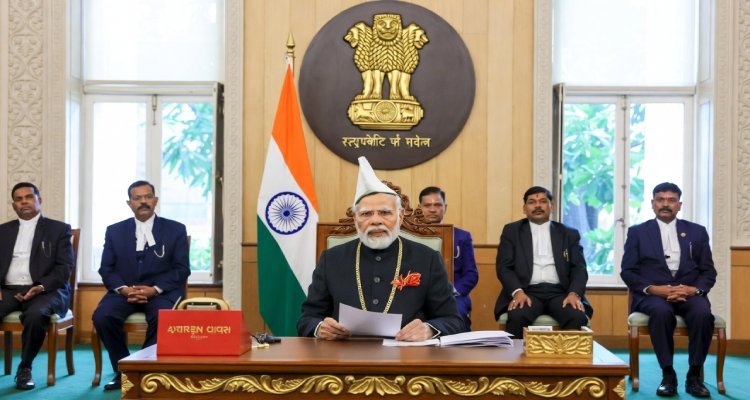
President Droupadi Murmu appoints new Chief Justices to Jharkhand and Patna High Courts and transfers the Meghalaya CJ to Kerala, invoking Articles 217 and 222 of the Constitution.
Introduction: A Quiet Constitutional Power with Far-Reaching Impact
Judicial appointments rarely dominate headlines, yet they quietly shape the administration of justice across India. On January 2, President Droupadi Murmu exercised constitutional authority under Articles 217 and 222 to appoint new Chief Justices to two High Courts and transfer another, setting in motion a series of leadership transitions that will influence judicial functioning in Jharkhand, Bihar, and Kerala.
These decisions, rooted firmly in constitutional procedure, highlight how India balances judicial independence with institutional continuity—especially at a time when High Courts play an increasingly central role in safeguarding constitutional rights and managing mounting case backlogs.
Constitutional Context: Understanding Articles 217 and 222
The Indian Constitution provides a detailed framework governing the structure and independence of High Courts. Article 214 establishes a High Court for each state, while Articles 214 to 231 collectively address their organisation, jurisdiction, and powers.
At the heart of the latest developments are Article 217 and Article 222, two provisions that govern appointments and transfers of High Court judges.
- Article 217(1) empowers the President of India to appoint the Chief Justice and judges of High Courts.
- Article 222(1) authorises the President to transfer a judge from one High Court to another, a mechanism often used to maintain institutional balance and uphold judicial independence.
The Seventh Constitutional Amendment Act, 1956 further enabled Parliament to establish common High Courts for multiple states or Union Territories, underscoring the flexibility built into India’s judicial architecture.
Key Appointments: New Chief Justices Named
Jharkhand High Court: Justice Mahesh Sharadchandra Sonak
Justice Mahesh Sharadchandra Sonak has been appointed as the next Chief Justice of the Jharkhand High Court. Currently serving as a judge of the Bombay High Court, Justice Sonak’s name was recommended by the Supreme Court Collegium in December 2025.
He will assume office following the retirement of incumbent Chief Justice Tarlok Singh Chauhan, who demits office on January 8 upon attaining the age of 62—the constitutionally mandated retirement age for High Court judges.
Justice Sonak’s appointment reflects the collegium’s preference for judges with experience in larger High Courts, particularly those accustomed to handling complex constitutional and commercial matters.
Patna High Court: Justice Sangam Kumar Sahoo
Justice Sangam Kumar Sahoo, currently a judge of the Orissa High Court, has been appointed as the Chief Justice of the Patna High Court.
The Patna High Court, one of the oldest in the country, carries a heavy judicial workload. The appointment of Justice Sahoo is expected to bring administrative stability and renewed focus on judicial efficiency in Bihar’s apex court.
Kerala High Court: Transfer Under Article 222
In a significant transfer under Article 222(1), President Murmu approved the movement of Justice Soumen Sen, Chief Justice of the Meghalaya High Court, to assume charge as the Chief Justice of the Kerala High Court.
This transfer follows the impending retirement of Kerala High Court Chief Justice Nitin Madhukar Jamdar, who demits office on January 9.
Judicial transfers, while often scrutinised, are constitutionally sanctioned and intended to strengthen judicial administration, reduce regional familiarity, and reinforce impartiality within the higher judiciary.
Why These Moves Matter: Judicial Leadership and Governance
High Courts sit at the apex of state-level judicial administration. Their Chief Justices are not only senior judges but also administrative heads responsible for:
- Allocation of cases
- Constitution of benches
- Judicial discipline
- Managing infrastructure and staffing challenges
Leadership transitions, therefore, have a direct impact on how efficiently justice is delivered. With High Courts grappling with large pendency levels, experienced Chief Justices play a crucial role in streamlining procedures and encouraging timely adjudication.
Expert Perspective: Constitutional Balance in Action
Legal experts often view such appointments and transfers as a reflection of India’s evolving judicial governance. Senior advocates note that the collegium system, though debated, aims to preserve judicial independence by insulating appointments from executive overreach.
Transfers under Article 222, while sometimes controversial, are also seen as tools to broaden judicial exposure and promote national judicial cohesion rather than regional silos.
Public reaction typically remains muted, but within legal circles, such changes are closely watched for signals about future reforms, administrative priorities, and judicial philosophy.
Impact and Implications: What Happens Next
The immediate impact will be administrative continuity in three major High Courts. Over the longer term:
- Jharkhand and Patna High Courts may see renewed focus on backlog reduction.
- Kerala High Court will benefit from leadership continuity following a scheduled retirement.
- The appointments reaffirm the constitutional process governing judicial elevation and transfer.
These developments also serve as a reminder that while Supreme Court judges retire at 65, High Court judges demit office at 62, making succession planning an ongoing institutional necessity.
Conclusion: Constitutional Process at Work
The latest appointments and transfers under Articles 217 and 222 underscore the quiet but decisive role of constitutional mechanisms in shaping India’s judicial landscape. While lacking political drama, these decisions influence how justice is administered for millions of citizens across states.
As new Chief Justices assume office, their leadership will be tested by rising litigation, public expectations, and the enduring challenge of delivering timely justice—making these constitutional actions far more consequential than they might initially appear.
This content is published for informational or entertainment purposes. Facts, opinions, or references may evolve over time, and readers are encouraged to verify details from reliable sources.