









Argentina Approves First Milei-Era Budget After Turbulent Years
After two years of governing without a formally approved spending plan, Argentina’s Congress has passed a new national budget, marking a pivotal moment for President Javier Milei’s economic agenda. The vote signals a shift in legislative dynamics and sets the fiscal tone for a country still recovering from runaway inflation and social strain.
The 2026 budget outlines ambitious growth targets, continued austerity, and cautious increases in social spending, all against a backdrop of political realignment and public unease.
A Long-Awaited Budget Breaks the Deadlock
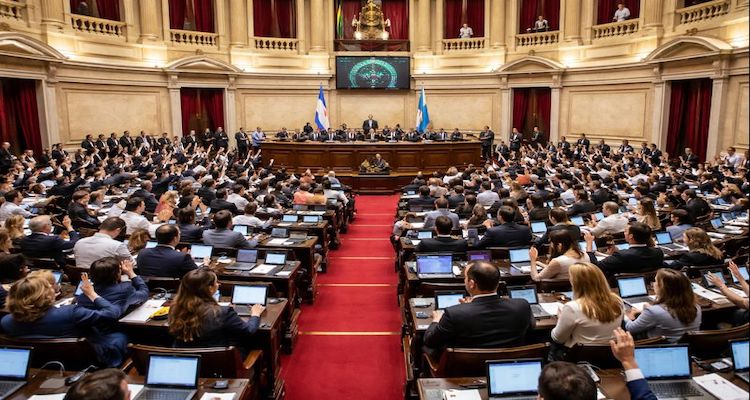
Argentina’s Congress approved the 2026 national budget on Friday, making it the first spending bill formally passed by lawmakers since President Javier Milei took office in December 2023.
The measure cleared the Senate with 46 votes in favor, 25 against, and one abstention. For Milei’s administration, the vote represents a significant institutional milestone after nearly two years of relying on extended budgets inherited from previous governments.
Those extensions, while legally permissible, had drawn criticism for leaving key sectors exposed to Argentina’s brutal inflation surge, which peaked near 300% annually in early 2024.
What the 2026 Budget Includes
The approved budget authorizes approximately $102 billion in spending, equivalent to around 148 billion Argentine pesos, and projects a cautiously optimistic economic outlook.
According to the government’s estimates, Argentina’s economy is expected to grow 5% in 2026, while inflation is forecast to slow sharply to 10.1%, a dramatic improvement from the hyperinflationary conditions of recent years.
The bill also targets a primary fiscal surplus of 1.2% of gross domestic product, reinforcing Milei’s central promise of restoring fiscal discipline after years of chronic deficits.
Governing Without a Budget: The Cost of Delay
The last budget approved by Congress dated back to 2023, before Milei assumed the presidency. Throughout 2024 and 2025, his government operated by extending prior spending plans rather than securing new legislative approval.
That approach had tangible consequences. Fixed budget allocations failed to keep pace with inflation, severely eroding funding for public services, universities, healthcare institutions, and social programs.
By April 2024, inflation had reached nearly 300% year-over-year, intensifying public frustration and fueling nationwide protests against austerity measures.
Independent Analysis Raises Red Flags
While the Milei administration has framed the new budget as a step toward normalization, independent analysts urge caution.
The Civil Association for Equality and Justice (ACIJ), a Buenos Aires–based public policy think tank, noted that the 2026 budget represents a 7% real-term increase compared to 2025, but still reflects a 24.6% real-term decrease compared to the 2023 budget approved by Congress.
ACIJ also warned that the government’s inflation assumptions may be overly optimistic, pointing out that several private forecasts place future price growth well above official estimates.
Social Spending Rises-But Not Enough
The budget includes nominal increases for social services such as healthcare, social security, and education, an acknowledgment of mounting pressure from lawmakers and civil society.
However, ACIJ stressed that these increases do not fully offset years of real-term declines caused by inflation and spending freezes.
In practical terms, many public institutions remain below their pre-crisis funding levels, even as demand for social support continues to rise amid lingering economic hardship.
Austerity, Protests, and Political Pushback
President Milei’s tenure has been defined by aggressive austerity policies aimed at shrinking the state, cutting subsidies, and balancing the books. While those measures helped Argentina post its first budget surplus in more than a decade in 2024, they also sparked sustained protests across major cities.
This year, Congress demonstrated growing resistance to Milei’s hardline approach by overriding presidential vetoes on legislation increasing funding for public universities, pediatric healthcare, and services for people with disabilities.
Those overrides underscored persistent tensions between the executive branch and lawmakers over the social costs of fiscal adjustment.
Shifting Power in Congress After Midterms
The political landscape has shifted in Milei’s favor since October’s midterm legislative elections.
His party, La Libertad Avanza, emerged as the largest minority bloc in the lower house and significantly expanded its presence in the Senate. While the party still lacks an outright majority, the strengthened position has improved the government’s ability to negotiate and advance legislation.
Officials believe the new congressional balance was instrumental in finally securing passage of the 2026 budget.
Reform Agenda Accelerates
With a budget now in place and greater legislative leverage, the Milei administration is preparing to push forward a series of structural reforms in the coming months.
Planned initiatives include overhauls to Argentina’s labor laws, tax system, and regulatory framework, all central to Milei’s vision of a smaller state and freer markets.
Supporters argue these reforms are necessary to unlock investment and stabilize long-term growth. Critics warn they could deepen inequality if not paired with stronger social protections.
A Turning Point, Not a Resolution
The approval of the 2026 budget marks a turning point for President Milei’s government, but not an endpoint.
Argentina remains deeply scarred by inflation, recession, and political polarization. Whether the budget’s growth projections prove realistic, and whether social tensions ease or intensify, will depend on how the numbers translate into daily life for ordinary Argentines.
For now, the vote signals that Milei’s economic experiment has entered a new phase, one backed by Congress, scrutinized by experts, and watched closely by a country eager for stability.
ALSO READ: Wall Street Pauses After Holiday Rally as Santa Claus Watch Begins
Disclaimer:
The information presented in this article is based on publicly available sources, reports, and factual material available at the time of publication. While efforts are made to ensure accuracy, details may change as new information emerges. The content is provided for general informational purposes only, and readers are advised to verify facts independently where necessary.