









5 New Non-Permanent Members Take Their Seats in the UNSC as Global Divisions Deepen
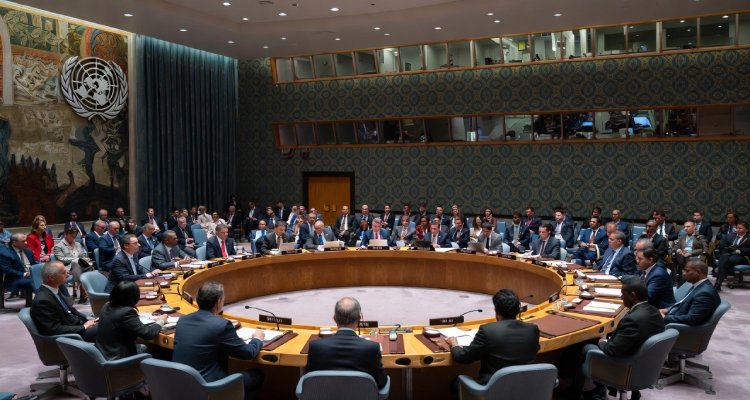
Five new countries join the UN Security Council as non-permanent members in 2026, stepping into a divided world facing conflict, veto deadlock, and diplomatic strain.
Introduction: A New Lineup at a Fractured Global Table
As the world enters 2026 amid escalating conflicts, humanitarian crises, and strained diplomacy, five newly elected nations have officially taken their seats on the United Nations Security Council (UNSC). On January 2, Bahrain, Colombia, the Democratic Republic of the Congo (DRC), Latvia, and Liberia began their two-year terms as non-permanent members of the UN’s most powerful decision-making body.
Their arrival comes at a moment when the Security Council—tasked with maintaining international peace and security—is increasingly shaped by geopolitical rivalries, frequent vetoes, and diminishing consensus. Whether these new members can help inject momentum into a divided chamber remains one of the most closely watched questions in global diplomacy this year.
Context & Background: How the Security Council Works
Established under the United Nations Charter in 1945, the Security Council is one of the UN’s six principal organs and holds unique authority. Unlike other UN bodies that issue recommendations, the Security Council’s decisions are binding on all 193 UN member states.
The Council is composed of 15 members:
- Five permanent members—China, France, Russia, the United Kingdom, and the United States—each wielding veto power.
- Ten non-permanent members, elected by the UN General Assembly for staggered two-year terms.
Every year, five non-permanent seats are contested through a secret ballot, requiring a two-thirds majority—at least 128 votes—even when candidates run uncontested. Seats are allocated based on regional representation, ensuring geographic balance across Africa, Asia, Europe, Latin America, and Western states.
Since its first meeting on January 17, 1946, in London, the Security Council has operated continuously from UN Headquarters in New York, with each member maintaining a permanent presence to allow emergency sessions at any time.
Main Developments: Who’s In, Who’s Out—and Why It Matters
The five incoming members replace Algeria, Guyana, South Korea, Sierra Leone, and Slovenia, whose terms concluded on December 31, 2025. They now join Denmark, Greece, Pakistan, Panama, and Somalia, who will continue serving through the end of 2026.
For January, Somalia assumes the rotating presidency, a role that changes monthly in English alphabetical order and gives the presiding country control over the Council’s agenda and meetings.
Each new member brings distinct regional perspectives:
- Bahrain represents Gulf and Middle Eastern dynamics during a period of heightened regional tension.
- Colombia enters with experience in peace processes and post-conflict reconciliation.
- The DRC, long affected by conflict itself, offers firsthand insight into peacekeeping and humanitarian operations.
- Latvia adds a strong Eastern European voice amid ongoing disputes related to Ukraine.
- Liberia, shaped by its own peacebuilding journey, brings emphasis on reconciliation and institutional recovery.
Together, they step into a Council confronting unresolved wars, shrinking humanitarian budgets, and widening ideological divides that increasingly limit unified action.
Expert Insight & Diplomatic Sentiment: Can New Voices Break Old Deadlocks?
Diplomats and UN analysts caution that while non-permanent members lack veto power, they can still influence negotiations, shape draft resolutions, and build coalitions behind the scenes.
“The effectiveness of the Security Council often depends on how creatively non-permanent members use their voice,” a senior UN affairs analyst noted. “Agenda-setting, mediation, and coalition-building can still matter—even in a polarized chamber.”
However, recent trends highlight the challenge ahead. After years of relative restraint following the Cold War, the use of veto power has surged. The Council recorded seven vetoes in 2023 and eight in 2024, reflecting deepening rifts among permanent members.
These divisions have complicated responses to major crises, particularly conflicts in Ukraine and the Middle East, where competing strategic interests have stalled decisive action.
Impact & Implications: What the Next Two Years Could Bring
The entry of five new non-permanent members reshapes voting dynamics but does not eliminate structural constraints. Any substantive resolution still requires at least nine affirmative votes and no veto from permanent members.
Yet the new lineup could influence:
- Humanitarian access negotiations, especially in conflict zones.
- Peacekeeping mandate renewals, where consensus is often fragile.
- Sanctions regimes, which require delicate diplomatic balance.
- Norm-setting debates, including civilian protection and post-conflict rebuilding.
As global conflicts persist and resources shrink, 2026 is expected to test whether the Security Council can move beyond entrenched positions to deliver meaningful outcomes—or remain gridlocked by power politics.
Conclusion: A Test of Diplomacy in an Era of Division
The arrival of Bahrain, Colombia, the Democratic Republic of the Congo, Latvia, and Liberia marks more than a routine rotation at the UN Security Council. It represents a critical moment for multilateral diplomacy at a time when international cooperation is under severe strain.
While the limits of the Council’s structure remain evident, the coming two years will reveal whether fresh perspectives, regional experience, and strategic diplomacy can help reopen space for dialogue and action. In a world increasingly defined by division, the performance of these new members may shape not only Council outcomes—but the credibility of global governance itself.
The information presented in this article is based on publicly available sources, reports, and factual material available at the time of publication. While efforts are made to ensure accuracy, details may change as new information emerges. The content is provided for general informational purposes only, and readers are advised to verify facts independently where necessary.