






WMO Predicts a Weak La Niña for the Next Three Months
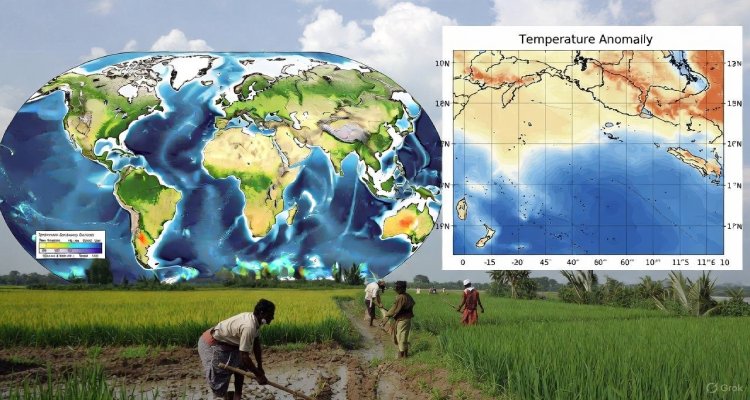
The WMO forecasts a weak La Niña for Dec–Feb 2025–26, with global weather shifts, warmer-than-normal temperatures, and major implications for climate-sensitive sectors.
Introduction: A Cooling Event Arrives in a Warming World
As the world continues to grapple with record-breaking temperatures and escalating climate extremes, a familiar Pacific phenomenon is making a quiet return. The World Meteorological Organization (WMO) has projected a 55% chance of a weak La Niña emerging between December 2025 and February 2026—a climate pattern known for its temporary cooling effect on global temperatures. But in today’s rapidly warming world, even La Niña’s cooling touch may not be enough to offset broader heat trends.
Understanding the Climate Context: What La Niña Really Means
La Niña and its counterpart, El Niño, are part of a natural climate rhythm known as the El Niño–Southern Oscillation (ENSO). These events normally occur every two to seven years and typically last nine to twelve months.
- El Niño warms surface waters in the tropical Pacific, altering wind patterns and often weakening monsoon systems, especially in countries like India.
- La Niña, on the other hand, cools the same region, strengthening monsoon winds and ushering in wetter-than-usual weather in many tropical and subtropical zones.
The terms themselves—El Niño (“boy child”) and La Niña (“girl child”)—were first coined by Peruvian fishermen for the unusual warm and cool currents that appeared seasonally off South America.
But while these events are natural, they unfold today against the backdrop of human-induced climate change, which is intensifying extreme weather, altering rainfall cycles, and pushing global temperatures relentlessly upward. As a result, even “normal” ENSO phases now carry amplified risks.
Main Development: WMO’s Forecast for a Weak La Niña
According to the latest WMO Update:
- There is a 55% likelihood that a weak La Niña will develop from December 2025 through February 2026.
- Despite La Niña’s traditional cooling influence, many regions are expected to remain warmer than average, underscoring how powerful global warming has become.
- Seasonal ENSO forecasts continue to serve as vital planning tools for sectors like agriculture, energy, health, transportation, and disaster management.
This forecast holds major implications for weather-sensitive economies, particularly those dependent on predictable rainfall or stable temperatures.
Expert Insights: Navigating a Weak but Significant Climate Shift
Climate scientists have long emphasized the importance of early ENSO predictions. “A weak La Niña doesn’t mean weak impacts,” notes a senior climate specialist at the WMO. “Even small shifts in Pacific temperatures can significantly influence global weather patterns—especially during peak agricultural and winter planning cycles.”
Meteorologists also point out that ENSO’s effects differ dramatically by region:
- Australia often experiences heavy rainfall and flooding during La Niña years.
- Southeast Asia and parts of southern Africa typically see wet conditions.
- South America, especially its western regions, may experience drought.
- The southern United States can receive increased precipitation, while the Pacific Northwest tends toward cooler, wetter winters.
Public reaction has ranged from concern among farmers to cautious optimism in drought-prone regions looking for relief. Yet experts warn that no ENSO phase should be interpreted as a guarantee—only as a probabilistic outlook that helps guide preparedness.
What La Niña Means for Global Regions: Anticipated Impacts
India: Potential Boost for Monsoon-Dependent Sectors
La Niña is historically associated with stronger monsoon rains, which could help replenish reservoirs, support winter crops, and ease water scarcity concerns. However, excessive rains can also trigger flooding, disrupt supply chains, and damage infrastructure.
Australia and Oceania: Flooding Risks
Australia may face increased risks of floods, coastal erosion, and storm events—a pattern consistent with previous La Niña episodes.
Horn of Africa: Wetter Conditions
The region often experiences enhanced rainfall, which can benefit agriculture but heighten risks of locust outbreaks or flash floods.
South America: Drier Conditions
Countries along the Pacific coast, including Peru and Chile, may see reduced rainfall, threatening crops and hydropower production.
United States: Wetter South, Cooler Northwest
The southern U.S. typically witnesses more rainfall, while the northwestern states may experience colder and wetter winters.
Why ENSO Forecasting Matters More Than Ever
ENSO-related climate forecasts are not academic exercises; they translate into millions of dollars in economic savings by enabling early warnings and preventive measures. These forecasts influence:
- Agricultural planning (crop sowing, irrigation, pest management)
- Energy demand forecasting (heating/cooling requirements)
- Water resource management
- Public health preparedness (disease outbreaks linked to weather patterns)
- Transportation and logistics (storm disruptions, flood risks)
- Disaster management and humanitarian planning
For nations vulnerable to climate extremes, timely ENSO insights can be the difference between preparedness and crisis.
The Larger Picture: ENSO in a Warming Climate
What is striking about this forecast is not the return of La Niña itself, but the reality that even a cooling event may not significantly lower global temperatures. The planet today is far warmer than during previous ENSO cycles.
Climate experts reiterate that while ENSO shapes short-term weather, long-term warming trends are increasingly dominating seasonal outcomes. This means:
- Hot extremes may remain elevated during a weak La Niña
- Rainfall variability may be more erratic
- Disaster risks could become more pronounced
- Traditional ENSO patterns may not perfectly match their historical behavior
This subtle but important shift highlights the need for climate-resilient infrastructure, adaptive agriculture, and robust forecasting systems.
Conclusion: Preparing for a La Niña That Looks Different
The WMO’s prediction of a weak La Niña for the coming three months offers both clarity and caution. While this natural event is known for its cooling influence, the broader climate landscape—shaped by accelerating global warming—means the world should not expect a dramatic temperature dip or predictable rainfall outcomes.
As governments, industries, and communities look ahead to the winter of 2025–26, the message is clear: prepare, adapt, and stay informed. ENSO may be a natural cycle, but the world it operates in is anything but normal.
Disclaimer :This article is based solely on the provided headline and information. It is intended for educational and informational purposes and should not be used as a substitute for professional meteorological guidance.