







Why Your Future Heart Might Be Part Machine
Advances in cardiac robotics and bioengineering are reshaping the future of human health, making hybrid artificial–biological hearts a real possibility.
Introduction: A Future Where Hearts Are Rebuilt, Not Replaced
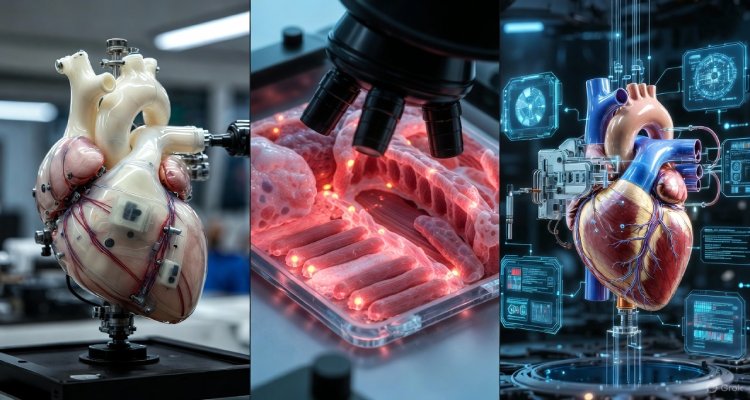
On a quiet morning in a Boston research lab, a translucent, pulsing structure sits beneath a microscope—part human tissue, part engineered machine. It contracts rhythmically, not because a surgeon repaired it, but because scientists built it to beat. This isn’t science fiction anymore. A future where your heart is partly biological and partly machine is rapidly approaching, bringing hope to millions living with cardiac disease—the world’s leading cause of death.
As researchers race toward new innovations, the question is no longer whether machines will become part of our bodies, but how soon they will save the hearts that medicine can’t heal on its own.
Context & Background: Why Humanity Needs a New Kind of Heart
Heart disease kills more people globally than any other condition. As populations age and lifestyles change, the demand for heart transplants far exceeds supply. Traditional solutions—medications, open-heart surgeries, and donor organs—face enormous limitations:
- Donor shortages: Thousands die waiting for hearts that never arrive.
- Rejection risks: Even successful transplants require lifelong immunosuppression.
- Complex repairs: Many heart conditions are simply too advanced or too rare for surgical correction.
These pressures have pushed scientists into a new frontier: combining human tissue with electromechanical components to create hybrid organs that can replace—or dramatically support—failing hearts.
The result? A bold new era in bioengineering that is reshaping the meaning of life-saving care.
Main Developments: The Rise of Hybrid, Machine-Enhanced Hearts
1. Soft Robotic Hearts That Beat Like the Real Thing
Researchers are developing soft robotic sleeves that wrap around failing hearts and assist with pumping. Unlike traditional artificial hearts that fully replace the organ, these sleeves amplify the heart’s natural movements. They contract and rotate using pneumatic or hydraulic systems, mimicking the organ’s biomechanics without touching blood directly—reducing clotting and infection risks.
2. Bioengineered Heart Tissue Grown in the Lab
Scientists have successfully grown heart muscle cells from stem cells, crafting patches that can repair damaged areas after a heart attack. But recent breakthroughs take this further: miniature hearts grown with chambers, valves, and electromechanical rhythms. These structures behave like early-stage organs and can attach to machine-guided systems for strength and longevity.
3. Smart Pacemakers and AI-Driven Cardiac Devices
The next generation of pacemakers is far more than a pulse generator. AI-enhanced devices can:
- Learn a patient’s cardiac rhythm
- Predict arrhythmias before they strike
- Deliver micro-targeted therapy
- Sync wirelessly with external monitors
These devices already represent “part machine, part human” integration—and they’re getting more advanced with every passing year.
4. Fully Artificial Hearts Entering Clinical Reality
Companies around the world are testing total artificial hearts built from synthetic materials, sensors, and miniaturized pumps that can mimic natural cardiac output. New iterations are quieter, smaller, and more adaptable than previous models—designed to last longer than biological organs ever could.
Expert Insights: Why Scientists Believe Hybrid Hearts Are the Future
Experts in cardiology and bioengineering say the shift toward machine-integrated hearts isn’t speculative—it’s necessary.
“We’re not replacing humanity with machinery. We’re using machinery to preserve human life where biology alone cannot,” says a leading cardiac robotics researcher at MIT.
Cardiologists emphasize that hybrid hearts may soon become the standard option for severe cardiac failure, especially for patients who cannot tolerate donor organs or suffer repeated episodes of heart damage.
Healthcare analysts echo this sentiment:
“If artificial intelligence and robotics can keep even a portion of the heart functioning safely, we’re talking about saving millions of lives,” notes a prominent medical futurist.
Public reaction is mixed—some embrace the idea of engineered life-saving organs, while others hesitate at the concept of merging human biology with machines. Yet for patients living with daily fear of sudden cardiac failure, the promise of a hybrid heart is nothing short of revolutionary.
Impact & Implications: How Machine-Assisted Hearts Could Transform Lives
1. A Lifeline for Patients on Transplant Waiting Lists
Hybrid hearts could dramatically reduce dependence on donor organs, making lifesaving treatments available to far more patients.
2. Longer Lifespans & Better Quality of Life
Machine-supported hearts may outperform biological ones, offering stable rhythms, controlled contractions, and precise cardiac output adjustments.
3. A New Era of Personalized, Predictive Medicine
With AI-driven monitoring, a machine-enhanced heart may detect abnormalities days or weeks before symptoms appear—preventing strokes, arrhythmias, and cardiac arrest.
4. Ethical & Social Questions
As humans integrate more machinery into their bodies, society will face complex questions about identity, accessibility, and the boundaries of medical intervention.
5. Health Infrastructure Transformation
Hospitals will need new specialists trained in cardiac robotics, long-term device monitoring, and hybrid-organ maintenance.
Conclusion: A Future Built on Hope, Innovation, and Human Ingenuity
The idea that your future heart could be part machine may feel bold, even unsettling. But behind this innovation is a simple truth: humanity is running out of biological solutions to the world’s most persistent killer. Hybrid hearts offer a powerful alternative—one built on decades of scientific progress, engineering brilliance, and relentless hope.
As technology continues to advance, the boundary between human and machine will blur not as a threat, but as a lifeline. And for millions waiting for a second chance at life, that future cannot come soon enough.
Disclaimer :This article is for informational purposes only and does not substitute professional medical advice, diagnosis, or treatment.