










Why Water Doesn’t Bloat Your Stomach, but Cold Drinks Often Do
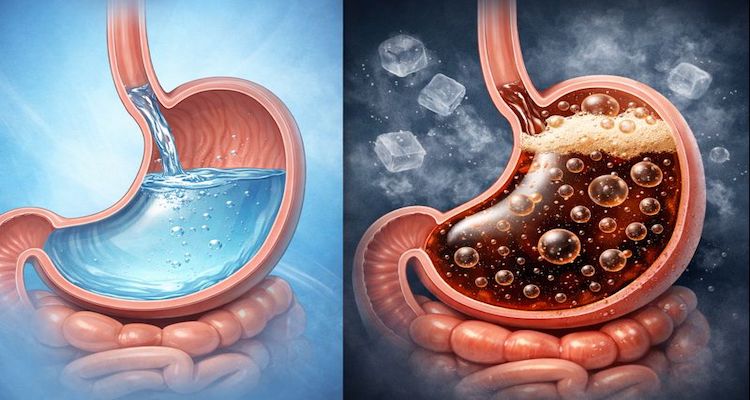
Many people swear they feel bloated after a cold soda or iced beverage but rarely after drinking plain water. The sensation is common, uncomfortable, and often misunderstood. So what’s really happening inside the body, and why does temperature and carbonation make such a difference?
Understanding this everyday digestive mystery matters because bloating affects comfort, eating habits, and even long-term gut health. The answer lies in how the stomach processes liquids, gas, and temperature.
Understanding Bloating: What the Body Is Reacting To
Bloating is not the same as weight gain or fat accumulation. It’s a temporary feeling of fullness, tightness, or pressure in the abdomen, often caused by gas, slowed digestion, or fluid shifts.
The stomach is designed to expand and contract. It can easily accommodate liquids, but certain triggers—like carbonation, cold temperatures, or sugar change how quickly and comfortably digestion happens.
Water, especially at room temperature, is the simplest liquid the digestive system handles.
ALSO READ: WHO Validates Brazil for Eliminating Mother-to-Child Transmission of HIV
Why Plain Water Rarely Causes Bloating
Water Moves Quickly Through the Stomach
Plain water does not require digestion. Once swallowed, it passes rapidly from the stomach into the small intestine, where absorption begins almost immediately.
Because it doesn’t linger, water doesn’t stretch the stomach walls for long periods. The result is hydration without pressure.
No Gas, No Fermentation
Water contains no dissolved gases, sugars, or additives. That means:
- No gas release in the stomach
- No fermentation by gut bacteria
- No delayed emptying
This is why even large amounts of water typically don’t cause that “swollen” feeling.
Temperature Matters
Room-temperature or slightly warm water aligns closely with the body’s internal temperature. The stomach doesn’t need to work harder to adjust, allowing smooth muscle contractions to continue normally.
Why Cold Drinks Are More Likely to Cause Bloating
Cold beverages introduce several factors that can slow digestion and increase discomfort.
Cold Temperatures Can Slow Gastric Emptying
When a very cold liquid enters the stomach, blood vessels constrict slightly as part of the body’s temperature regulation response. This can temporarily slow stomach contractions.
A slower-moving stomach holds liquid and air longer, increasing the sensation of fullness.
Carbonation Traps Gas in the Gut
Cold drinks are often carbonated sodas, sparkling water, energy drinks, and beer.
Carbonation releases carbon dioxide gas once it warms in the stomach. That gas has to go somewhere.
If it doesn’t escape quickly through burping, it stretches the stomach lining, triggering bloating.
According to gastroenterologist Dr. Kyle Staller of Harvard Medical School, “Carbonated beverages are one of the most common dietary causes of bloating because they introduce excess gas directly into the digestive tract.”
ALSO READ: The Microbes That Could Rewrite Mental Health
Sugar and Sweeteners Add to the Problem
Many cold drinks contain high amounts of sugar or artificial sweeteners.
These compounds can:
- Slow digestion
- Pull water into the intestines
- Feed gas-producing gut bacteria
Fructose, commonly found in sodas and fruit drinks, is especially hard for some people to absorb fully. When it reaches the colon undigested, bacteria ferment it, producing gas.
Artificial sweeteners like sorbitol and sucralose are also known bloating triggers for sensitive individuals.
The Role of Drinking Speed
Cold drinks are often consumed quickly, especially in hot weather.
Drinking fast increases the amount of air swallowed along with the liquid. This swallowed air—known as aerophagia—adds to stomach distension and discomfort.
Water, particularly when sipped slowly, introduces far less air into the digestive system.
Public Experience Matches the Science
Many people intuitively notice these effects.
Fitness trainers often advise clients to avoid ice-cold beverages during workouts. Yogis and traditional medicine systems like Ayurveda have long promoted warm or room-temperature water to support digestion.
Online health forums and clinical surveys consistently report increased bloating from cold sodas and iced coffees compared to plain water.
Who Is Most Affected?
Certain groups are more sensitive to cold drinks:
- People with irritable bowel syndrome (IBS)
- Individuals with lactose intolerance or fructose malabsorption
- Those prone to acid reflux
- People with slow digestion or high stress levels
For these individuals, cold drinks can amplify symptoms significantly.
ALSO READ: How Stress Is Quietly Becoming Humanity’s Most Dangerous Toxin
What Happens Next Inside the Body?
After consuming a cold, carbonated drink:
- Gas expands as the liquid warms
- Stomach emptying slows slightly
- Pressure builds in the abdomen
- The brain interprets stretching as bloating
The sensation usually fades within an hour, but repeated exposure can worsen digestive sensitivity over time.
Practical Takeaways for Everyday Comfort
If bloating is a frequent issue, small changes can help:
- Choose room-temperature water more often
- Limit carbonated drinks
- Sip slowly instead of gulping
- Avoid sugary cold beverages on an empty stomach
These habits support smoother digestion without eliminating enjoyment entirely.
A More Mindful Way to Drink
Water doesn’t bloat the stomach because it works in harmony with the body’s natural processes. Cold drinks, especially carbonated and sweetened ones, challenge those processes just enough to cause discomfort.
The difference isn’t imagined it’s physiological.
Understanding how temperature, gas, and digestion interact empowers people to make simple choices that improve daily comfort and long-term gut health.
ALSO READ: Why We’re Entering the Era of Personalized Immunity
This article is intended for general awareness and educational purposes only. It should not be considered medical advice. Readers are encouraged to consult qualified healthcare professionals for personal health decisions.