








Why the Next Academic Revolution Will Happen Outside Schools
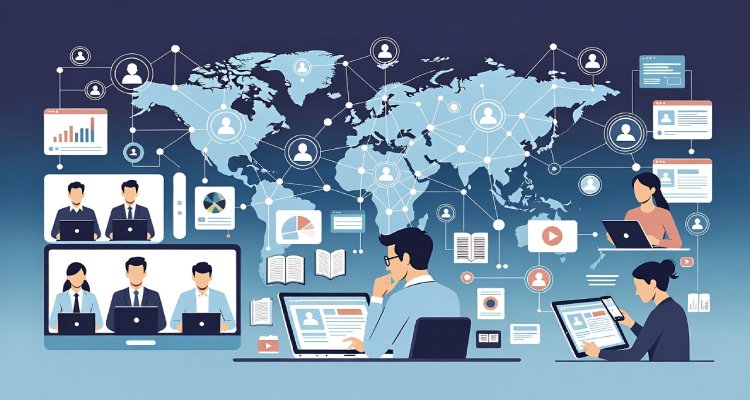
Why learning is shifting beyond schools as technology, self-directed education, and decentralized knowledge reshape the future of academia.
Introduction: Learning Breaks Free From the Classroom
For centuries, schools and universities have been treated as the uncontested centers of human knowledge. From medieval lecture halls to modern smart classrooms, society has largely believed that meaningful learning happens within institutional walls. But today, that assumption is quietly collapsing.
Across the world, people are mastering complex skills, building careers, and advancing knowledge without stepping inside a traditional school. Programmers learn from open-source communities, scientists collaborate on independent research platforms, and entrepreneurs build global companies with nothing more than online resources and peer networks.
The next academic revolution is not coming from a new curriculum or elite university—it is emerging outside schools altogether.
Context & Background: How Schools Lost Their Monopoly on Knowledge
Formal education systems were designed for an industrial age. Schools standardized learning to produce predictable outcomes: literacy, discipline, and job readiness. For decades, this model worked reasonably well.
However, three major shifts have destabilized the traditional academic structure:
1. Information Is No Longer Scarce
Once, schools controlled access to books, labs, and experts. Today, high-quality knowledge is freely available online—often updated faster than textbooks.
2. Skills Age Faster Than Degrees
In fields like technology, media, and science, skills become outdated in years, sometimes months. Academic institutions struggle to adapt at this pace.
3. Credentials Are Losing Absolute Authority
Employers increasingly value portfolios, projects, and demonstrable skills over formal degrees, especially in digital and creative industries.
As a result, schools are no longer the sole gatekeepers of learning—or credibility.
Main Developments: Where the New Academic Revolution Is Taking Shape
Self-Directed Learning Ecosystems
Millions of learners now design their own education paths. Platforms offering open courses, research papers, and collaborative forums allow individuals to go deeper than standardized syllabi.
Unlike traditional classrooms, these systems reward curiosity, speed, and real-world application rather than memorization.
Communities as Classrooms
Knowledge today often spreads through communities rather than institutions. Open-source software communities, independent research collectives, and online study groups function like decentralized universities—without administrators or tuition fees.
In these spaces, learning is peer-driven, problem-focused, and constantly evolving.
AI as a Personalized Tutor
Artificial intelligence has changed how people learn complex subjects. Instead of one-size-fits-all teaching, learners now receive personalized explanations, instant feedback, and adaptive challenges—something schools struggle to provide at scale.
This has made advanced learning accessible to people regardless of geography or economic background.
Credential Alternatives Are Rising
Micro-credentials, skill certifications, and project-based evaluations are increasingly accepted in professional environments. These alternatives reflect what a person can do, not where they studied.
Together, these developments signal a profound shift: learning is separating from schooling.
Expert Insight & Public Reaction: A Growing Consensus
Education researchers and economists increasingly agree that institutional education is facing structural limits.
“Schools were built to transmit knowledge. Today, knowledge transmits itself,” says one global education analyst. “Institutions must adapt or become optional.”
Public sentiment reflects this change. Parents question rising tuition costs. Students doubt the return on investment of long degrees. Professionals prefer flexible learning that fits real careers.
At the same time, educators acknowledge that schools still matter—but not as the exclusive authority they once were.
Impact & Implications: Who Benefits—and Who Must Adapt
Winners
- Lifelong learners who can reskill continuously
- People in remote or underserved regions
- Independent researchers and creators
- Employers seeking practical competence over credentials
Institutions Under Pressure
Schools and universities now face a choice:
- Evolve into hubs of mentorship, research, and community
- Or risk becoming expensive credential factories with declining relevance
A More Inclusive Knowledge Economy
When learning escapes institutional barriers, talent is no longer limited by admission criteria, geography, or wealth. This could democratize innovation on a global scale.
However, it also raises questions about quality control, misinformation, and unequal access to digital tools—challenges the next phase of learning must address.
Conclusion: Education Is Being Redefined, Not Destroyed
The academic revolution unfolding today is not anti-school—it is post-school. Learning is becoming fluid, decentralized, and deeply personal.
Schools will not disappear, but their role will change. They will no longer define who is educated. Instead, education will be defined by what people can learn, build, and contribute—anywhere in the world.
The future of knowledge is not confined to classrooms. It is already alive in networks, communities, and minds beyond institutional walls.
The information presented in this article is based on publicly available sources, reports, and factual material available at the time of publication. While efforts are made to ensure accuracy, details may change as new information emerges. The content is provided for general informational purposes only, and readers are advised to verify facts independently where necessary.