







Why Shravan Is the Most Powerful Month for Shiva Worship
Within the Hindu lunar calendar, the month of Shravan occupies a uniquely sacred position. Across temples and pilgrimage routes, devotees intensify their worship of Lord Shiva during this period through fasting, rituals, and prayer.
While many associate Shravan with seasonal monsoon rains, its deeper significance lies in ancient mythology and spiritual symbolism.
The Cosmic Calendar of Devotion
Hindu months are traditionally determined by lunar cycles and constellations.
Shravan begins when the full moon aligns with the Shravana Nakshatra, an astronomical marker recognized in Vedic tradition.
The timing reinforces the connection between spiritual practice and celestial rhythms.
Ancient scholars believed that aligning human activities with cosmic cycles strengthened spiritual awareness.
The Period of Divine Responsibility
According to traditional belief, a significant cosmic shift occurs shortly before Shravan begins.
On a day known as Devshayani Ekadashi, Lord Vishnu is said to enter a period of yogic rest lasting four months.
During this interval, Shiva assumes greater responsibility for maintaining cosmic balance.
This belief has contributed to the perception that Shravan is the most favorable time for seeking Shiva’s blessings.
Rituals That Define the Month
Several rituals dominate Shravan observances.
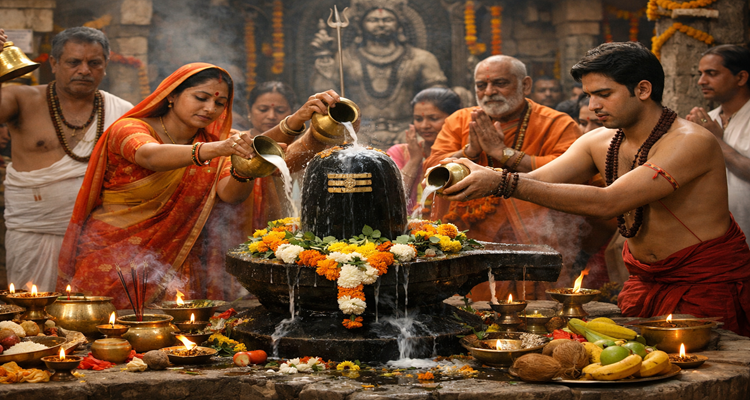
The most widely practiced is Jal Abhishek, the ceremonial pouring of water or milk over the Shiva Lingam.
Devotees also offer sacred herbs, flowers, rice grains, and sandalwood paste during temple visits.
These offerings symbolize purity, devotion, and gratitude.
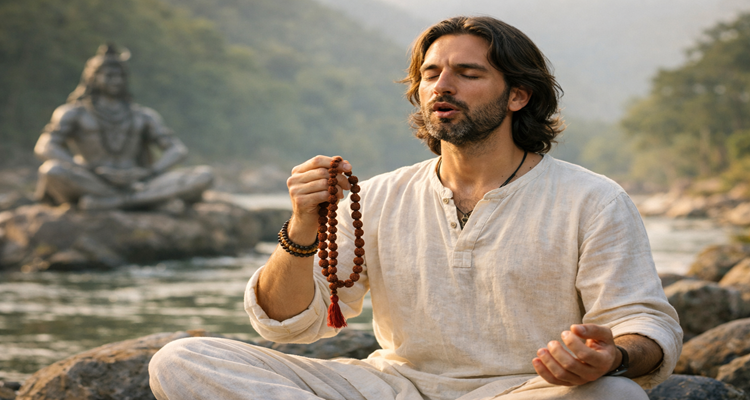
Fasting and mantra chanting are also common spiritual disciplines observed throughout the month.
The Role of Pilgrimage
For many believers, Shravan is incomplete without visiting a Shiva temple.
Pilgrimages to sacred sites such as Varanasi, Ujjain, and Haridwar draw large crowds during this time.
These journeys are often undertaken as acts of penance, gratitude, or spiritual renewal.
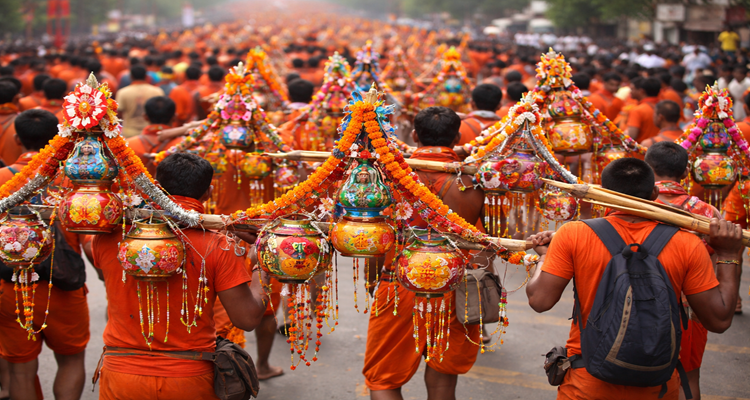
Pilgrims may travel long distances on foot, viewing the journey itself as an offering of devotion.
Community and Cultural Celebration
The month also fosters strong communal participation.
Temples host devotional singing, spiritual discourses, and collective prayer gatherings.
Local communities often organize charitable activities such as distributing food and water to pilgrims.
These events reinforce the social dimension of spirituality.
Modern Access to Ancient Rituals
In recent years, technology has expanded access to traditional practices.
Many temples now broadcast rituals online, allowing devotees to participate from distant locations.
Digital platforms also enable individuals to sponsor temple offerings remotely.
These innovations ensure that ancient customs remain accessible to global audiences.
Real-World Impact
Shravan’s observances generate significant cultural and economic activity.
Temple towns experience a surge in visitors, boosting local businesses and tourism.
More importantly, the month reinforces spiritual values such as discipline, humility, and gratitude.
For many participants, Shravan becomes a time of personal reflection and renewal.
Conclusion
Shravan continues to stand as one of the most spiritually vibrant periods in the Hindu calendar.
Its rituals and traditions are deeply rooted in mythological narratives and cosmic symbolism. For devotees of Shiva, the month represents an opportunity to deepen their spiritual connection and reaffirm their commitment to faith.
Across centuries, Shravan has remained a powerful reminder of the enduring relationship between humanity, the cosmos, and the divine.
This content is published for informational or entertainment purposes. Facts, opinions, or references may evolve over time, and readers are encouraged to verify details from reliable sources.