






Why Shravan Is Hinduism’s Most Sacred Month
Across India and among Hindu communities worldwide, the month of Shravan is widely regarded as one of the most spiritually powerful periods of the year. Temples dedicated to Lord Shiva fill with devotees, pilgrimages intensify, and the chant “Om Namah Shivaya” echoes across sacred sites.
Yet the deeper reasons behind Shravan’s importance extend far beyond seasonal monsoon traditions. Its significance is rooted in cosmic mythology, ancient astronomy, and a powerful story of sacrifice that shaped the spiritual traditions still practiced today.
The Astronomical Roots of Shravan
Despite the popular belief that Shravan is associated with rainfall, the month’s name originates from an astronomical phenomenon.
Shravan begins when the full moon aligns with the Shravana Nakshatra, a constellation recognized in ancient Vedic astronomy. Hindu lunar months are traditionally defined by celestial movements rather than seasonal patterns.
The Sanskrit word Shravan itself derives from a root meaning “to hear” or “to listen.” This reflects a time when sacred knowledge was preserved through oral tradition. Before written texts existed, spiritual teachings were transmitted by listening and memorization.
Thus, the very name of the month symbolizes learning, devotion, and spiritual awareness.
The Mythological Crisis That Changed the Cosmos
The importance of Shravan is closely tied to one of the most dramatic stories in Hindu mythology: the churning of the cosmic ocean, known as Samudra Manthan.
According to ancient scriptures, a curse once weakened the celestial beings known as the Devas. The curse was delivered by the sage Durvasa after the king of the gods, Indra, disrespected a sacred garland he had received as a divine gift.
As the Devas gradually lost their strength, the Asuras (demons) seized the opportunity to challenge their dominance. Facing defeat, the Devas sought guidance from the divine trinity, Brahma, Vishnu, and Shiva.
The solution was unprecedented.
The gods would temporarily join forces with their rivals to churn the cosmic ocean in search of Amrit, the nectar of immortality.
The Poison That Threatened Creation
The churning of the ocean unleashed many mystical treasures, but the first substance to emerge was far more terrifying.
A deadly toxin called Halahal rose from the depths, spreading fumes so destructive that it threatened the entire universe. Neither gods nor demons could withstand its potency.
Even the creator deity Brahma and the preserver Vishnu were unable to neutralize it.
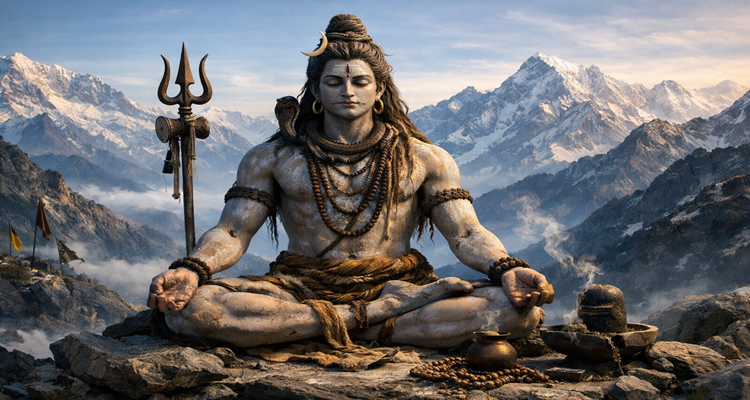
In this moment of cosmic crisis, all beings turned to Lord Shiva.
Shiva’s Sacrifice and the Birth of Neelkanth
To prevent universal destruction, Shiva made an extraordinary decision.
He consumed the deadly poison himself.
The toxin was so powerful that it turned his throat blue, earning him the name Neelkanth, meaning “the blue-throated one.” But even Shiva endured intense suffering from the poison’s burning effects.
In response, gods and sages poured water over him to cool his body.
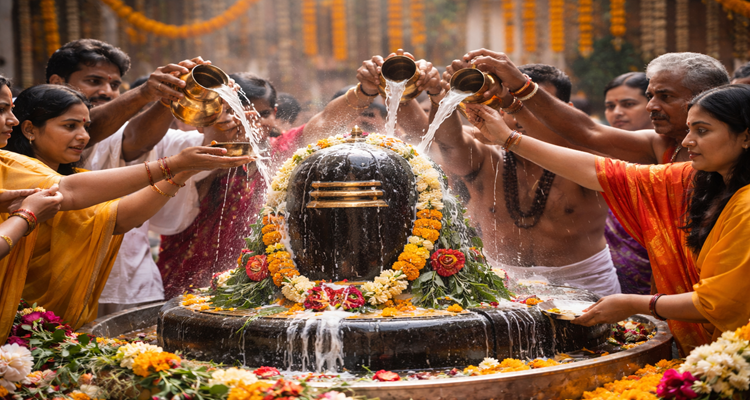
This act is believed to be the origin of one of Hinduism’s most recognizable rituals: Jal Abhishek, the ceremonial pouring of water on the Shiva Lingam.
Why Water Offerings Define Shravan
The cooling ritual performed to relieve Shiva’s pain became a permanent devotional tradition.
During Shravan, millions of devotees offer water, milk, and sacred liquids to Shiva temples. The ritual symbolizes gratitude for the divine act that protected the universe.
Many scriptures emphasize the spiritual potency of these practices during this month.
Ancient texts such as the Shiva Purana, Skanda Purana, and Linga Purana describe Shravan worship as particularly powerful for spiritual purification and divine blessings.
Even simple offerings—water, sacred herbs, rice grains, or sandalwood, are believed to carry profound significance.
A Month When Shiva Is Closest to Devotees
Another mythological explanation adds to Shravan’s spiritual importance.
According to tradition, Devshayani Ekadashi marks the beginning of four months when Lord Vishnu enters cosmic rest, known as yogic sleep.
During this time, responsibility for maintaining cosmic balance shifts to Shiva.
As a result, many believers consider Shravan the period when Shiva is most attentive to prayers and devotion.
This belief explains why pilgrimages, temple rituals, and fasting practices intensify during the month.
A Universal Deity Beyond Gods and Demons
One of the most fascinating aspects of Shiva worship is its inclusivity.
In mythological narratives, Shiva grants blessings not only to gods but also to demons and sages who approach him with sincere devotion.
A famous example is Shukracharya, the spiritual teacher of the Asuras, who received powerful knowledge through Shiva’s grace after performing intense penance.
This impartial nature reinforces Shiva’s reputation as a deity who transcends divisions between good and evil.
Real-World Impact: A Living Tradition
Today, Shravan is observed through numerous spiritual practices.
Devotees undertake pilgrimages, observe fasting rituals, and chant sacred mantras. One of the most visible traditions is the Kanwar Yatra, in which pilgrims carry holy river water to offer at Shiva temples.
The rituals strengthen community bonds while preserving ancient spiritual heritage.
In modern times, technology has also expanded access to sacred spaces. Digital platforms now allow devotees to participate in temple rituals remotely, enabling global audiences to remain connected to these traditions.
Conclusion
Shravan is far more than a seasonal observance or religious festival.
It represents a profound intersection of mythology, astronomy, philosophy, and devotion. At its heart lies a story of sacrifice, one that highlights Shiva’s willingness to endure suffering for the survival of the universe.
For millions of devotees, the month remains a powerful reminder that spiritual renewal often begins with humility, gratitude, and devotion.
Continue Exploring:
How Shiva’s Symbolism Speaks to Everyday Life
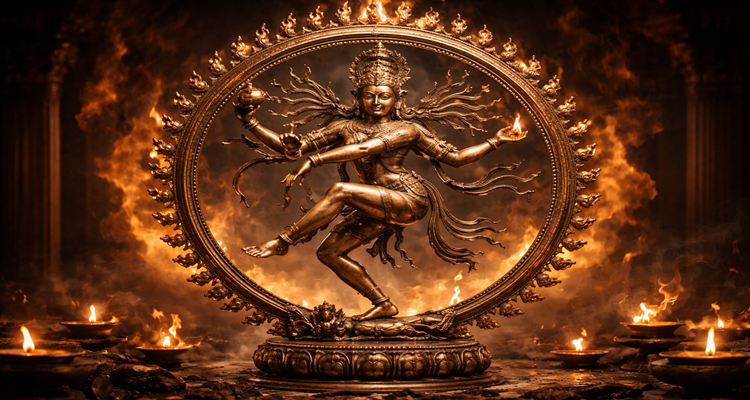
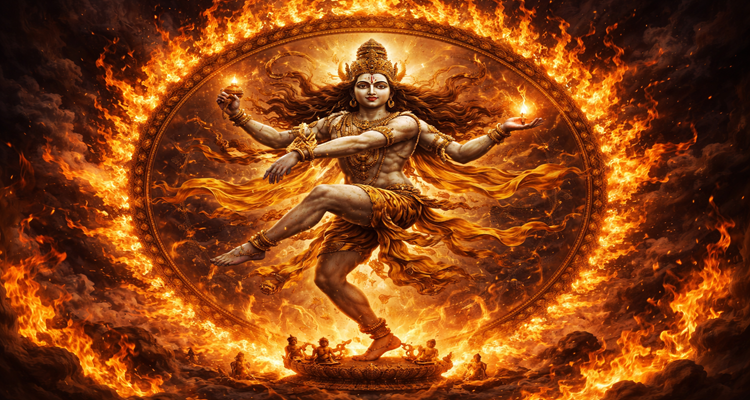
What Nataraja Teaches a World Living in Upheaval
Why Shiva Endures as a Symbol of Cosmic Balance
This content is published for informational or entertainment purposes. Facts, opinions, or references may evolve over time, and readers are encouraged to verify details from reliable sources.