










Why Future Kitchens Might Be Completely Scentless
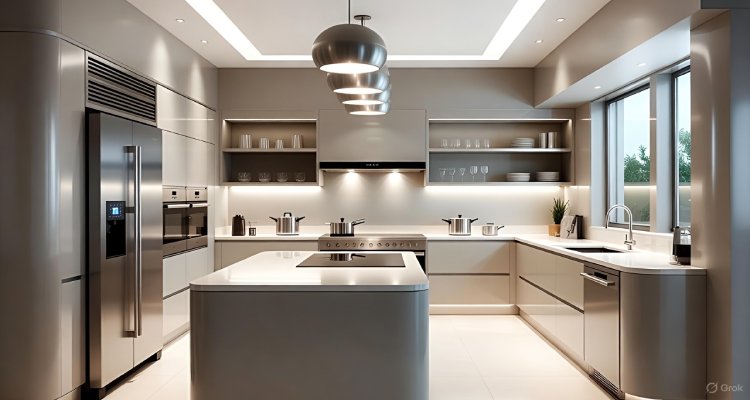
Future kitchens could eliminate odors entirely, using advanced technology to neutralize smells while redefining cooking and dining experiences.
The Smell of a Future Without Smell
Imagine walking into a kitchen where the aroma of sizzling onions, roasting coffee, or fresh bread is entirely absent. No wafting scents, no lingering odors clinging to your clothes or furniture—just a perfectly neutral environment. While it may sound like science fiction, researchers and appliance developers are actively exploring technologies that could render future kitchens completely scentless.
Context: Why Kitchens Smell Matters
Traditionally, a kitchen’s smell has been both a sensory pleasure and a potential problem. The aroma of a home-cooked meal evokes comfort, memory, and connection, but unwanted odors—from fish, spices, or burnt food—can linger for hours, sometimes permeating every corner of a home.
Over the past decade, consumer demand for cleaner, more controlled living environments has driven innovation in air purification and odor management. From carbon filters to ionizing purifiers, appliances are evolving to balance fresh scents with odor neutrality. The next frontier, experts suggest, is a kitchen that can eliminate scent entirely without affecting taste or the cooking experience.
How Scentless Kitchens Could Work
The emerging concept of a scentless kitchen relies on advanced air filtration, chemical neutralization, and even digital scent technology. Engineers are experimenting with systems that:
- Capture and neutralize odor molecules at the source: Using ultra-fine filters and catalytic converters, appliances could trap volatile organic compounds before they disperse.
- Control environmental scent digitally: Some prototypes use micro-encapsulation technology to release neutralizing agents that interact with lingering molecules.
- Integrate smart monitoring: Sensors could detect and adapt to cooking intensity, automatically adjusting ventilation or scent neutralization in real time.
Companies like Electrolux and Panasonic are reportedly exploring next-generation air management in smart kitchens, while research institutions are examining molecular-level filtration that leaves air “chemically clean” yet comfortable for humans.
Expert Perspectives and Public Reaction
Dr. Lila Chen, a food scientist specializing in sensory perception, notes, “Odor plays a crucial role in taste perception. A completely scentless kitchen might challenge our natural sensory cues, but it could also revolutionize urban living, where space is shared and cooking smells often create friction.”
Consumer reactions are mixed. Enthusiasts of ultra-modern, minimalist lifestyles see scentless kitchens as a breakthrough in hygiene and design. Others, particularly culinary professionals, worry that removing aromas may diminish the joy and cultural significance of cooking. Social media debates are already emerging, with some users imagining scentless kitchens as a solution for apartment living, while others call it a sterile, soul-less concept.
Implications for Cooking, Design, and Daily Life
If scentless kitchens become mainstream, the implications would be wide-ranging:
- Urban living and shared spaces: Odorless cooking could solve conflicts in multi-unit dwellings and co-living spaces.
- Health and hygiene: Reduced exposure to airborne particles from cooking could benefit people with allergies or respiratory conditions.
- Culinary experiences: Restaurants and home chefs might need to rely more on visual presentation, texture, and flavor combinations, since aromas will no longer signal taste cues.
- Smart home integration: Kitchens may become more connected, with automated ventilation systems responding to real-time cooking activities, enhancing convenience.
Some futurists speculate that scentless kitchens could also be paired with “digital flavor augmentation,” where aromas and tastes are simulated through augmented reality or molecular gastronomy—essentially creating meals that appeal to the senses without actual scent.
Looking Ahead: The Future of Smell in Homes
While fully scentless kitchens remain experimental, the concept reflects broader trends in technology-driven home design: control, customization, and clean living. As air quality concerns and urban density grow, neutralizing kitchen odors may move from novelty to necessity.
Yet, the human love of smell is unlikely to vanish entirely. Many experts predict hybrid solutions—kitchens that can selectively block unpleasant odors while allowing desirable aromas to enhance the cooking experience. In other words, the future might not be completely scentless, but perfectly controlled in a way that balances practicality with sensory delight.
For now, designers, engineers, and home enthusiasts are watching closely as air filtration and smart kitchen technologies converge, offering a glimpse of kitchens that look familiar but smell entirely different.
Disclaimer :This article is for informational and educational purposes only. It is based solely on the provided headline and does not claim to represent actual scientific findings, product developments, or verified technological advancements unless stated otherwise. All insights, expert perspectives, and future scenarios described here are speculative and intended to offer readers thoughtful analysis and context. Readers should independently verify any information before making decisions related to technology, health, or home design.