










Why Elon Musk Wants to Move AI Data Centers Into Space
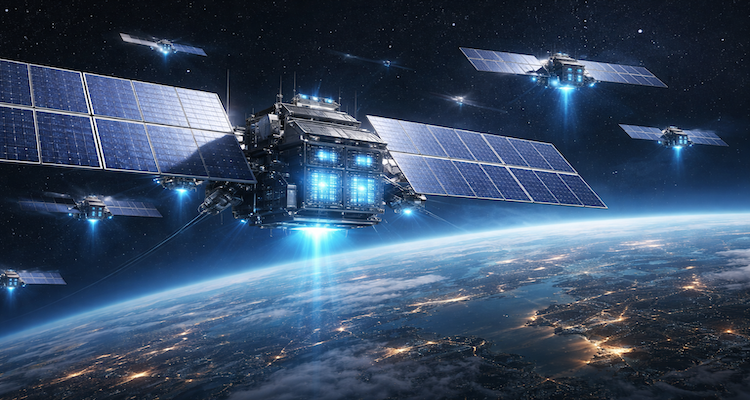
As the global race for artificial intelligence accelerates, Elon Musk is looking far beyond Earth for an edge. A reported merger between SpaceX and xAI could unlock a radical new frontier: AI data centers operating in orbit, powered by the sun and free from many of the constraints choking data centers on the ground.
If realized, the idea could reshape how the world powers and scales advanced AI systems, while intensifying competition with tech heavyweights like Google, Meta, and OpenAI.
A merger that could change the AI infrastructure game
A proposed merger between Elon Musk’s rocket company SpaceX and his artificial intelligence venture xAI was reported exclusively by Reuters this week. While neither company has publicly confirmed the deal, the report suggests the move could accelerate Musk’s ambition to deploy AI-ready data centers in space.
The logic is straightforward. As AI models grow larger and more energy-intensive, traditional data centers are becoming harder, and more expensive, to operate. Electricity costs, land constraints, cooling requirements, and environmental scrutiny are all rising sharply.
Space, Musk believes, may offer a cleaner and ultimately cheaper alternative.
What are space-based AI data centers?
Space-based AI data centers are still largely theoretical, but the core concept is gaining traction across the industry. Instead of housing servers on Earth, companies would deploy networks of solar-powered satellites in orbit to perform AI computing tasks.
Operating above the atmosphere offers two major advantages. First, satellites receive near-constant solar energy without weather disruptions. Second, heat can be radiated directly into space, eliminating the massive cooling systems that dominate the cost and design of terrestrial data centers.
Proponents argue this could dramatically improve efficiency for AI workloads, including large language models like xAI’s Grok or OpenAI’s ChatGPT.
Why the technology is still years away
Despite the promise, engineers and space experts caution that orbital data centers face formidable technical and economic hurdles.
Space debris poses collision risks that could damage or destroy computing satellites. Cosmic radiation threatens sensitive electronics, requiring heavy shielding and redundancy. Repairs are also a challenge, with limited options for in-person maintenance once systems are deployed.
Launch costs remain another major barrier, even with reusable rockets. Analysts at Deutsche Bank estimate that the first small-scale orbital data center experiments could begin around 2027 or 2028. Large constellations, potentially numbering in the hundreds or thousands of satellites, are unlikely to emerge until the 2030s, assuming early trials succeed.
Why Musk sees SpaceX as the key advantage
If space-based AI computing becomes viable, SpaceX is uniquely positioned to lead the charge. The company has already launched thousands of satellites for its Starlink broadband network and operates the world’s most frequently flown orbital rockets.
That launch capability could significantly reduce the cost of deploying AI infrastructure in space. It could also give Musk end-to-end control over everything from rocket launches to on-orbit computing.
Speaking at the World Economic Forum in Davos earlier this month, Musk made his views clear. He argued that space would soon become the cheapest place to run AI, citing abundant solar power and lower cooling costs.
According to a Reuters report, SpaceX is also considering an initial public offering that could value the company at more than $1 trillion. Sources told the news agency that part of the proceeds could be used to fund space-based AI data center development.
Competitors are already moving in orbit
Musk is not alone in eyeing space as the next computing frontier.
Jeff Bezos’ Blue Origin has been quietly working on technologies that could support orbital AI data centers. The Amazon founder has previously suggested that massive, gigawatt-scale facilities in space could outperform Earth-based centers within one to two decades.
Meanwhile, Nvidia-backed startup Starcloud has already demonstrated early progress. Its Starcloud-1 satellite, launched aboard a SpaceX Falcon 9 rocket last month, carries an Nvidia H100 chip, the most powerful AI processor yet sent into orbit. The satellite is running and training Google’s open-source Gemma AI model as a proof of concept.
Starcloud ultimately envisions a modular “hypercluster” of satellites delivering roughly five gigawatts of computing power, comparable to several hyperscale data centers combined.
Google and China are staking their claims
Google is also investing heavily in orbital AI research. Through Project Suncatcher, the company is exploring ways to network solar-powered satellites equipped with its proprietary Tensor Processing Units into a space-based AI cloud.
The company plans to launch an initial prototype around 2027 in partnership with Planet Labs, according to public disclosures.
China, meanwhile, is moving aggressively. State media reported this week that Beijing plans to deploy a “Space Cloud” of AI data centers over the next five years. China Aerospace Science and Technology Corporation, the country’s primary space contractor, has committed to building what it described as “gigawatt-class space digital-intelligence infrastructure” as part of a five-year development plan.
What this means for the AI arms race
The push toward space-based computing highlights a deeper shift in the AI race. As models scale up, access to energy and infrastructure is becoming as critical as algorithms themselves.
If orbital data centers prove viable, they could reduce pressure on power grids, lower carbon footprints, and offer new ways to deploy AI globally. At the same time, they raise questions about space governance, orbital congestion, and who controls the infrastructure powering future intelligence systems.
For Musk, the strategy aligns tightly with his broader vision: vertically integrated technology ecosystems spanning Earth and space.
A future still under construction
Despite bold promises and early experiments, space-based AI computing remains a long-term bet. Significant engineering breakthroughs, regulatory clarity, and sustained investment will be required before it becomes commercially practical.
Still, the fact that major players, from Musk and Bezos to Google and China, are investing in the idea suggests it is no longer science fiction.
As AI’s appetite for power continues to grow, the next data center boom may not happen on land at all, but hundreds of miles above it.
(This article is based on publicly available information and reporting, including exclusive coverage by Reuters.)
ALSO READ: Tesla Adds New Model Y Variant as EV Market Cools
The information presented in this article is based on publicly available sources, reports, and factual material available at the time of publication. While efforts are made to ensure accuracy, details may change as new information emerges. The content is provided for general informational purposes only, and readers are advised to verify facts independently where necessary.