










Why Astronomers Fear We May Be the Youngest Civilization
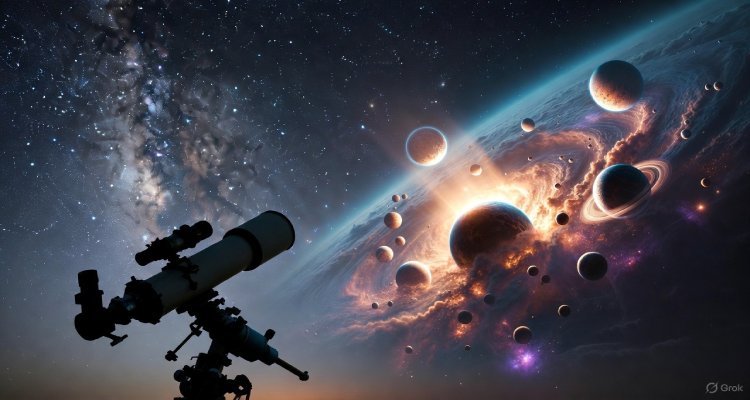
Astronomers are questioning whether humanity is the universe’s youngest civilization—and why no older cosmic societies have made contact despite billions of years of head start.
Introduction: A Startling Cosmic Possibility
For decades, humanity has looked to the night sky with a familiar hope: that someone, somewhere, might be looking back. But a growing number of astronomers are wrestling with an unsettling new idea. What if we are not among the earliest civilizations of the cosmos—but the youngest? What if the universe has been home to advanced societies long before Earth cooled, yet none have reached out or survived to greet us?
This question is no longer confined to speculative philosophy. It is quietly reshaping scientific debates, space-telescope missions, and the search for extraterrestrial intelligence. And it is prompting a chilling realization: if we are the newcomers, something may have happened to those who came before.
Context & Background: A Universe Old Enough for Civilizations
The universe is 13.8 billion years old. Earth appeared only 4.5 billion years ago, and humans have existed for barely 200,000 years—a cosmic blink. The gap is stunning: intelligent life elsewhere could have had billions of years to evolve, innovate, explore, and colonize the stars.
Astronomers often reference the Fermi Paradox: with so much cosmic time, why is the universe silent?
Yet silence is not the only mystery. Over the last decade, new observations have deepened the puzzle:
- Ancient stars more than 10 billion years old show signs they could host habitable planets.
- Exoplanet surveys reveal Earth-like worlds forming far earlier than our own.
- Galactic chemical maps suggest that many planetary systems matured rapidly—long before the Sun took shape.
If habitable planets formed billions of years before Earth, then intelligent life elsewhere could be billions of years older than us.
So why aren’t they here?
Main Developments: The New Fear in Astrobiology
Recent theoretical papers and models point to a provocative possibility: the rise of intelligent life might be extremely rare and heavily constrained, making Earth one of the last places where it has emerged.
Astronomers cite several reasons:
1. Cosmic Hazards May Have Repeatedly Reset the Universe
Gamma-ray bursts, supernova explosions, and galaxy-wide radiation events could have sterilized planets or wiped out developing civilizations multiple times before Earth’s relative stability.
2. Habitability May Peak Late in Cosmic History
Some researchers argue that the early universe was too volatile. Heavy elements essential for life—carbon, oxygen, nitrogen—were limited. Civilizations may have struggled to form until galaxies enriched over billions of years.
But if habitability peaks now, then humanity may belong to the earliest wave of civilizations—or the latest survivors.
3. The “Great Filter” May Lie Behind Us—or Ahead
One of the most debated concepts in astrobiology is the “Great Filter,” a barrier that prevents life from advancing to a galaxy-spanning society.
If we are the youngest civilization, it could mean:
- Others faced the Filter and failed.
- Humanity is emerging just after a massive cosmic tipping point.
- A past catastrophe wiped out older civilizations before we appeared.
This is where the fear intensifies: the absence of ancient civilizations might be a warning, not a coincidence.
Expert Insight & Public Reaction
Astronomers and physicists are divided—hope and dread often sitting in the same sentence.
Dr. Marlon Reyes, a cosmology researcher, describes the fear bluntly:
“If older civilizations existed, their absence implies something ended them. That should concern us.”
Meanwhile, astrobiologist Lena Hoffman offers a more optimistic lens:
“Being the youngest civilization could mean the universe is still in its early creative phase. We might be among the first to stand up and look around.”
Public fascination has skyrocketed. Online communities debate whether this makes humanity special or vulnerable. Science podcasts and documentaries have leaned heavily into the psychological implications:
- Are we alone because others failed?
- Are we too early or too late?
- Or are we the first species capable of surviving where others could not?
Impact & Implications: What Comes Next
If humanity is among the youngest—or last—civilizations, the implications are enormous.
1. Our Technological Future Becomes Existential
The fear suggests that civilizations may not remain stable long enough to be detected. Whether from war, climate collapse, artificial intelligence, or cosmic threats, longevity may be far rarer than intelligence itself.
This fuels renewed urgency in:
- Planetary defense programs
- AI safety research
- Climate and resource stability
- Sustainable space exploration
2. SETI Must Rethink Its Search Strategies
Instead of hunting for “active” civilizations, scientists may need to:
- Search for ruins of extinct societies— Dyson sphere fragments, abandoned megastructures, or anomalous signals.
- Study biosignatures on exoplanets for signs of collapse rather than flourishing life.
- Look for technosignature fossils in stellar data archives.
3. Humanity May Become the Universe’s Storyteller
If no one older is out there, humanity might carry an unexpected responsibility: to become the civilization that lasts, explores, and eventually reaches worlds where life is just beginning.
Astronomers warn that this perspective is both empowering and terrifying.
Conclusion: A Universe Waiting for Its Newest Voice
The idea that humanity is the youngest civilization is less about fear of the unknown and more about understanding our role in a vast cosmic timeline. If true, the silence of the skies is not a sign of emptiness—but of possibility. It means the universe may still be writing its grandest chapter, and we are among its first narrators.
Whether we flourish or fade will determine not just our own future, but perhaps the future of every civilization yet to come.
Humanity may be young. The question now is: can we grow old?
Disclaimer :This article is a journalistic interpretation created for informational purposes. It does not claim definitive scientific conclusions, and speculative theories mentioned are based on ongoing research and expert debates.