







When Stars Act Alive: Scientists Explore Life-Like Behavior in Space
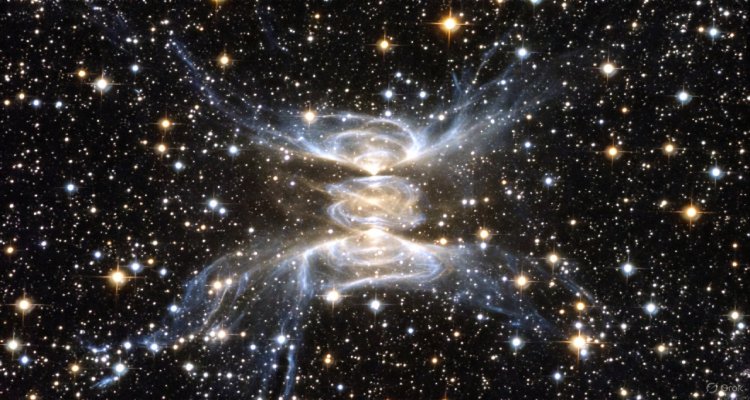
Scientists are exploring stars that pulse, adapt, and self-regulate—raising profound questions about whether some stars behave like living systems.
Introduction: When the Cosmos Starts Acting Alive
Across the vast silence of space, stars have long been treated as predictable cosmic furnaces—burning hydrogen, following physical laws, and ending their lives in spectacular but orderly ways. Yet, a growing body of astronomical research is challenging that neat picture. Some stars don’t just shine; they pulse, flare, communicate, and adapt in ways that feel eerily similar to biological behavior.
This has led scientists to a provocative question: What if certain stars behave less like inert objects and more like living systems? Inside observatories, data centers, and space agencies worldwide, astronomers are now investigating stars whose patterns resemble metabolism, nervous responses, and even communication networks—blurring the boundary between physics and life itself.
Context & Background: From Static Suns to Dynamic Systems
For centuries, stars were classified based on brightness, color, and mass. The famous Hertzsprung–Russell diagram neatly sorted them into life stages—from birth in stellar nurseries to death as white dwarfs, neutron stars, or black holes.
However, advances in space telescopes such as Kepler, TESS, Gaia, and the James Webb Space Telescope have revealed something unexpected: many stars are far more dynamic than previously thought.
Astronomers have documented stars that:
- Pulse rhythmically like heartbeats
- Erupt in powerful flares without clear triggers
- Exchange energy across vast magnetic fields
- Show feedback loops that stabilize or destabilize their behavior
These discoveries coincided with the rise of complex systems science, a field that studies how simple components can produce life-like behaviors when connected. Suddenly, stars didn’t just look like burning balls of gas—they looked like self-regulating systems.
Main Developments: Stars That Mimic Life-Like Behavior
Stellar Pulsations That Resemble Biological Rhythms
Certain variable stars, such as Cepheids and RR Lyrae, expand and contract with astonishing regularity. Their cycles are so precise they are used as cosmic measuring tools. Researchers now compare these pulsations to biological rhythms—similar to breathing or circadian cycles—driven by internal feedback mechanisms.
More intriguingly, some stars shift their pulsation patterns over time, responding to internal changes in ways that resemble adaptation rather than randomness.
Flares, Feedback, and “Stellar Nervous Systems”
Red dwarf stars and magnetically active suns can unleash sudden flares far more powerful than expected. These eruptions are not isolated events; they influence future activity through magnetic feedback loops.
Astrophysicists describe these interactions using terms borrowed from biology:
- Stimulus and response
- Threshold behavior
- Energy regulation
In network models, a star’s magnetic field behaves like a distributed nervous system, transmitting stress and releasing it in bursts—remarkably similar to neural firing.
Self-Organization Inside Stars
Inside a star, plasma flows form rotating patterns, waves, and cycles that persist for millions of years. These structures are not externally imposed; they emerge naturally through internal interactions.
This phenomenon—self-organization—is a hallmark of living systems, from ant colonies to human brains. While stars are not alive, scientists argue that they may follow the same mathematical rules that govern life.
Expert Insight: Why Scientists Take This Seriously
Astrophysicist and complex systems researcher Dr. Sara Walker has argued that life is not defined by materials but by processes. From this perspective, stars meet several criteria associated with life-like systems: energy flow, internal regulation, and long-term stability far from equilibrium.
Meanwhile, solar physicists studying our Sun note that its 11-year activity cycle behaves like a regulated biological process, not a simple mechanical one. Machine-learning models trained on solar data now identify “memory” in stellar activity—suggesting stars retain information about their past states.
Public fascination has followed suit. Online forums and science communities increasingly debate whether stars could represent a pre-biological form of organization—complex, responsive, but not conscious.
Impact & Implications: Redefining Life in the Universe
Changing How We Search for Life
If life-like behavior can exist at stellar scales, it forces scientists to rethink the traditional search for extraterrestrial life. Instead of focusing solely on planets, future research may explore energy systems capable of sustaining complex behavior, even if they aren’t carbon-based.
Advancing Artificial Intelligence and Physics
The models used to study stars behaving like living systems are influencing AI research. Stellar simulations now inspire algorithms designed to learn, stabilize, and adapt—mirroring how stars manage enormous energy flows without collapsing.
Philosophical Consequences
Perhaps most profound is the philosophical impact. If life exists on a spectrum rather than as a binary state, stars may occupy a gray zone—not alive, yet not purely mechanical. This challenges humanity’s long-held assumptions about our place in the universe.
Conclusion: When the Universe Feels Less Silent
The search for stars that behave like living things is not about declaring the cosmos alive. It’s about recognizing that nature repeats its patterns across scales—from cells to suns.
As telescopes grow more powerful and data more precise, scientists are discovering that the universe is not just a collection of objects, but a web of processes—some of which feel surprisingly familiar.
In studying stars that pulse, adapt, and regulate themselves, humanity may be uncovering a deeper truth: life is not an exception in the universe—it may be one expression of a far more universal rule.
Disclaimer :This article explores emerging scientific interpretations and theoretical research in astrophysics and complex systems science. Descriptions of “life-like” behavior are metaphorical and do not imply biological life or consciousness in stars.