










When Machines Start Forgetting: The Coming Crisis No One Is Talking About in AI
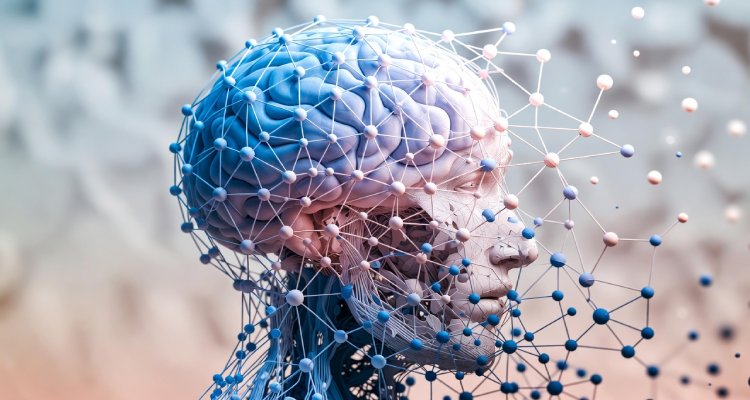
As AI systems evolve, a hidden risk is emerging—machine forgetting. Experts warn this silent flaw could reshape trust, safety, and the future of artificial intelligence.
Introduction: When Intelligence Begins to Fade
For years, artificial intelligence has been framed as a system that only gets smarter—learning endlessly, improving relentlessly, and remembering everything. But a quieter, more unsettling reality is emerging inside AI labs and research papers: machines are starting to forget.
Not in the human sense of nostalgia or memory loss, but in a technical, structural way that could reshape the future of AI systems we increasingly rely on. From large language models to autonomous systems, engineers are discovering that as AI grows more complex, its ability to retain, recall, and prioritize knowledge is becoming fragile. This phenomenon—often overlooked outside academic circles—may soon evolve into one of the most serious challenges in artificial intelligence.
The irony is striking. In an age obsessed with data permanence, machine forgetting may become AI’s Achilles’ heel.
Context & Background: Why AI Memory Was Never Meant to Be Perfect
AI systems were never designed to “remember” the way humans do. Instead, they rely on statistical patterns, parameter weights, and training cycles that approximate intelligence rather than store lived experience.
Modern AI models—especially large-scale neural networks—learn through repeated exposure to massive datasets. But as these models are updated, fine-tuned, or retrained, older information can degrade or disappear altogether, a problem known in research as catastrophic forgetting.
Early AI systems avoided this issue by staying narrow and static. Today’s models, however, are dynamic. They adapt to new data, new rules, and new social expectations. Each update risks overwriting what came before.
As AI is deployed in healthcare, finance, defense, education, and governance, forgetting is no longer a minor technical quirk—it becomes a systemic risk.
Main Developments: What Is Machine Forgetting—and Why It Matters
Machine forgetting occurs when an AI system loses previously learned knowledge while acquiring new information. This can happen subtly, without warning, and often without developers immediately realizing it.
Why AI Forgets
- Continuous retraining overwrites earlier patterns
- Limited memory architectures prioritize recent data
- Bias correction updates remove historical context
- Regulatory constraints force selective data deletion
In isolation, these updates improve performance. But collectively, they can erode institutional memory within AI systems.
Imagine:
- A medical AI forgetting rare disease patterns
- A financial model losing crisis-era risk behaviors
- A language model forgetting historical nuance
The result isn’t just inaccuracy—it’s strategic amnesia.
Expert Insight: Growing Concern Inside the AI Community
AI researchers have begun openly acknowledging the problem. Many argue that the industry’s obsession with scale has come at the cost of stability.
Computer scientists working on neural architectures warn that current models lack true long-term memory, making them vulnerable to knowledge decay. Others note that as AI becomes more regulated, enforced data removal may unintentionally accelerate forgetting.
Public sentiment is also shifting. As users notice AI tools becoming inconsistent—confident one day, confused the next—trust begins to erode. The question is no longer whether AI can learn, but whether it can retain wisdom over time.
Impact & Implications: Who Is Affected and What Comes Next
1. Enterprises and Governments
Organizations deploying AI for long-term decision-making may unknowingly rely on systems with fading institutional memory, leading to flawed forecasts and policy missteps.
2. Safety-Critical Systems
In autonomous vehicles, defense platforms, and healthcare diagnostics, forgetting is not an inconvenience—it’s a liability.
3. The AI Alignment Debate
Ironically, forgetting may complicate efforts to make AI safer. Systems that forget past guardrails or ethical constraints could behave unpredictably.
4. The Push for “AI Memory Engineering”
The next phase of AI development may focus less on intelligence and more on memory preservation—building systems that can learn without erasing the past.
Some researchers are exploring hybrid memory models, external knowledge vaults, and human-in-the-loop verification as potential solutions.
Conclusion: The Future Depends on What AI Chooses to Remember
The coming AI crisis won’t arrive with a dramatic malfunction or a rogue algorithm. It will be quieter—hidden in forgotten lessons, lost context, and vanishing knowledge.
As machines take on roles once reserved for human judgment, their ability to remember history, nuance, and consequence becomes essential. Intelligence without memory is not wisdom—it’s repetition without understanding.
The real question facing the AI industry is no longer how fast machines can learn, but how carefully they can remember.
This content is published for informational or entertainment purposes. Facts, opinions, or references may evolve over time, and readers are encouraged to verify details from reliable sources.